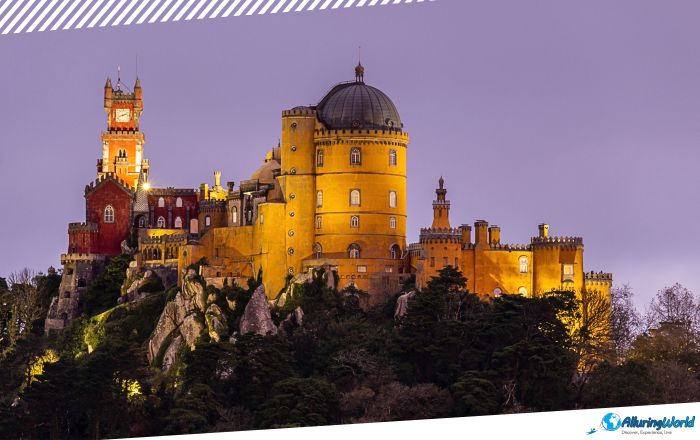
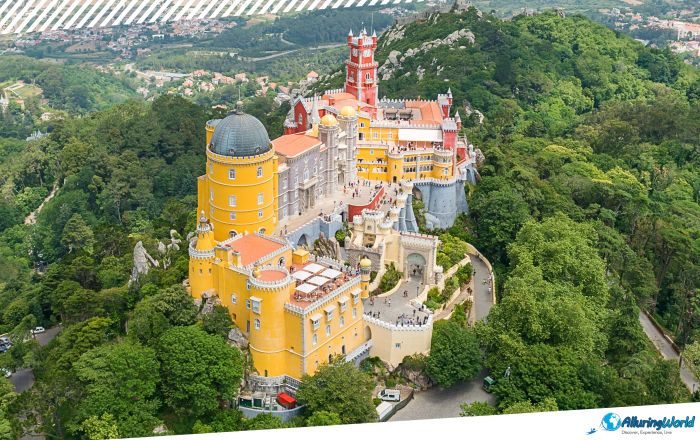
Palácio da Pena, or as it is its English equivalent, Pena Palace, is a famous and very important castle that is considered to be among the finest ones that can be found today as a tourist attraction located in the Municipality of Sintra, in the Greater Lisbon Region, within the southern part of the Portuguese Republic.
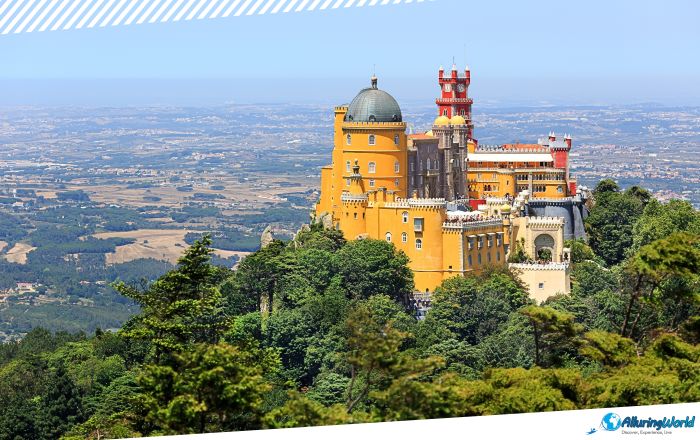
As Palácio da Pena stands on top of a hill surrounded by a forested park, it represents the Romanesque Revival architectural style, but what makes it very special is its colorful appearance, which, on a clear day, can be easily spotted from the capital city of Portugal, Lisbon.
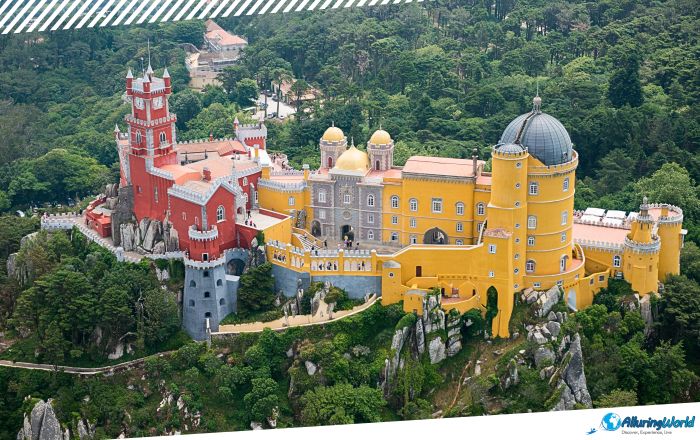
This hedonistic mix of vividly painted terraces, decorative battlements, and mythological statues, all of which stand in stark contrast to the lush greens of the forests that encircle Pena, is also a national monument and part of the Seven Wonders of Portugal. Everyone who visits Lisbon has Palácio da Pena on their itinerary, and it is perhaps one of the most visited attractions in the country.
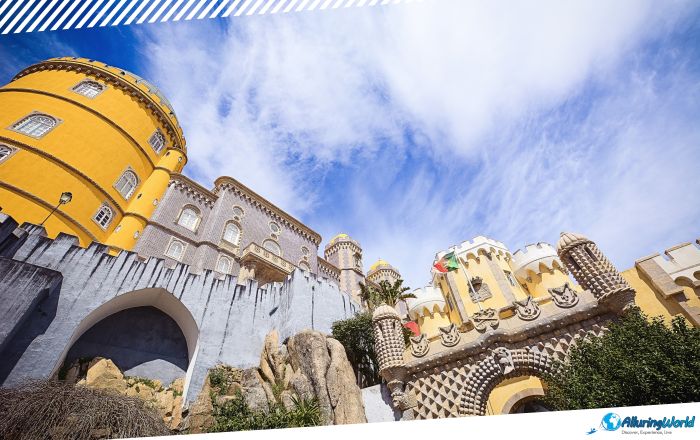
Even though the construction began in the Middle Ages with some small structures, it was in fact completed sometime in 1854 according to the design of Baron Wilhelm Ludwig von Eschwege. Still, the biggest credit for its construction most likely is to be given to King Ferdinand II, because the castle was meant to be a summer home for the Portuguese royals who wanted to escape the city and be among the Portuguese nature.
ADVERTISEMENT
Even so, the various mixed styles that blend perfectly have some interesting eclecticism that includes the Neo-Gothic, Neo-Manueline, Neo-Islamic, and Neo-Renaissance styles. Most importantly, the whole structure stands atop the rock of the Sintra Mountains, and as seen, Palácio da Pena can be divided into four different sections.
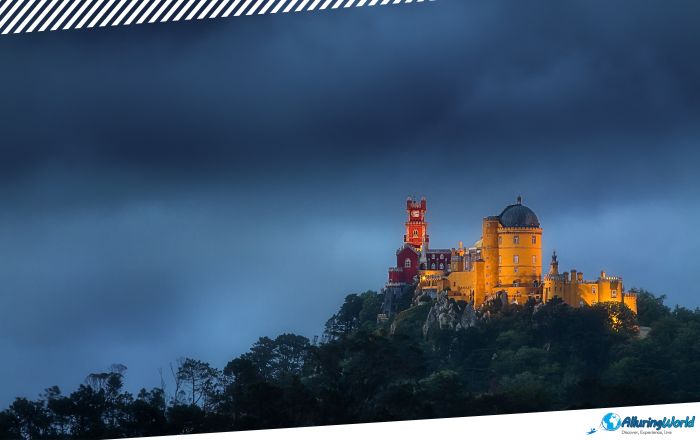
Beginning with the two gateways together with the enveloping walls and the foundation makes the first section. This then continues with the restored structure of the old convent and the clock tower, which makes it the second section. Moving on to the third section, it is the Arches Yard in front of the chapel, with its wall of Moorish arches, and the final, fourth section is the palatial zone and its cylindrical bastion, with interiors decorated in the cathédrale style.
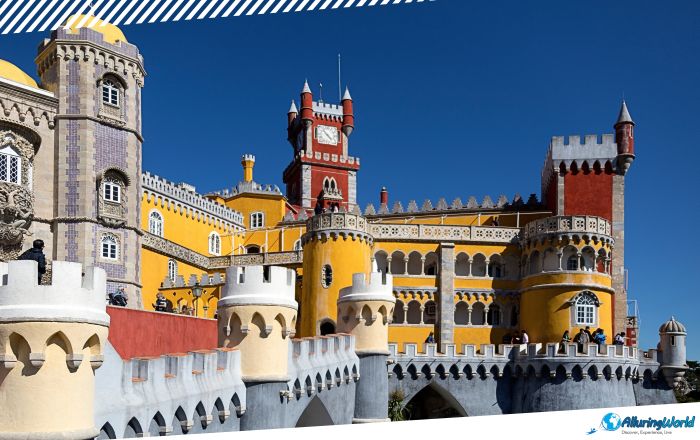
The interior of Palácio da Pena is as fascinating as the palace’s exterior is, yet the interior has been restored to reflect the decor of the time when it was built. Palácio da Pena was abandoned in 1910 when the Portuguese nobility fled to Brazil to escape the revolution. The 1910 Revolution was a republican coup d’état that successfully overthrew the centuries-old constitutional monarchy, thus replacing it with the First Portuguese Republic, and today, Palácio da Pena gives every visitor the sense of a certain time from the Portuguese royal past.
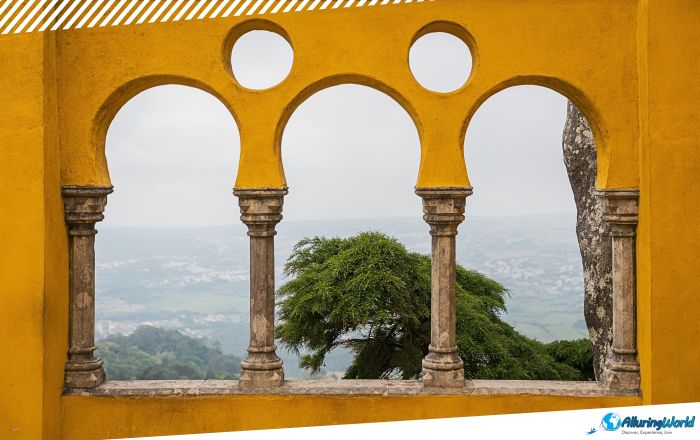
In conclusion, with its amazing stuccoes, painted walls in trompe-l’oeil, and various revetments in tile from the 19th century, Palácio da Pena nowadays is classified as an important UNESCO World Heritage Site. Overall, considering the entire history behind this amazing structure, Palácio da Pena is seen as one of the grandest instances of Romantic architecture with its colorful towers, and most likely it will remain one of the most attractive places in the country, where many people enjoy its beauty.