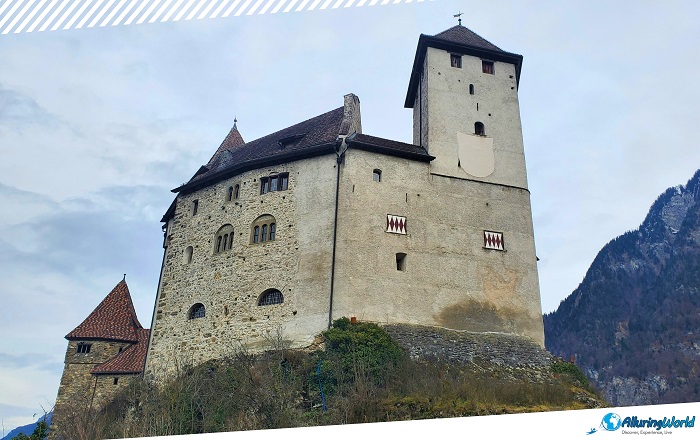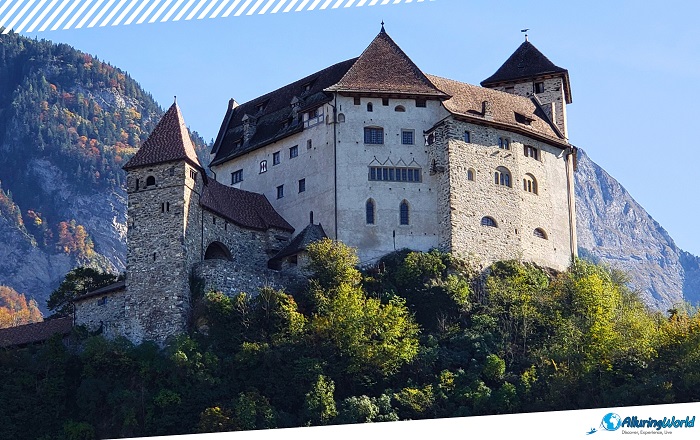
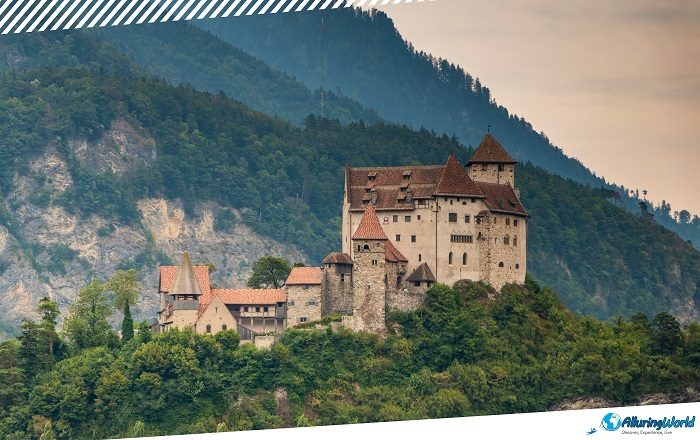
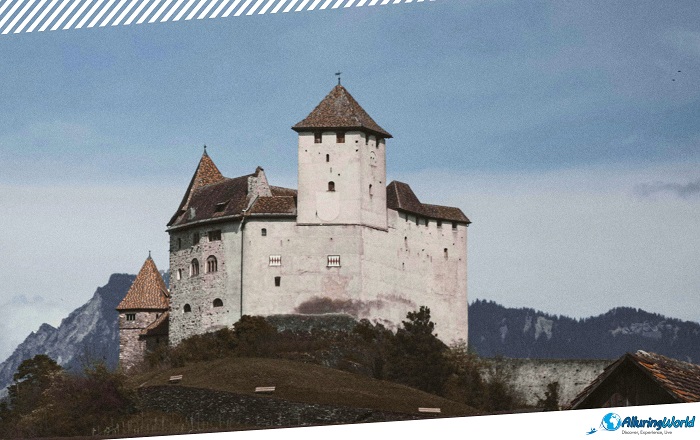
Gutenberg Castle, locally referred to as Burg Gutenberg, is a remarkably well-preserved medieval fortress located in the southern town of Balzers, within the southwestern part of the Principality of Liechtenstein. Serving as one of the five primary castles that hold significant historical and cultural importance for the nation, Gutenberg Castle occupies a unique position; unlike Vaduz Castle, it does not serve as a private residence for the Princely Family of Liechtenstein. This distinction is precisely why this grandiose castle is open to the general public, allowing the structure to function as a captivating museum and cultural landmark.
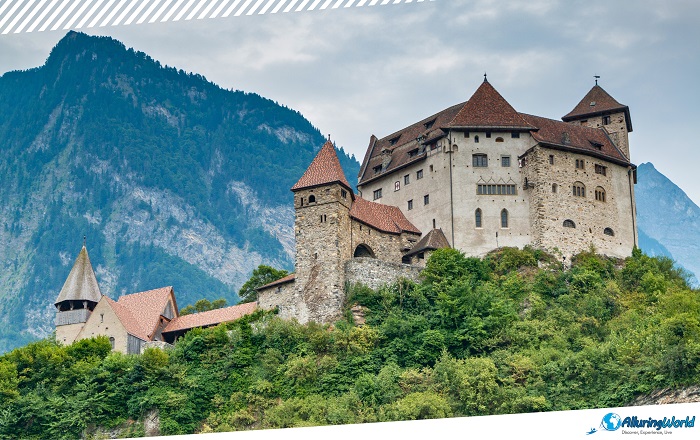
The architectural evolution of the site is a fascinating journey through time because, in its earliest form, the castle was not a fortress at all, but rather a modest church and cemetery perched atop a prominent hill overlooking the surrounding valley. By the early 12th century, the site underwent a dramatic transformation into a military fortification. A defensive ring wall was constructed around the existing church, effectively creating a circular keep. While historians have found no precise date for the original groundbreaking, scholarly consensus suggests the initial structures emerged around the year 1100.
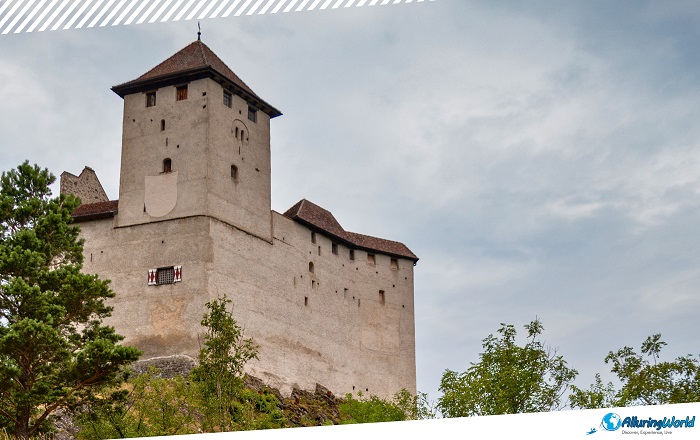
Following this initial construction period, work still continued on the formidable main tower. This central structure was eventually outfitted with merlons, and this is the upright sections of a battlement, thus designed to provide essential cover for defenders against potential invaders.
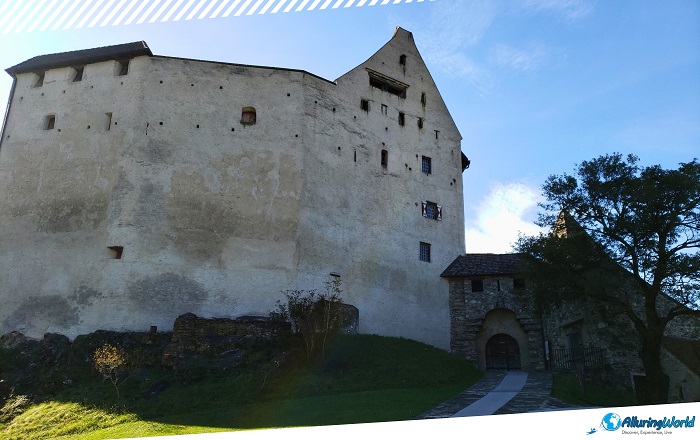
The first official written mention of the Gutenberg Castle dates back to 1296. By 1314, the castle became the property of the prestigious House of Habsburg, and during this era, it served a vital strategic role as a border outpost. The castle guarded the frontier between Habsburg-owned territories and the lands that belonged to the independent Swiss cantons at that time.
ADVERTISEMENT
Throughout the centuries, the castle’s fate fluctuated as it changed hands frequently, enduring cycles of decay and repair. One very particular notable moment in its history occurred in 1795, which was followed by a catastrophic fire that leveled the town of Balzers. Since then, the then-dilapidated castle ruins were repurposed as a primary source of stone and building materials to help residents reconstruct their homes.
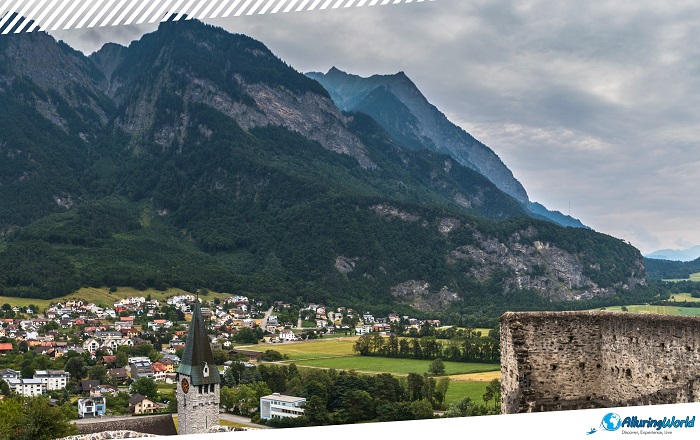
Fortunately, Gutenberg Castle’s modern silhouette is largely credited to a major restoration project that took place between 1905 and 1912. The project was led by Egon Rheinberger, a sculptor and architect born in Vaduz, the capital city of Liechtenstein.
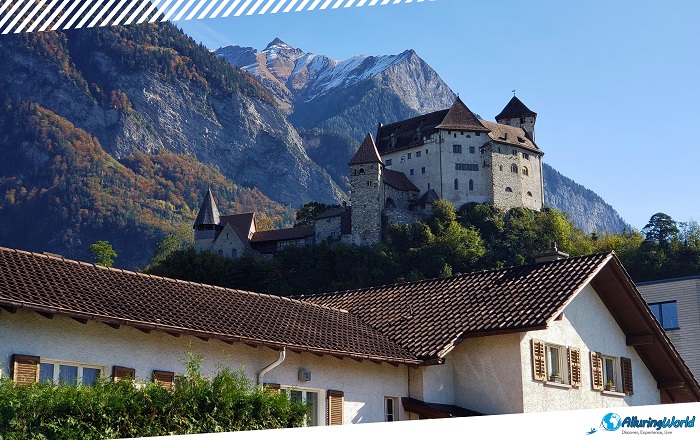
By adding several new structures and reinforcing the medieval aesthetic of the castle, Rheinberger gave the castle the distinctive appearance we are able to see today. Following his death, the property changed owners throughout the decades until 1979, and this is when the government of the Principality purchased the site to ensure its preservation for state and museum purposes.
In conclusion, today the Gutenberg Castle has been preserved as a historic structure that is a premier destination for those visiting the region. With a central courtyard open to all visitors free of charge, Gutenberg offers a glimpse into the past while showcasing the dramatic history it has gone through. Within the complex, you can also explore the serene chapel and a beautifully maintained rose garden, but overall, you are guaranteed that these spaces will offer you a sense of peace and tranquility, thus solidifying Gutenberg Castle’s reputation as a historic and precious jewel of the Alps.