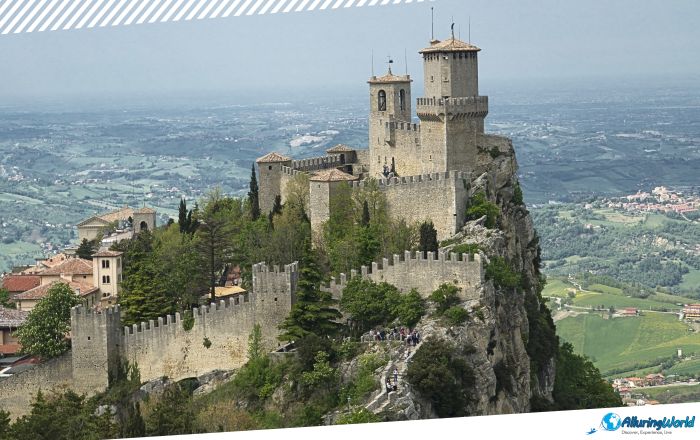
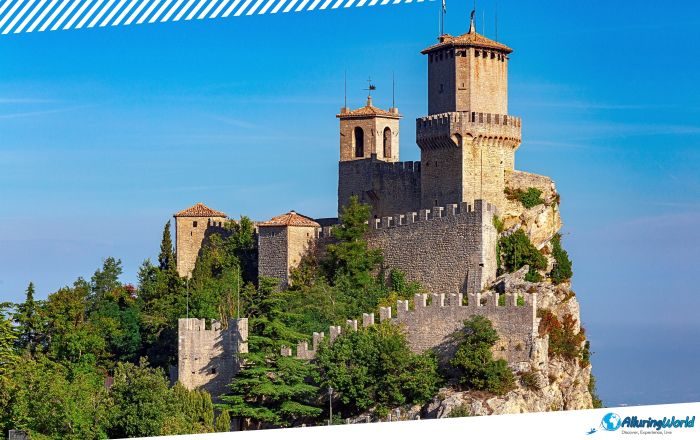
Fortress of Guaita is the oldest of the three towers constructed on Monte Titano, located in the tiny Republic of San Marino, a landlocked country on the Apennine Peninsula. As the oldest and most iconic of the three defensive peaks, this “First Tower,” as it is sometimes commonly referred to, is more than just a fortification. Guaita is considered to be the very soul of the world’s oldest Republic.
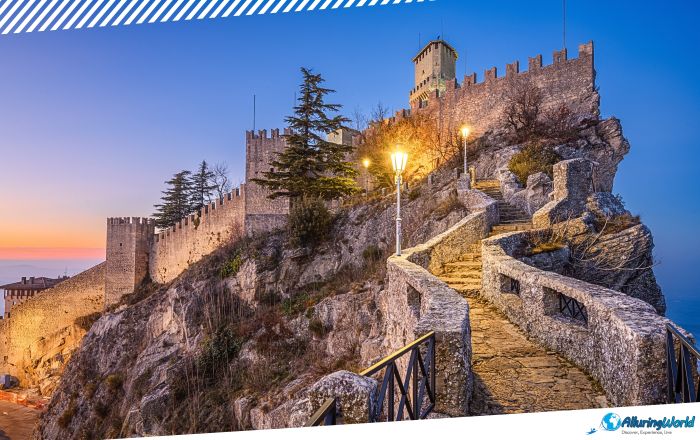
There is no clear source that suggests when the Fortress of Guaita was built, although throughout history, there are some mentions about the foundations, or in this case, the lack thereof. According to some historians, the foundations of the First Tower were laid as early as the 10th century, although some scholars would argue that its primary structure emerged in the 11th century. Regardless of the exact date, Guaita has remained an immovable witness to the passage of an entire millennium and guided the Sammarinese people to keep their freedom.
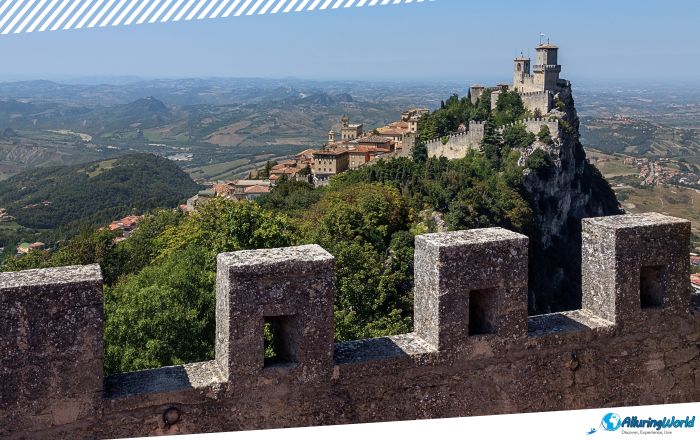
Due to the importance the Fortress of Guaita has in Sammarinese history, it is proudly depicted on the country’s flag, together with the other two important towers, Cesta and Montale Towers. Guaita is built on top of the rock, with no foundations, hence being a a masterpiece of medieval pragmatism.
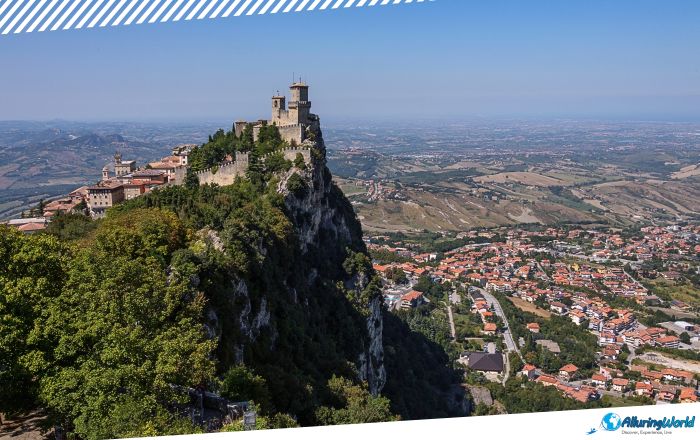
The tower has a pentagonal base that is built directly into the living limestone of the mountain, and remarkably, it relies on the natural strength of the rock. Over the centuries, its walls have been reinforced and expanded to adapt to the evolution of warfare by adding some additional towers, walls, and turrets.
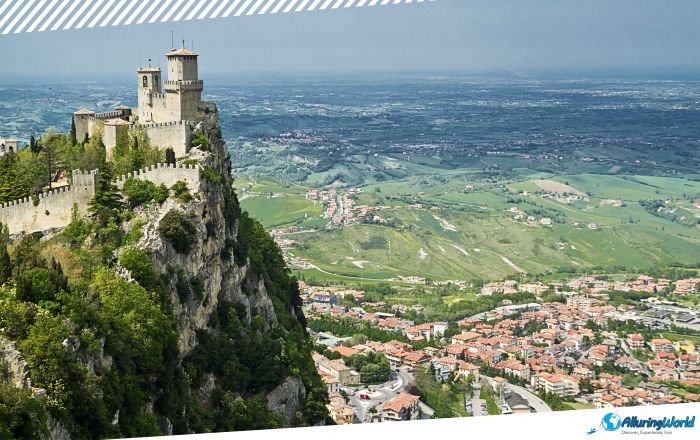
Visitors entering the stronghold are greeted by a striking Baroque coat-of-arms carved in stone, and this regal emblem dates back to the 1600s. This coat of arms was initially placed in the amazing Palazzo Pubblico before being moved to watch over the fortress gate. When you enter the fortress, you immediately notice that the layout of the inner ward is bounded by two distinct towers: The Bell Tower and The Pinnacle Tower.
ADVERTISEMENT
The Bell Tower was primarily used to alert the citizenry in times of peril, as it was equipped with bells that could be heard throughout the small city, while the Pinnacle Tower is a later addition that provided a strategic vantage point over the valley to monitor who was approaching Monte Titano.
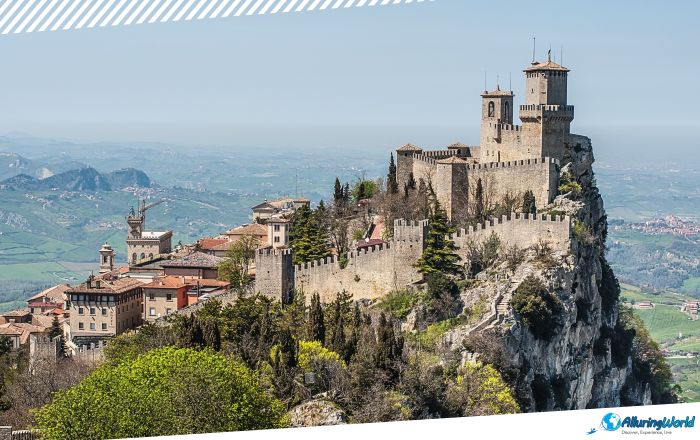
Beyond the Bell Tower and the Pinnacle Tower, the Guaita fortress complex is defined by its multifaceted defensive layers and specialized structures that evolved over centuries to ensure the survival of San Marino. The heart of the fortification features the Mastio, or the Keep, which is the oldest and most central part of the fortress. This section of Guaita served as the ultimate refuge and the primary residence for the captain of the guard.
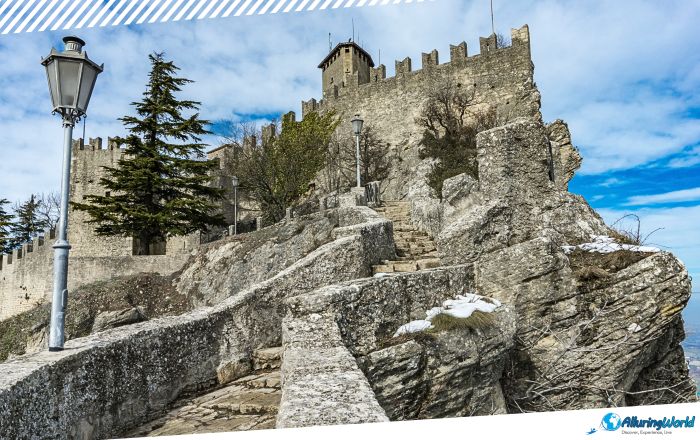
Surrounding this are two distinct sets of walls: the inner wall, which protected the core living and governing quarters, and the outer wall, which was reinforced with battlements and walkways to accommodate archers and later riflemen. While the Bell Tower and Pinnacle Tower are part of the internal wall, the fortress also incorporates several Watchtowers and semi-circular bastions along the perimeter, designed to eliminate blind spots and provide a 360-degree view of the surrounding Romagna plain and the Apennine peaks.
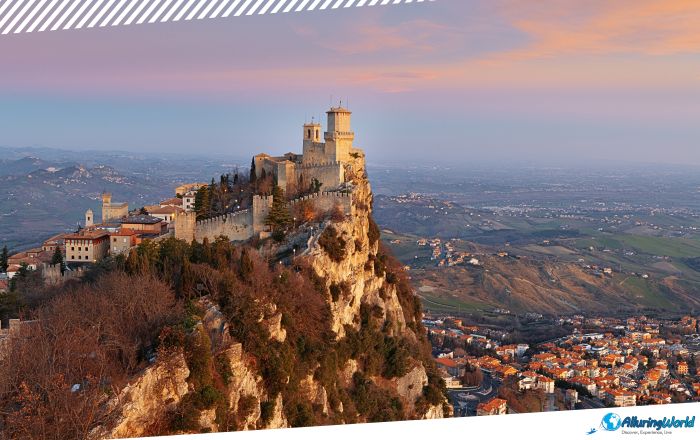
These outer towers and curtain walls were strategically designed to withstand long sieges, and today we can see them still with narrow slits for crossbows and heavy stone machicolations that allowed defenders to drop projectiles on any invaders who attempted to scale the sheer cliffs of the majestic Monte Titano.
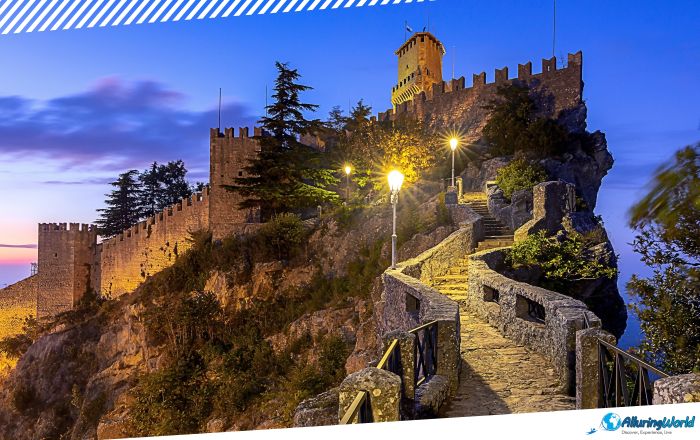
While today it serves as one of the greatest symbols of San Marino, and it is a big attraction for travelers, Guaita once held a more somber role, serving briefly as a state prison until the mid-20th century. Today, the courtyard offers a much friendlier atmosphere, as it is open to the general public, and it doubles as an open-air museum for military history. Enthusiasts can find artillery pieces gifted by Italian royalty, including two mortars presented by King Vittorio Emanuele II and two 75mm cannons gifted by King Vittorio Emanuele III, which the Guardians of the Fortress still fire to mark national festivities and historic celebrations.
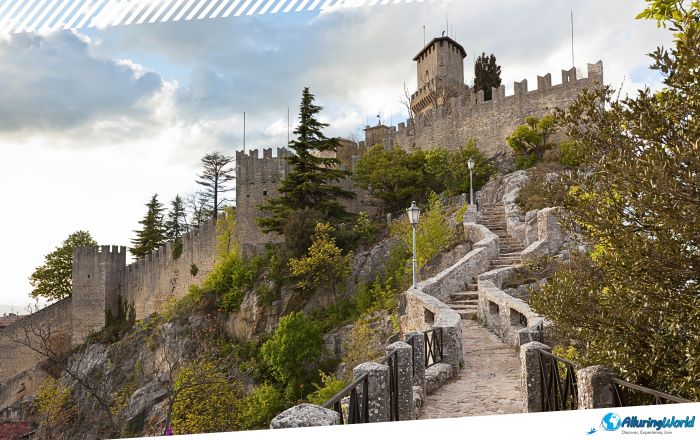
Recognized as a UNESCO World Heritage Site in 2008, the fortress is used as a connection point between the ancient world and the modern era, which continues to watch over the fifth smallest country in the world, and it serves as a proud testament to the endurance of the Sammarinese people. Overall, when visiting the tiny Republic of San Marino, it is impossible to miss the Fortress of Guaita, and this historic monument will continue to speak about the proud history of the Sammarinese people.