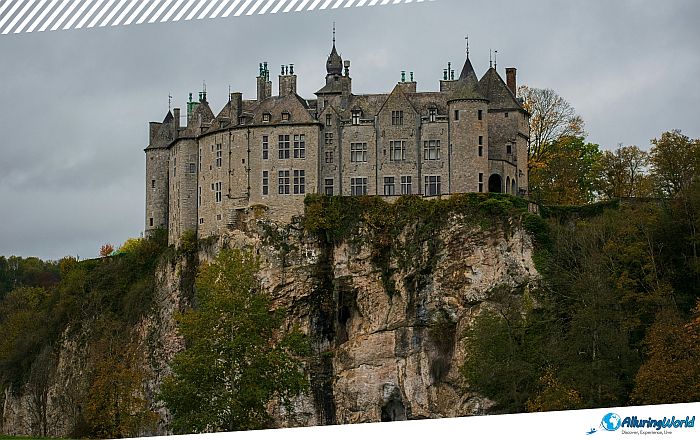
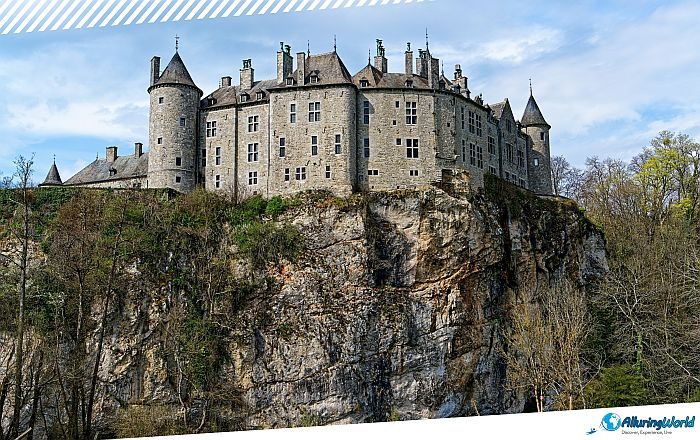
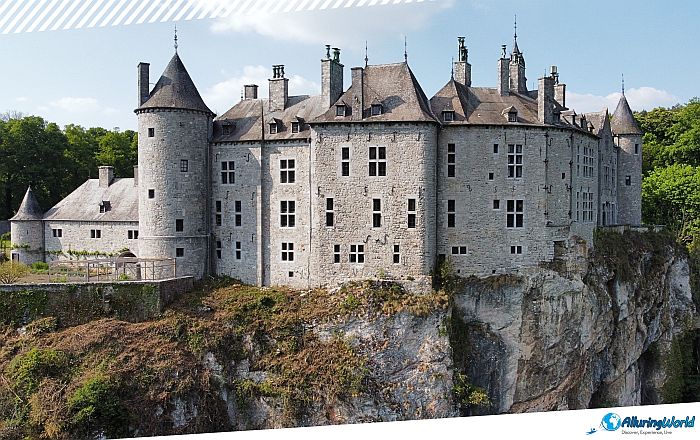
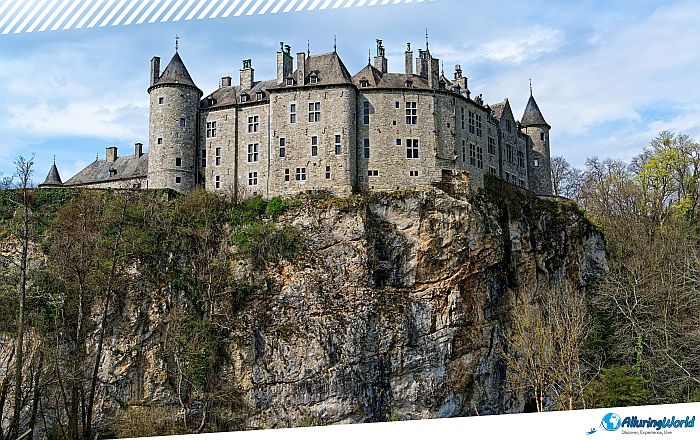
Walzin Castle, locally referred to as Château de Walzin, is a Gothic Revival fortress that rises dramatically above a sheer limestone cliff that is part of the Belgian side of the Ardennes, in the city of Dinant, in the central part of the Namur Province, within the southwestern part of the Kingdom of Belgium. One of the most mesmerizing examples of medieval architecture in Europe is undoubtedly Walzin Castle, which rises out of the rocky face above the curving Lesse River.
This castle appears more like a legendary stronghold that is built into the landscape rather than an architectural construction built by men. Although Belgium has many historic castles, none compare to the natural beauty and fairytale-like structure of Walzin. Its strategic location offered two benefits: first, as a defensive stronghold in times of regional strife for hundreds of years, and second, as a permanent mark that characterizes the romance of the Ardennes area.
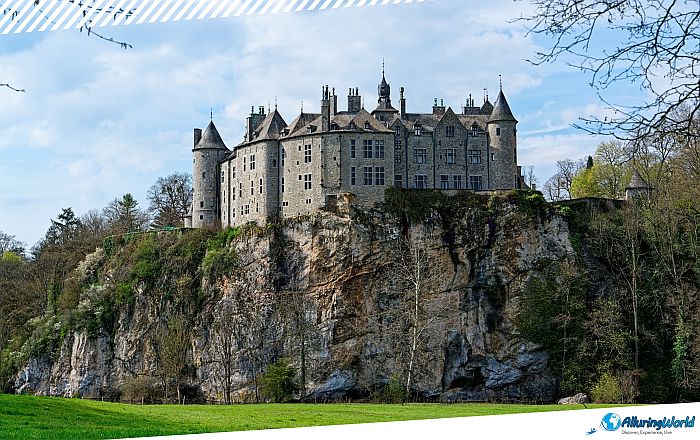
The history of the castle goes back to the 11th century, when the Low Countries were characterized by a fragmentation of the feudal structure and territorial conflicts. The castle is strategically located on a hilltop above a significant bend of the river Lesse, which was very important for commerce because it led straight to the river Meuse. By the start of the 13th century, the makeshift wooden fortifications had been replaced by a formidable stone structure and fortification wall with arrow slits and watchtowers aimed at repelling any invaders. It was an integral part of the defense system for the Principality of Liège and its surrounding lordships, protecting against rival feudal powers.
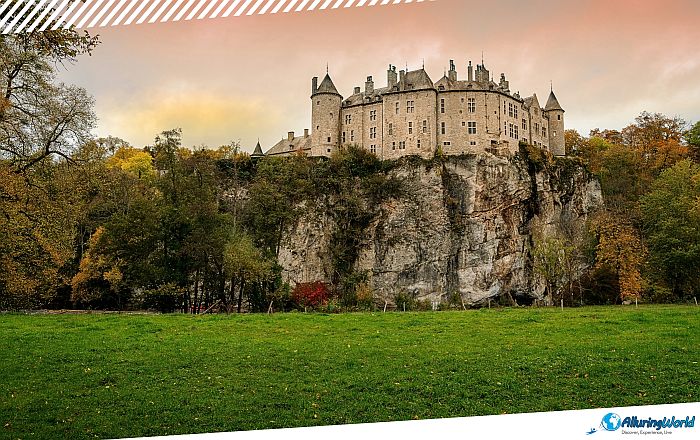
The geographic advantage of the castle was another reason why it became such a sought-after prize whenever war raged throughout the region. The Walzin Castle had been under attack, siege, and plunder from the Middle Ages up until the beginning of the Renaissance era. The greatest damage Walzin suffered was in 1554 during the destructive raids of King Henry II of France. After the destruction of the 16th century, the castle was transferred by means of marriage, succession, and sale between several powerful noble Belgian families such as the House of Celles and the Counts of Brugairolles. During subsequent centuries, successive generations of owners continued to add living quarters, develop terraces, and repair the ancient medieval ramparts, thereby gradually transforming its character from that of a fortress into an elegant noble manor house.
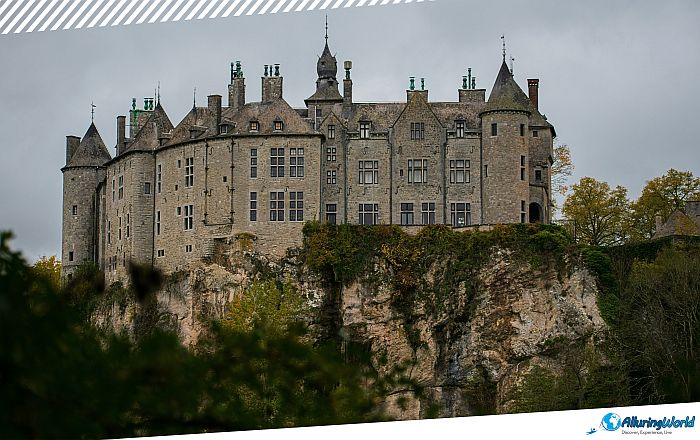
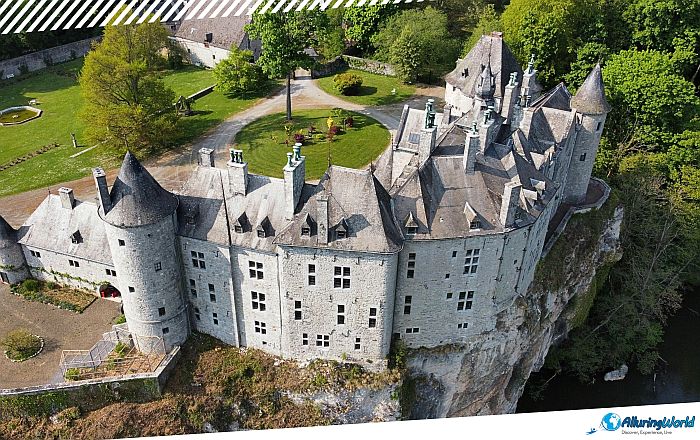
Surprisingly well-integrated into the rocky face of the dolomite rock formation, Château de Walzin features a stone-built tower from the thirteenth century, which is linked to the residential structures with slate roofs. Access to the upper courtyard can be made via a gate tower and a stone bridge over a historically existing dry moat. The walls of the castle have about 120 windows, from the small arrow slits of the medieval period on the lower floors to the stone-mullioned dormers on the high-pitched roofs. There are octagonal turrets with conical spires at the rampart corners. The impressive look of Walzin Castle today is mainly due to a remarkable restoration project that took place in the latter part of the 19th century under the supervision of the famous Belgian architect, Henri Beyaert.
ADVERTISEMENT
Beyaert was motivated by the Romantic era and the popularity of Gothic Revival architecture during the Victorian period to restore this medieval castle. Beyaert skillfully combined the remaining stone masonry from the 13th century with sloping slate roofs, elaborate turrets, gargoyles, and the imposing timber framing elements for the castle front. The castle’s new design highlights the vertical proportions, thus drawing attention to the perfect harmony between the castle and the steep rock formation behind it. It is the combination of these architectural elements that gives you the impression of a fairytale kingdom.
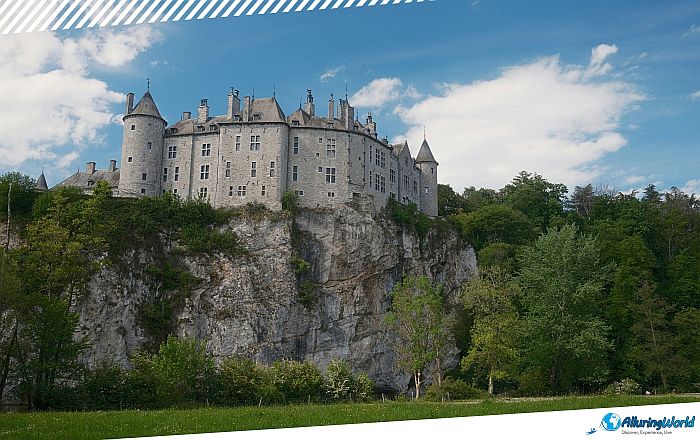
Important to note prior to visiting the place: Walzin Castle is a private home and, therefore, the inside of the castle is not open to the general public. It is possible, though, to admire the beauty of its outside through the nearby public waterways and hiking paths. There is no better way to see Walzin Castle than from the water. The legendary Descent of the Lesse River (Descente de la Lesse), beginning at either Houyet or Houyet-Anseremme, features a tranquil paddle through the wooded canyons, surrounded by the limestone bluffs. While floating downstream along the calm currents of the river, you’ll soon be greeted by the massive dolomite cliffs towering above you, where the castle will be seen sitting right above you.
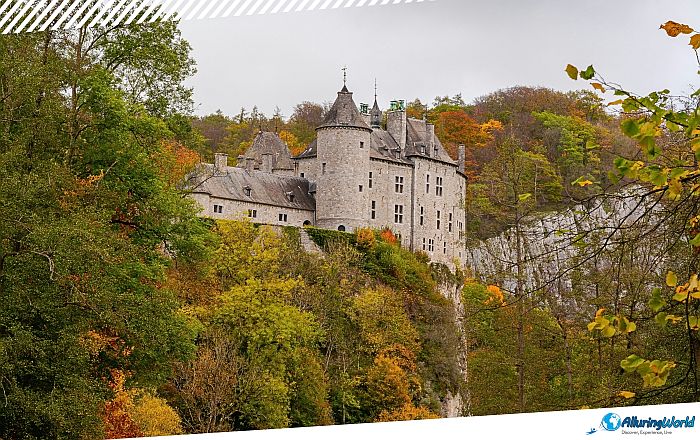
In regard to land-based adventure, there is a vast hiking trail network which traverses the valley of Lesse, linking the town of Dinant, Anseremme, and the picturesque village of Falmignoul. You can follow the popular Promenade de Walzin, which follows the path to the forest, crosses stone bridges, and climbs to the top of cliffs overlooking the castle. At these high elevations, there are beautiful views of the castle and river loop below.
Key vantage points that you should be aware of along the valley include:
- Meadow Trailhead View: The flat grassy banks directly across from the cliff offer classic, wide-angle landscape photography opportunities.
- Upper Cliff Overlooks: Higher elevation trails provide dramatic perspectives looking down onto the slate roofline and the river below.
- Chaleux Needles Reserve: A nearby geological reserve featuring striking rock formations easily integrated into a full-day hiking loop through the Lesse Valley.
However, some basic considerations are recommended in order to have a smooth journey to the Lesse Valley and Walzin Castle. The ideal time to visit this beautiful place is either spring (April to June) or early autumn (September to October). In spring, there are plenty of green plants, the level of the river is ideal for kayaking, and in autumn, the Lesse Valley is covered in beautiful golden or orange leaves which provide amazing light for taking photographs. During summer, visitors will have warmer temperatures, and there will be high numbers of visitors on the main paddling routes.
The castle is located approximately 10 minutes south of the city of Dinant. If you are arriving by train, then you can disembark at Anseremme station and enjoy a scenic 45-minute walk along the river path directly to the viewing meadows opposite the castle base. Because the castle sits on private property, it is surrounded by protected nature reserves, so you are expected to respect local conservation guidelines:
- Respect Private Boundaries: Do not cross fencing, attempt to climb up the cliff face, or launch unauthorized drones over the residential grounds.
- Practice Leave No Trace: If you are picnicking along the riverbanks, make sure to pack out all trash to protect local wildlife and water quality.
- Check River Water Levels: Kayak operations on the Lesse River are strictly regulated based on daily water levels for public safety and ecological protection.
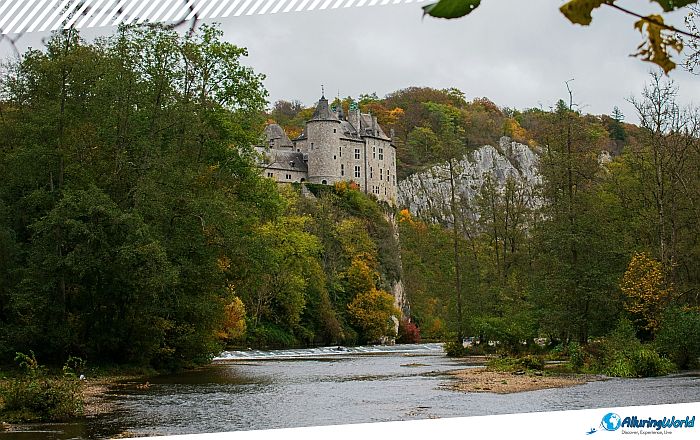
In conclusion, the Ardennes landscape holds many treasures, but few capture the spirit of Wallonia quite like Walzin Castle. As the sunlight reflects off the calm waters of the Lesse River and illuminates the ancient limestone cliff face, the boundary between history and legend naturally blurs. Whether you catch your first glimpse of its soaring turrets while paddling around a river bend or while pausing along a quiet woodland path, Château de Walzin offers an unforgettable encounter with Belgium’s rich medieval past and dramatic natural scenery.