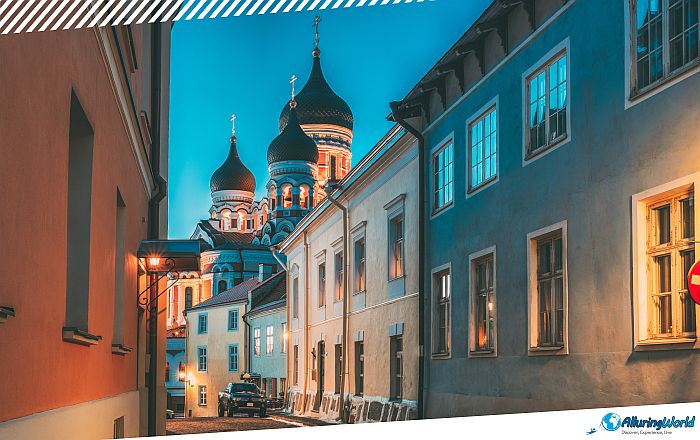
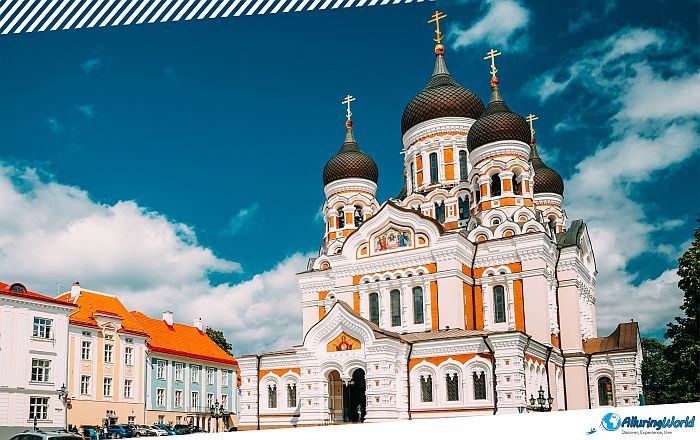
The Alexander Nevsky Cathedral is a historic and quite impressive Eastern Orthodox cathedral that is located in the central part of the city of Tallinn, the capital of the Republic of Estonia. The church represents one of those majestic structures that serve as monuments to Estonia’s history and can also be viewed as an excellent architectural structure, being closely connected with the city’s core.
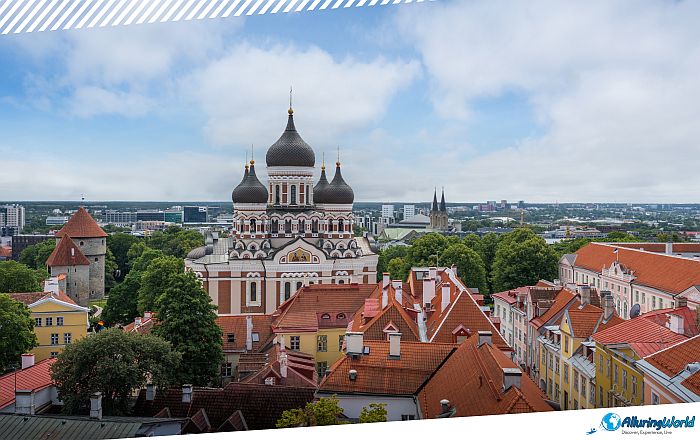
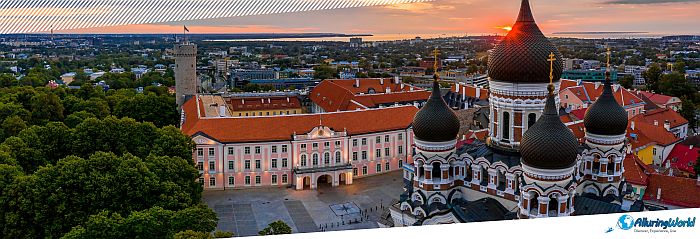
Being located more precisely on the Toompea Hill, this architectural monument stands out against the background of ancient defensive structures and the center of national government, the historic and also amazing Toompea Castle, where now resides the parliament of Estonia. The construction of this cathedral took place from 1894 to 1900 in the epoch of Russian dominance in Estonia. Moreover, the name “Alexander Nevsky” indicates the dedication of this temple to the prince of Russia of the 13th century who won a victory in the battle of ice at Lake Peipus, on the border of present-day Estonia and Russia.
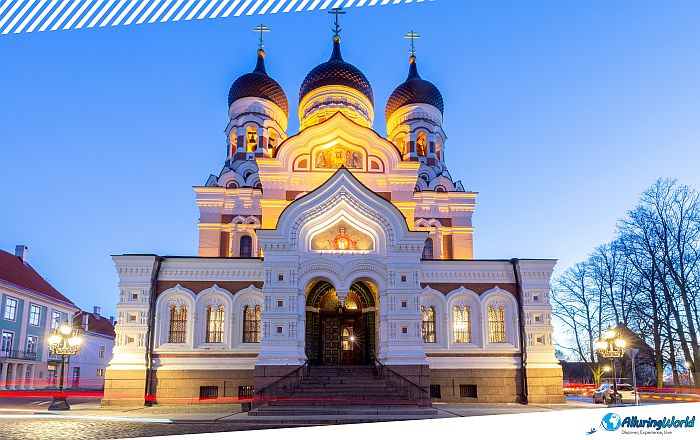
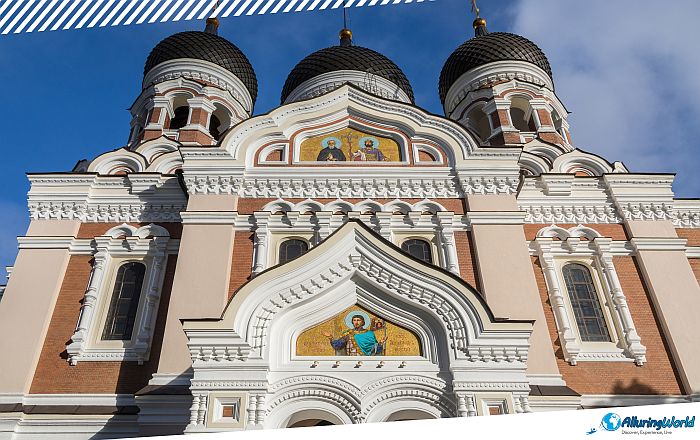
From the architectural standpoint, Alexander Nevsky Cathedral is a marvelous piece of the Russian Revival or fin de siècle style of Russian Orthodox architecture, which incorporates numerous elements of 17th-century Moscow design. The cathedral was designed by Mikhail Preobrazhensky, who was a famous St. Petersburg architect, and did impeccable work with this amazing structure. One cannot fail to notice the five domes of the cathedral with their bright Orthodox crosses crowning them and making an impressive contrast to the red and white brickwork of the walls decorated with tiles and stone details. The very architecture of Alexander Nevsky Cathedral makes the building look dominating over its surroundings, thanks to its vertical lines accentuating its height. Being located on the top of the hill, the cathedral symbolically dominates the historic Estonian territory of Toompea.
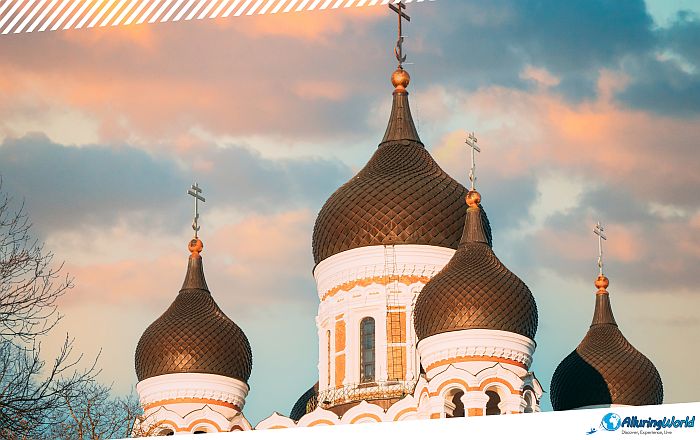
One of the unique features of the cathedral is the bell ensemble. The cathedral boasts the biggest bell ensemble in all of Tallinn, and it consists of eleven bells. The largest bell, which is the biggest one in Tallinn, weighs fifteen tons. The presence of such bells gives out signals of religious rituals and important events throughout the capital. Both the presence of onion-shaped domes and a huge bell tower contribute to the cathedral being seen from almost any part of Tallinn. Interestingly, right at the top of the entrance, one can notice the mosaic panels, which were designed by Alexander Frolov.
From the moment one enters, it becomes clear that the cathedral has an extremely luxurious interior design. For instance, the nave is adorned with mosaics and frescoes that renowned Russian painters created. In addition, the pictures depict stories associated with religion and history. An iconostasis is another luxurious interior wall adorned with numerous icons and holy paintings, which acts as a partition between the nave and the sanctuary. Intricate wood carvings, luxurious gilded designs, beautifully designed chandeliers, and brightly colored murals create a sensory interior design that creates a perfect blend of artistry and spirituality.
The history of the cathedral cannot be separated from its political symbolism. The cathedral was built by order of Tsar Alexander III, and it is a component of an even larger Russification project that sought to establish dominance over the Baltic provinces. For Estonian nationalists, the cathedral symbolized imperial domination and the foreign presence in their land, especially considering the fact that it was built right opposite Toompea Castle, the main symbol of the country, together with the Tall Hermann Tower.
ADVERTISEMENT
Once Estonia declared its independence in 1918, several calls were made for the destruction of the cathedral, and the plan started moving forward with the demolition. The Estonian Parliament accepted a bill in 1924 to start the demolition process, but due to the design’s complexity, coupled with a lack of funds and the immense structural stability of the building, the proposals were unfeasible. In today’s context, such historical animosity gives the building an added cultural and political meaning, turning the cathedral into a symbol of the country’s fortitude as well as its complex history with other nations.
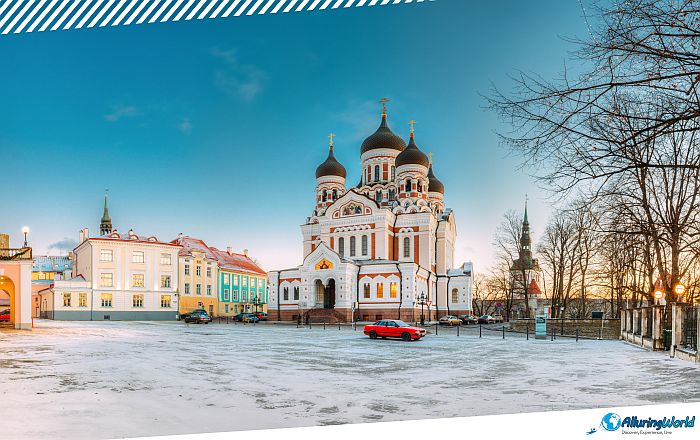
The modern Alexander Nevsky Cathedral we see today serves as an active center of the Estonian Orthodox Church of the Moscow Patriarchate, and it is also one of the main attractions for tourists that should not be missed. Tourists may either admire the beauty of the architecture of the cathedral while standing on the outside looking at the cathedral’s domes, brick structure, and decorations, or they may enter the cathedral and be amazed by the beauty of the interior.
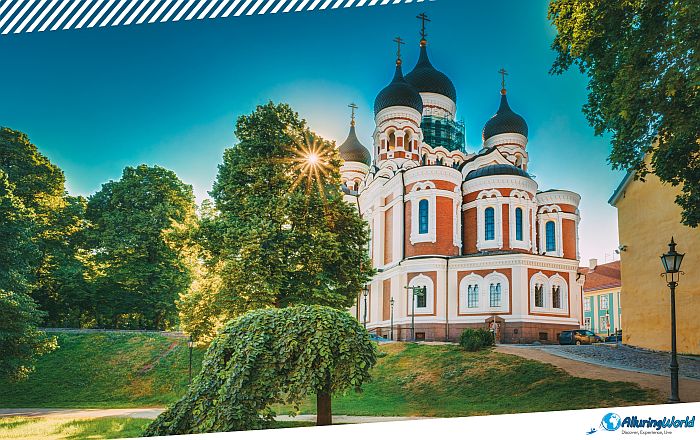
The entrance is free, and as soon as you enter the religious structure, you are captivated by its immense interior. Please be aware that taking photos inside the church is strictly forbidden, and you should follow these rules to be respectful. The illuminated domes and mosaics create an almost magical atmosphere in the cathedral, and you will leave with a great impression. Being located on Toompea Hill, the cathedral provides great opportunities to see other landmarks of the city, like the parliament building and medieval castle walls.
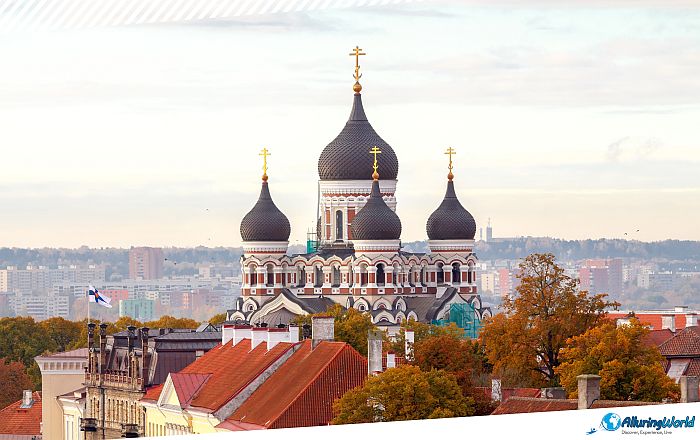
A visit to Alexander Nevsky Cathedral is not only a tour to be taken, but it is a deep immersion into the history of Estonia. Even though it is not Estonian-made, it is still something that many Estonians can appreciate. Overall, the church is an embodiment of the combination of different cultures, religions, and politics that have developed the city for centuries. It will be an interesting detail for those who are keen on arts, architecture, or history because it gives an opportunity to learn about the history of Russian Orthodox temples and the culture of the end of the 19th century, and about the story of Estonia during the imperial period.
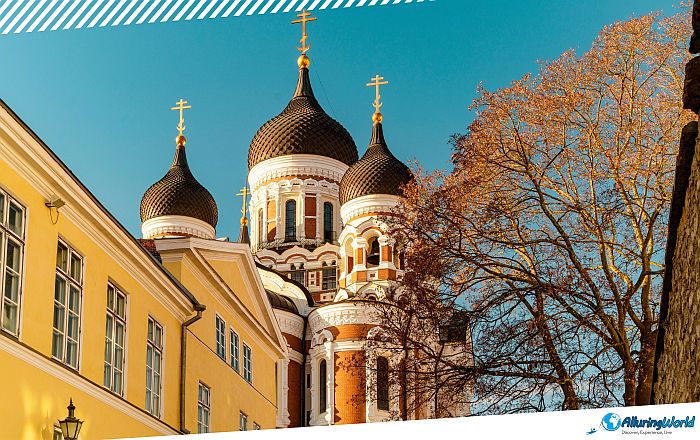
To conclude, it would be imperative for every visitor to Tallinn to visit Alexander Nevsky Cathedral as it will give one insights into the culture and religion in Estonia while also offering some understanding of its rich history. The building’s presence on Toompea Hill, the onion domes, mosaics, and bells all add to the beauty of the place, which leaves visitors fascinated. Finally, it can be stated with certainty that the cathedral will offer visitors a sense of Estonia’s history and struggles as well as achievements through its architecture.