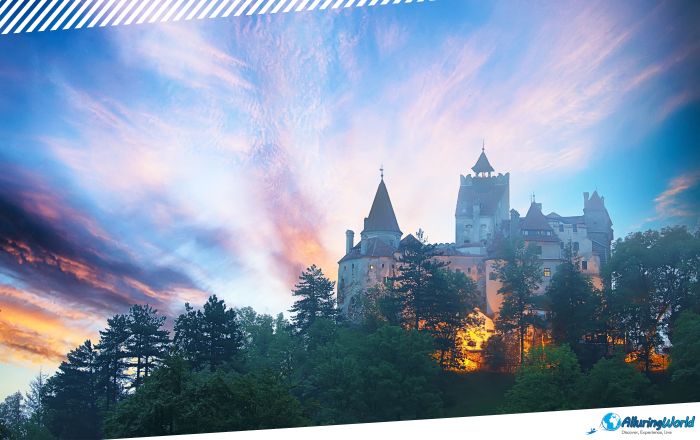
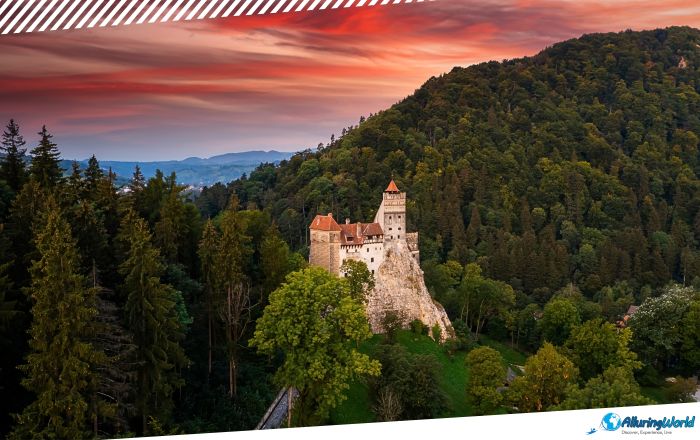
Bran Castle is a historic castle that is considered a great national monument and landmark in the Republic of Romania, and it is located near the Commune of Bran, in the immediate vicinity of the city of Braşov. Standing as a sentinel over the Rucăr-Bran Pass, it is strategically positioned atop a 61 m (200 ft) rock, offering a commanding view of the surrounding valley.
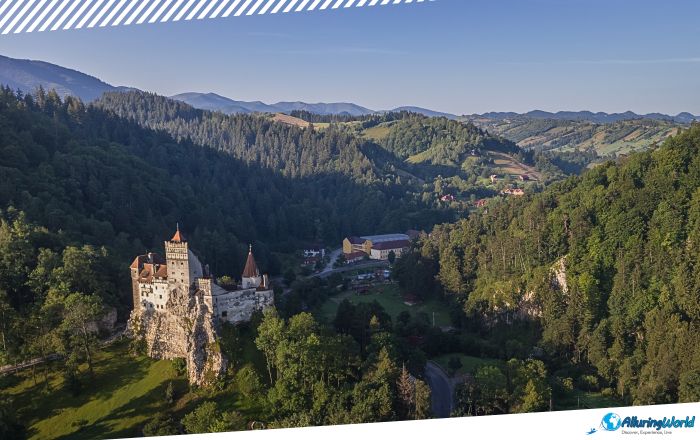
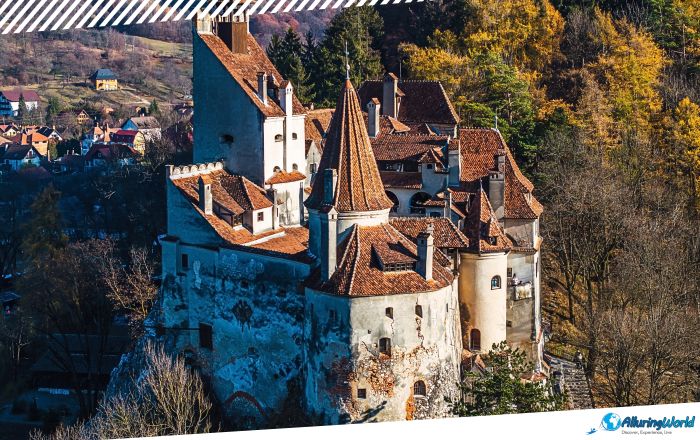
Situated on the border between the historic regions of Transylvania and Wallachia, Bran Castle is commonly known as Dracula’s Castle, and it is the home of the titular character in Bram Stoker’s Dracula. Because the castle is surrounded by an aura of mystery and legend and perched high atop a high rock, Bran Castle owes its fame to its imposing towers and turrets that are easy to recognize. While Stoker never actually visited Romania to get first-hand knowledge of Bran Castle, his vivid descriptions of a crumbling fortress on the edge of a “terrific precipice” align perfectly with Bran’s jagged limestone silhouette.
This association is further bolstered by the historical and almost mythical figure Vlad III Dracula, who is also known as Vlad the Impaler. He was the Voivode of the historic Wallachia, and he was the Voivode three times between 1448 and his death. Regarded as a national hero in Romania due to his opposition to the Ottoman Empire, he is considered to be one of the most important rulers in Wallachian history, who never really owned the castle.
His association with Bran Castle is probably because Vlad III Dracula was likely imprisoned within its walls for several weeks following his capture by the Hungarian King Matthias Corvinus in 1462, although certain historical sources cannot really confirm this. It is historically acknowledged that Vlad III Dracula was imprisoned by the Hungarian King Matthias Corvinus from 1462 to roughly 1474-1475, after his betrayal by the shifting loyalties of his noblemen (boyars) and the treacherous political landscape between the Ottoman Empire and Hungary. After fleeing to Transylvania for aid, Vlad was captured and transported as a captive to Visegrád and Buda. The imprisonment likely resulted from political maneuvering, with Matthias needing a bargaining chip with the Ottoman Empire.
Still, Bran Castle was built on the site of a Teutonic Knights stronghold dating from 1212, but some sources suggest that this structure was destroyed by the Mongols in 1242. Moving forward, the castle was first documented in an act issued by Louis I of Hungary on 19 November 1377, giving the Saxons of Kronstadt, nowadays known as Braşov, the privilege to build the Citadel.
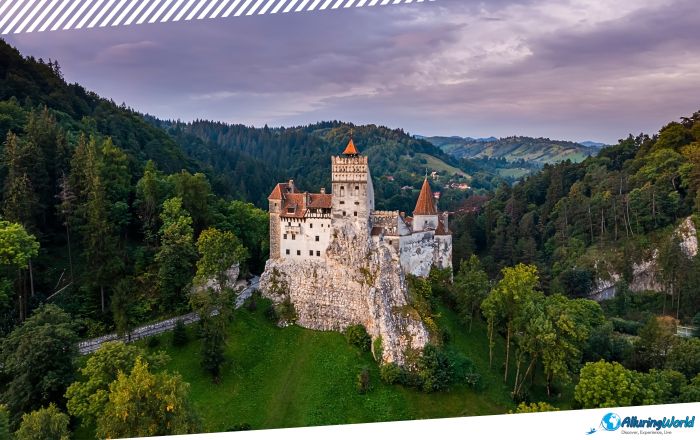
This construction of Bran Castle served a dual purpose; first, it was to defend the southeastern borders of Transylvania, and second, to regulate the vital trade route passing through the Carpathian Mountains. In 1438–1442, the castle was used in defense against the Ottoman Empire, but as the Romanian regions fell under Ottoman rule, in a sort of political maneuver, and later they gradually became tributary states.
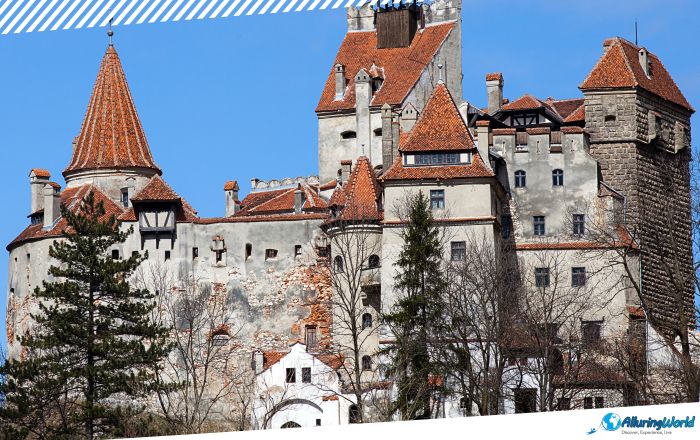
The architecture of Bran Castle is a striking example of the Gothic-Transylvanian style, characterized by its irregular, defensive silhouette that conforms to the jagged limestone cliffs upon which it sits. The structure is comprised of four main towers: the Powder Tower, the Observation Tower, the Eastern Tower, and the Gate Tower, each connected by thick exterior curtain walls that enclose a central inner courtyard.
ADVERTISEMENT
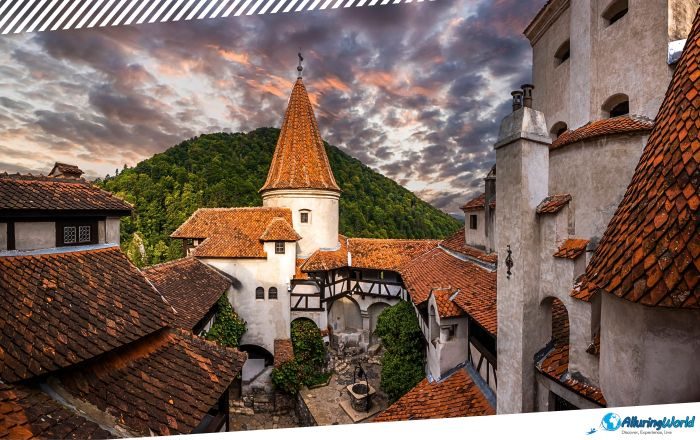
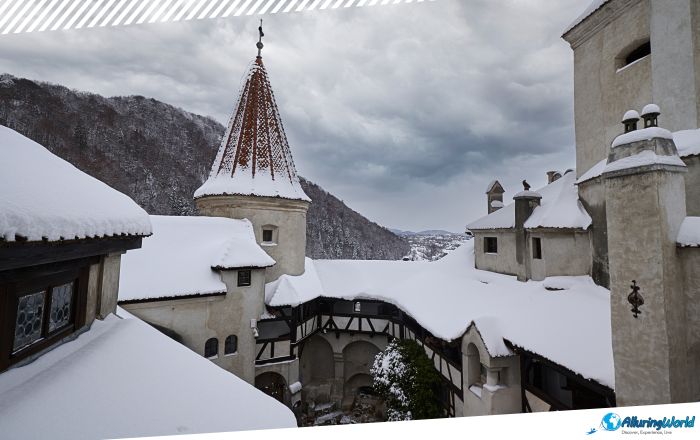
This courtyard serves as the heart of the fortress, featuring a traditional Mediterranean-style well and wooden galleries that provide access to the labyrinthine interior, while the interior is a complex network of narrow, winding stone staircases, vaulted ceilings, and secret underground passages. Among these passages is the famous Secret Stairway that once connected the first and third floors for rapid military movement. Its aesthetic is defined by the contrast between stark, whitewashed walls and dark timber framing, punctuated by red-tiled roofs and lancet windows that offer strategic vantage points over the surrounding mountain pass.
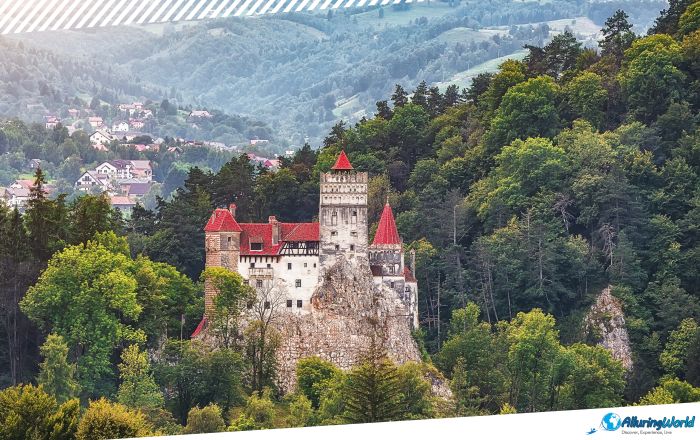
Throughout time, Bran Castle became a customs post on the mountain pass between Transylvania and Wallachia, where a tax of 3% was levied on all goods entering or exiting the territory, so it really had great importance at that time. Interestingly, Bran Castle belonged to the Hungarian Kings, but due to King Vladislas II’s failure to repay loans, the city of Brașov gained possession of the fortress in 1533, and up until the middle of the 18th century, Bran played a military strategic role.
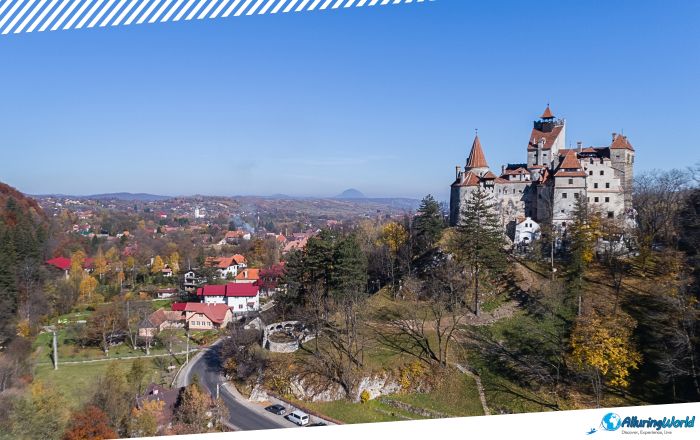
During this era, the structure underwent several renovations to withstand the evolution of gunpowder warfare, including the addition of the southern tower and the reinforcement of the exterior walls. Later in 1920, the castle became the royal residence within the Kingdom of Romania, becoming the favorite home and retreat of Queen Marie.
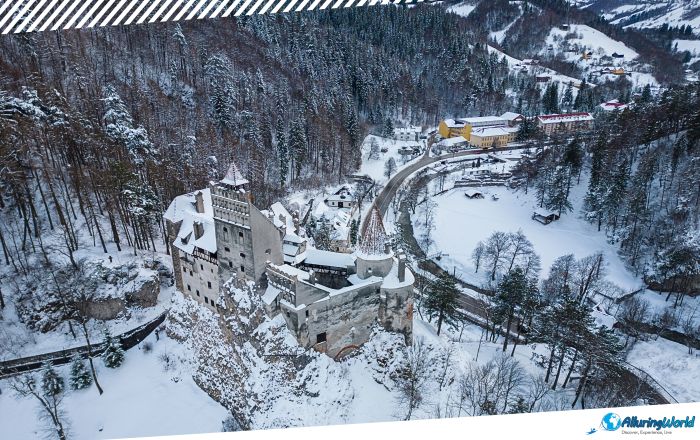
The Queen, a granddaughter of Queen Victoria, transformed the austere medieval fortress into a warm, summer residence, commissioning the architect Karel Liman to add an elevator, a tea house, and lush gardens, while preserving the castle’s authentic character. At that time, with the finalization of the reconstruction, Bran Castle was an important summer residence of the then-royal Romanian family, thus becoming an even greater symbol of Romania.
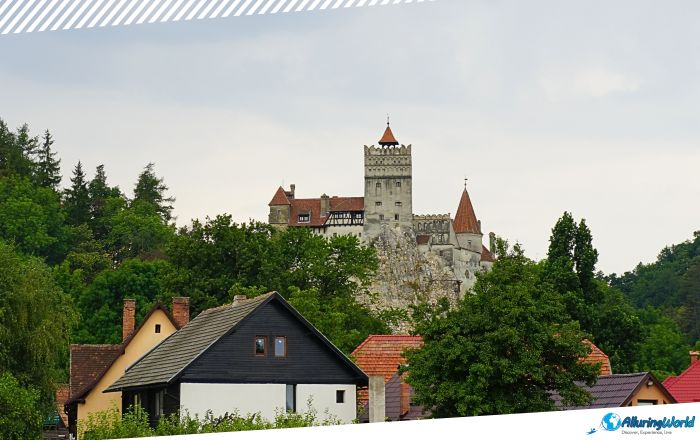
Nevertheless, the castle in 1948 was seized by the communist regime following the forced abdication of the Romanian Royal Family, and after this event, the property fell into a state of neglect for decades. Bran Castle’s fate changed in the late 1950s when it was eventually reopened as a museum of feudal, and stayed as such even until the regime change in 1989.
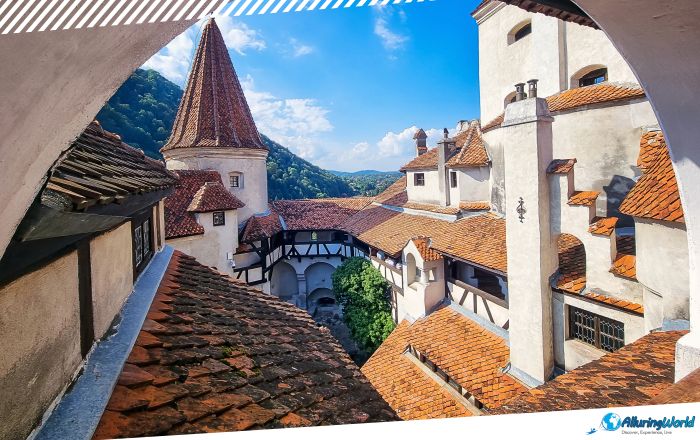
After a long period of time, in 2005, the Romanian government started returning ownership of the illegally expropriated places, and a year later, Bran Castle was returned to Dominic von Habsburg, the son and heir of Princess Ileana. This restitution marked a significant turning point in Romanian post-communist law, recognizing the heritage rights of the Archduke and his sisters.
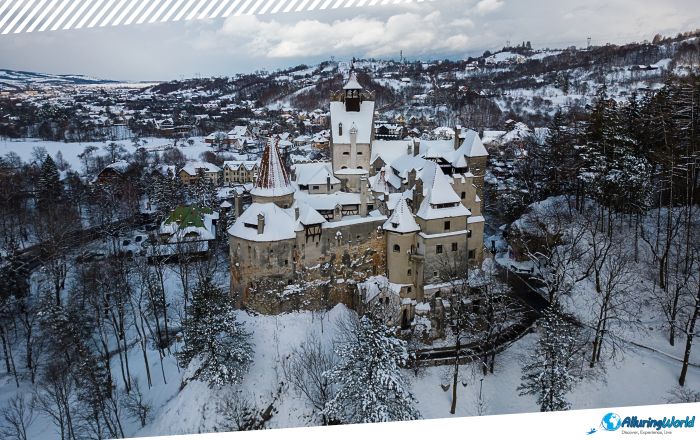
Nowadays, Bran Castle serves as a refurbished castle for the public as the first private museum of the country, attracting a lot of tourists. While visitors can explore the narrow winding stairways, underground passages, and rooms filled with 19th-century furniture and art collected by Queen Marie, it is probably one of the most visited attractions in Romania. Every year, hundreds of thousands of guests from around the globe journey to the heart of the Carpathians to witness the intersection of royal history and the enduring myth of the vampire.
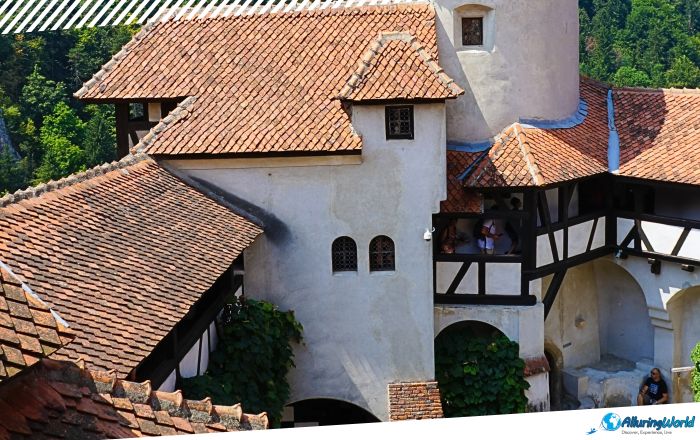
In conclusion, Bran Castle has seen a lot of events, tragedies, conquests, and much more throughout its history. Being today one of the best reconstructed structures in the country, Bran Castle showcases the different times when Romania was divided into separate historic regions, and Transylvania has the honor of being the location of this imposing and very alluring castle. Overall, if you are visiting Romania, a visit to Bran Castle is a must-do for you, since you will be transported through time, and will see a different part of Romania that is mostly shown in Hollywood movies.