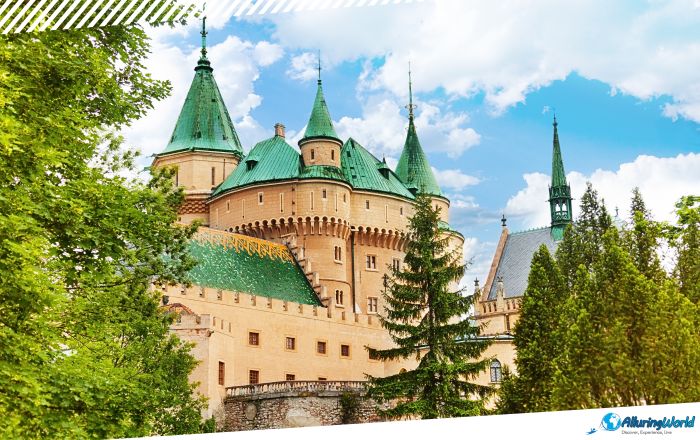
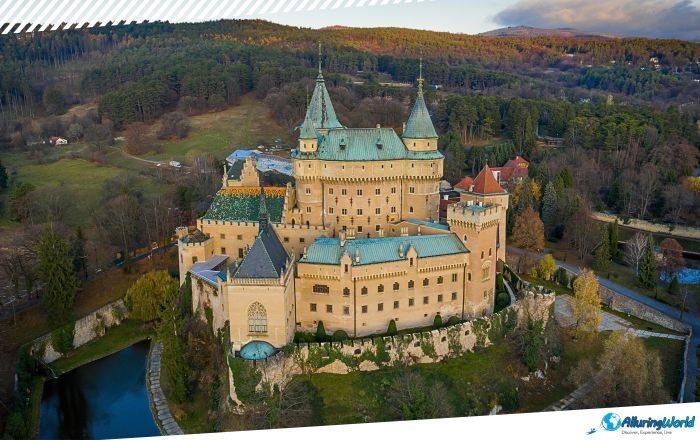
Bojnice Castle is a big medieval castle that is located in the historical town that has the same name, Bojnica, within the central part of the Slovak Republic. Bojnice Castle isn’t just a historical site where some events happened, but it is rather a portal to a world where medieval history meets the whimsy of a storybook. Perched majestically on a travertine hill overlooking the historical town of Bojnice, it is widely regarded as one of the most significant and oldest monuments in the country.
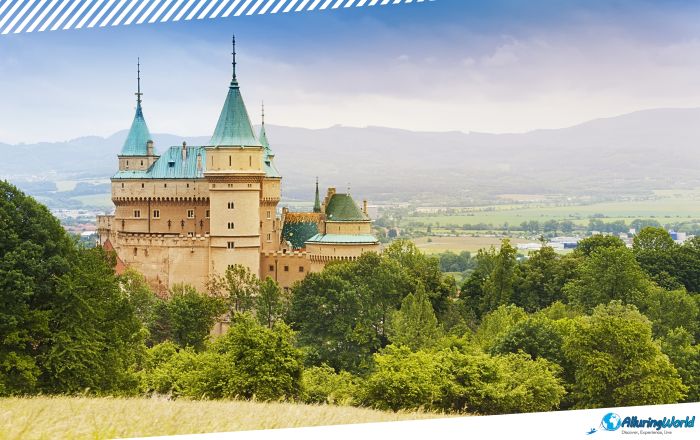
While first mentioned in 1013 as a wooden fortification, the castle’s stone heart began to beat in the 12th century. Ever since the first stone was laid on the structure, it continued to be shaped throughout the centuries as it underwent massive architectural shifts, with major reconstructions in 1528, 1889, and 1950. During these periods, the Bojnice Castle was transformed from a simple fortification to Gothic and Renaissance styles, so that it would get the final shape we are able to witness today.
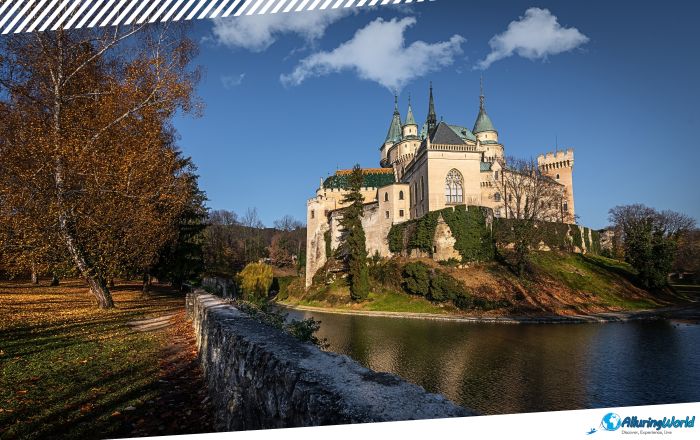
Throughout this time, the castle was the seat of the most prestigious Hungarian noble families, but probably, there is no other name that is more synonymous with the castle’s grandeur than the Pálffy family, its final private owners. The Pálffy family emerged as a powerful one in the 16th century, as they were Hungarian nobility, which was later incorporated into the Austrian nobility and held significant positions in the Habsburg monarchy.
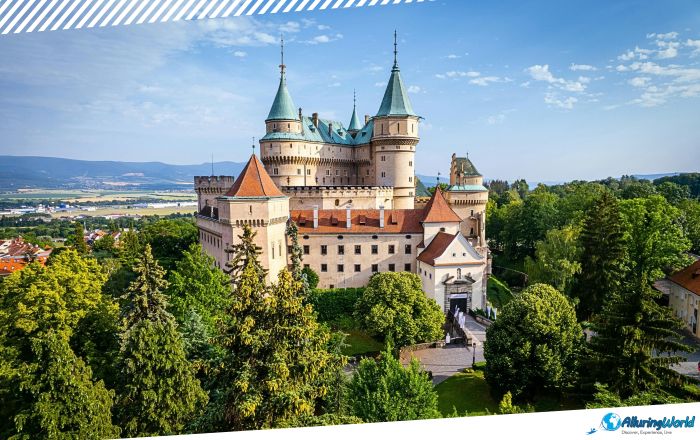
Still, the “Romantic” silhouette we admire today is the result of a labor of love by Count János Ferenc Pálffy. It was Count Pálffy who, between 1889 and 1910, commissioned architect J. Hubert to execute a total reconstruction of Bojnice Castle. Since Hubert was inspired by the châteaux of the Loire Valley in France, he decided that Bojnice deserves the same reconstruction, and he managed to add to the redesign a blend of Romanticism with neo-Gothic flair.
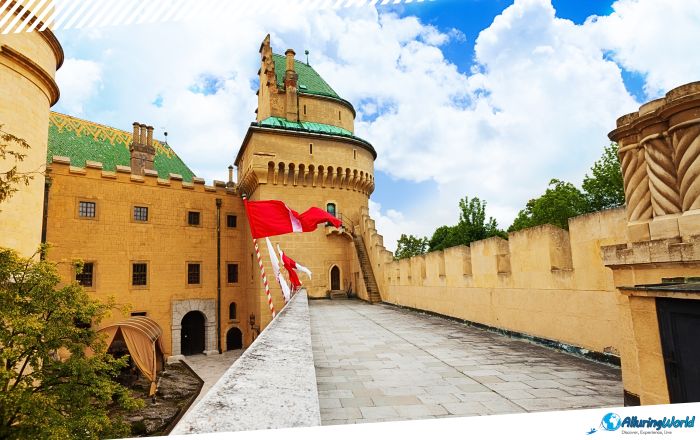
Since Count Pálffy was a connoisseur of art and history, intending for the castle to be a museum for his private collections, he did not manage to see the castle in its glory because he died in 1908. This was unfortunate because it was just two years before the reconstruction was completed, thus never seeing his masterpiece in its final form and intent. After Count Pálffy’s death, the castle changed ownership several times, but the last private owner, pre-WWII, was Jan Antonín Baťa, also known as the “Shoe King,” who purchased it in 1939.
ADVERTISEMENT
Despite thinking that Bojnice Castle had enough historical events that happened in it, as a surprise, the middle of the 20th century brought even more dramatic shifts. In 1945, the castle was seized by the Czechoslovak government as part of post-WWII nationalization, specifically targeting assets owned by Czech entrepreneur Jan Antonín Baťa. Bojnice Castle was confiscated because he and his properties were deemed to have been in collaboration with or unprotected during the war, ultimately becoming state property.
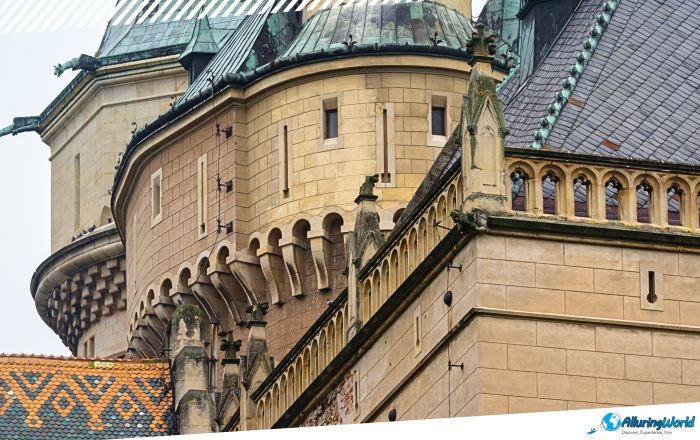
Tragedy struck on 9 May 1950, when a devastating fire broke out, threatening to erase centuries of history, but since the castle was state-owned, the country funded the very much needed restoration that followed, which was meticulous, consequently successfully reviving the castle’s distinctive silhouette. The silhouette is clearly defined by the steep, pointed roofs of its palaces, chapel, and towers, giving us the majestic fairytale, Romantic architectural style.
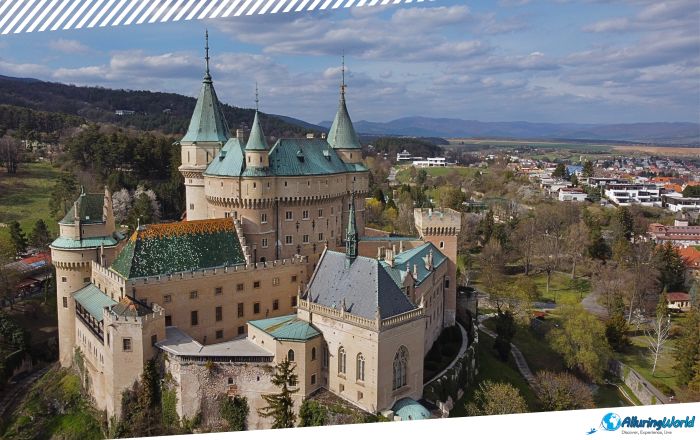
Today, Bojnice Castle is open to the general public, and it serves as a branch of the Slovak National Museum. If you come to this magical place, then you can explore the various rooms and exhibitions that speak about the history that occurred here. You can see the Golden Hall, which is famous for its ceiling covered in gold leaf and carved angel faces. As an additional attraction, Bojnice also houses the Pálffy Collections, which in fact are an incredible array of original furniture and artistic artifacts collected throughout time. Another interesting feature is the Altar of Bojnice, which is a rare 14th-century Gothic masterpiece by Nardo di Cione. Finally, the Dripstone Cave, which is located 26 m (85 ft) below the fourth courtyard, is a natural cave connected to the castle’s well and was used as a shelter and water source.
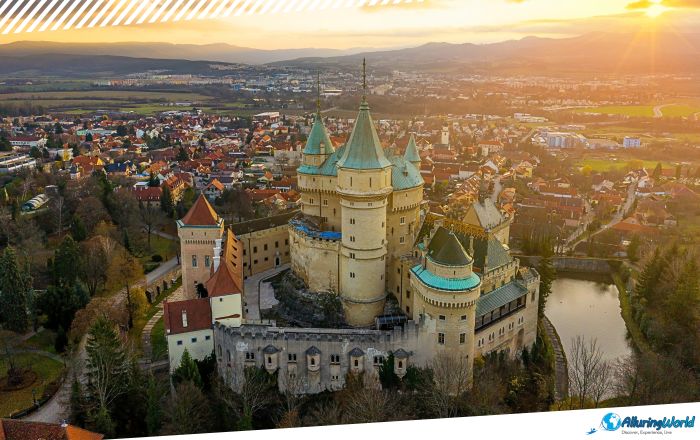
But when you think of castles in Central Europe, Bojnice Castle might not come to your mind. Still, the castle manages to keep up with the times, and its grounds are just as captivating as the interiors. The surrounding park features the famous King Matthias Lime Tree, one of the oldest trees in Slovakia, under which King Matthias Corvinus used to hold court. But if you seek a thrill, then the International Festival of Ghosts and Spooks, held every May, is something that you should not miss. This event brings legends to life, drawing thousands of visitors who want to experience the “haunted” side of Slovak history. With its moat, towers, and lush greenery, it truly feels like a Disney-esque fantasy come to life.
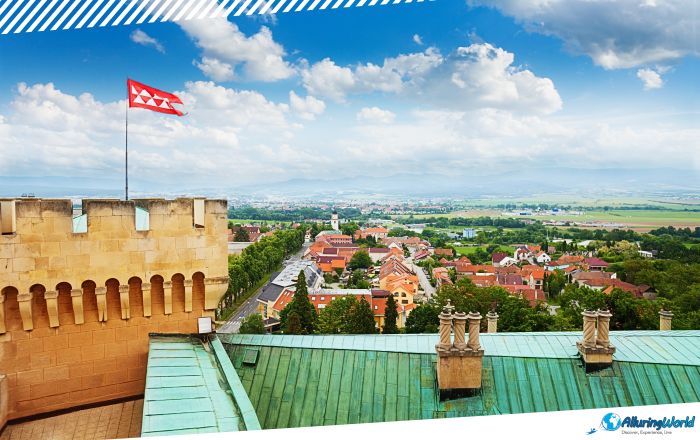
In conclusion, Bojnice Castle stands as more than just a stone monument. This is a living testament to the enduring spirit of Slovak history, the Slovak people, and starting from a humble wooden structure to a Romantic masterpiece, the castle is a proof that certain historical structures deserve to be saved and properly restored.
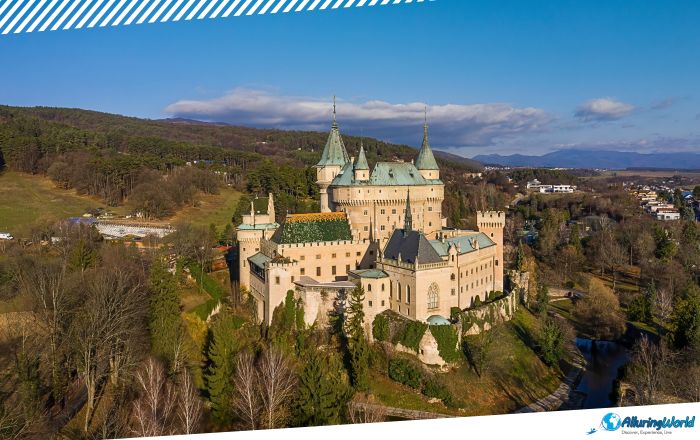
Even with the survival of wars, fires, and the changing tides of political power, Bojnice Castle continues to connect the rigid history of the Middle Ages and the whimsical beauty of a fairy tale, hence offering visitors a rare glimpse into a world where art, nature, and architecture exist in perfect harmony. If you decide to visit Slovakia because you are drawn by the haunting legends of the May festival, the silent dignity of the Pálffy art collection, or the simple peace of the surrounding gardens, Bojnice remains an essential destination that you should not miss.