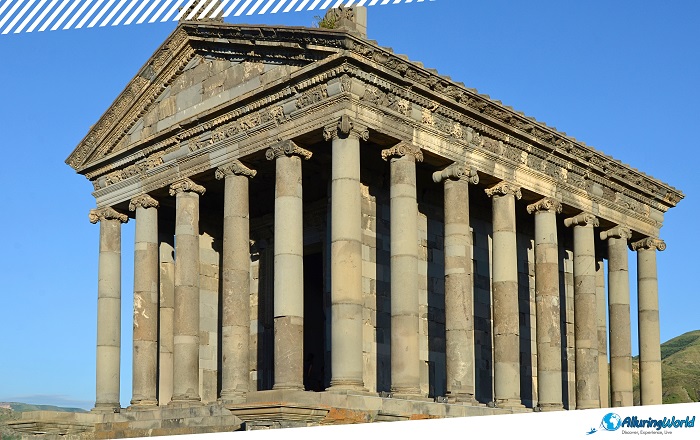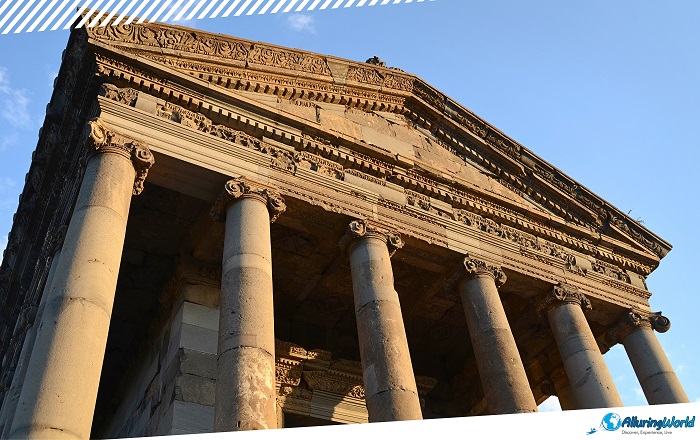
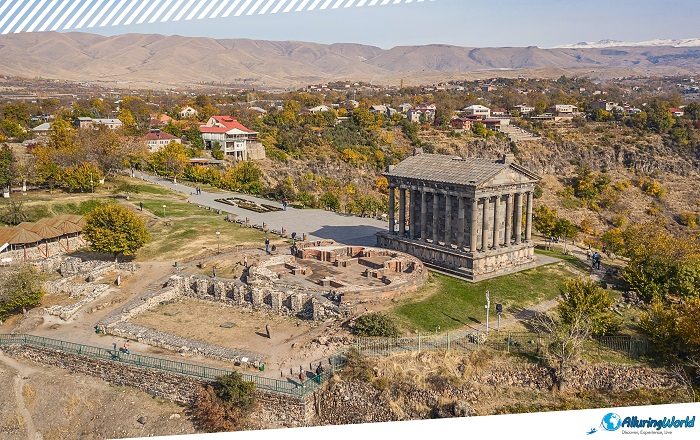
The Temple of Garni is a classical colonnaded temple structure that stands as a breathtaking testament to antiquity, and it is perched dramatically on a triangular cliff overlooking the jagged Azat River Gorge, in the village of the same name, Garni, in the southern part of the Kotayk Province, within the western part of the Republic of Armenia.
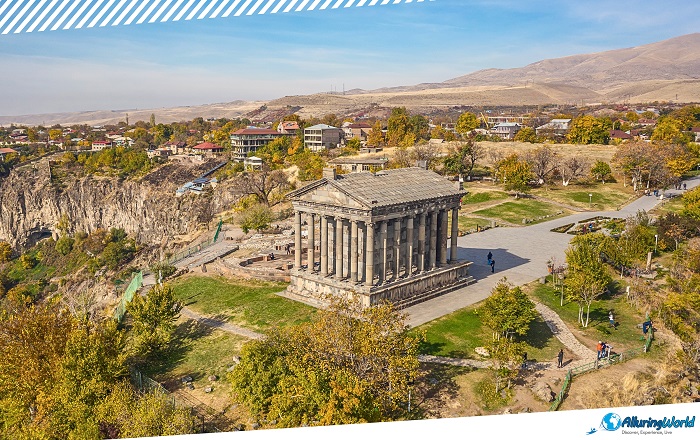
Being one of the oldest sights that can be seen in Armenia, the Garni Temple is a “bucket list” destination that captures the imagination of every traveler. Even though the travelers are expecting to encounter a standard Roman-style ruin that dates back to 76 AD, they quickly discover a far more complex and ancient narrative. The massive cyclopic stone walls protecting the site were actually first laid in the 3rd millennium BC by ancestral Armenians. These early inhabitants transformed the region into a powerhouse of metallurgy and trade, bridging the gap between Mesopotamia and Asia Minor.

Today, Garni is celebrated as the only surviving Greco-Roman colonnaded building in the former Soviet Union, which continues to draw more travelers to this land in the Caucasus region. This reconstructed masterpiece features twenty-four Ionic columns that reach toward the heavens, symbolizing the twenty-four hours of the day. Despite the fact that there is no concrete evidence to pinpoint who really commissioned the Temple of Garni, most historians agree that it was commissioned by King Tiridates I in the first century AD, and it was dedicated to Mihr, the Zoroastrian-influenced god of the sun.
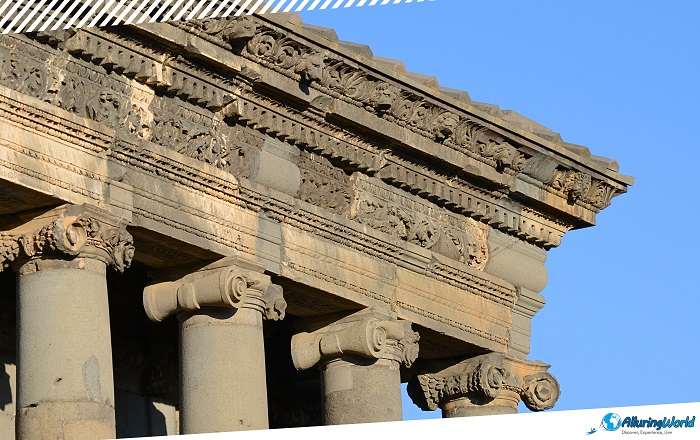
With Armenia’s conversion to Christianity in the early fourth century, the structure was repurposed as a cooling royal summer house for Khosrovidukht, who was the sister of King Tiridates III. Some scholars argue that we can bear witness to this alluring building today simply because it was believed to be actually a tomb. At that time, all temples that were considered pagan were mostly destroyed, and this was an architectural detail that may have saved it from those religious zealots.
ADVERTISEMENT
Though the great 1679 earthquake reduced the temple to a heap of ruins, there was a surge of archaeological interest in the 19th century that paved the way for its meticulous reconstruction. This reconstruction of the Garni Temple happened between 1969 and 1975, and thanks to that, the site today is more than just a temple. This is a vital part of the Fortress of Garni, which was a former stronghold that was mentioned by the Roman historian Tacitus as Gorneas.
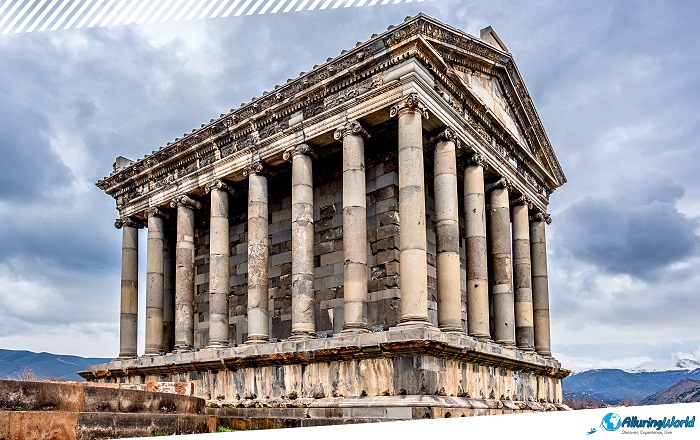
Architecturally seen, the building is a fascinating hybrid that follows a somewhat ancient style that originated in the 7th century BC, and it boasts distinct local flourishes. Experts have labeled it “Armenian-Hellenic” to honor the indigenous craftsmanship, such as the intricate sculptures of plants and geometric patterns on the pediment. Even the staircase at the front of the temple is very unique since it features nine unusually high steps. Each of these steps is 30 cm (12 in) tall, and they have been designed to force visitors into a slow, respectful climb toward the divine.

Ultimately, the Temple of Garni is more than a mere collection of stones. This represents a resilient symbol of Armenian identity that has survived empires, religious shifts, and the literal shaking of the earth. If your travels are taking you through Armenia, then a visit to this marvel of engineering, the mystery of the Mihr sun worship, or the panoramic views of the Armenian highlands is compulsory.
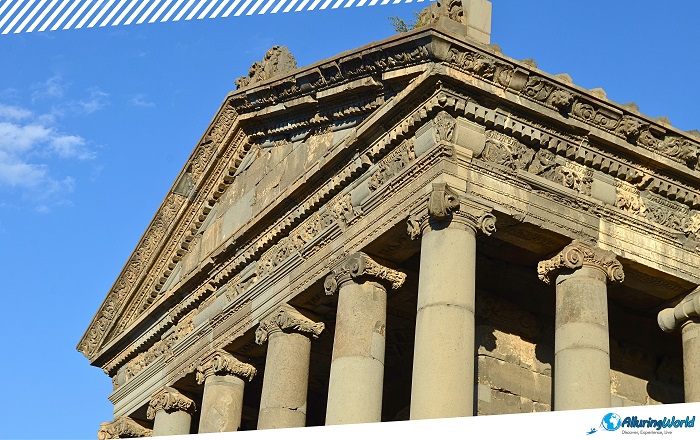
Overall, Garni offers a profound connection to the ancient world while standing on its high-stepped podium. Nowadays, you do not see a monument, but rather an experience of the enduring spirit of a culture that has acted as a bridge between East and West for millennia.