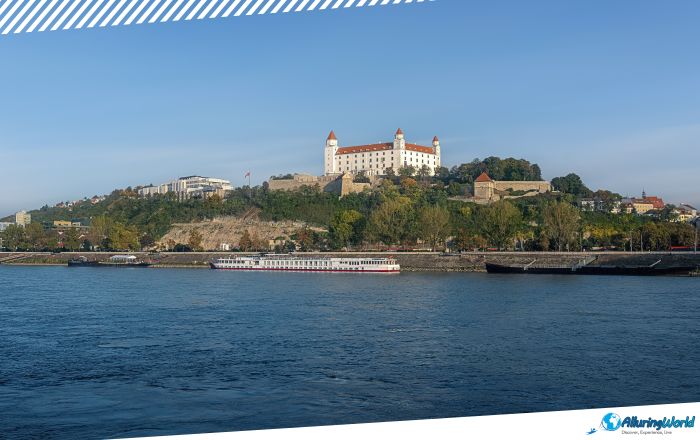
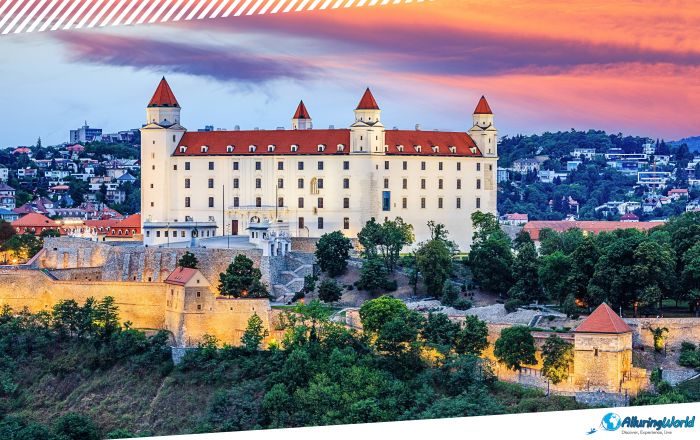
Bratislava Castle is a historic castle that is perched on a rocky spur of the Little Carpathians over the Danube River, located in the capital city of the Slovak Republic, Bratislava. As seen from a distance, the Bratislava Castle doesn’t just overlook the Danube, but in reality, it commands it. The castle is often compared to something like an “inverted table” due to its distinctive four corner towers, and its close resemblance to a table being upside-down, but still, this National Cultural Monument serves as the stony soul of the Slovak capital.
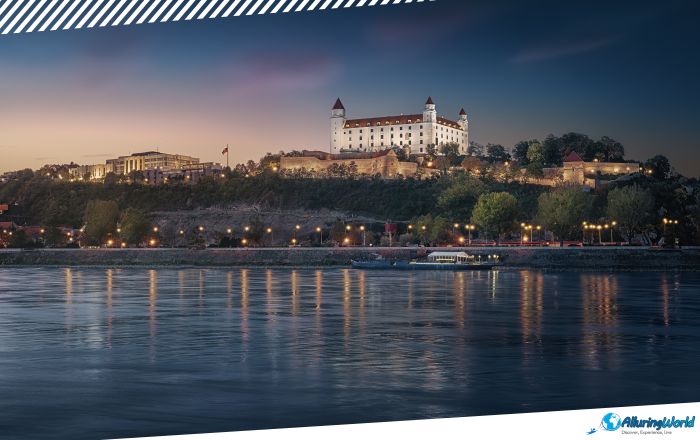
The ground beneath the Bratislava Castle has seen more history than most entire cities in Central Europe. Prior to being first mentioned as a castle, there is a first written mention of Brezalauspurc Castle in 907 AD, which marked the famous battle between Bavarians and Magyars. At that time, the hill was a Celtic power center of the Celtic Boii tribe. Throughout time, archaeologists have discovered “Biatecs,” high-quality Celtic gold coins, proving that this was a sophisticated hub of trade and minting in the 1st century BC.
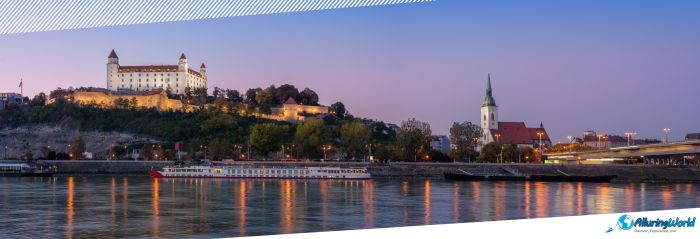
During the Roman era, the hill served as a vital part of the Limes Romanus, which at that time was the fortified border of the Roman Empire. Since Bratislava Castle had an advantageous, strategic position, it allowed soldiers to monitor the vast plains and the winding Danube, long before the first pre-Romanesque stone palaces rose in the 11th century.
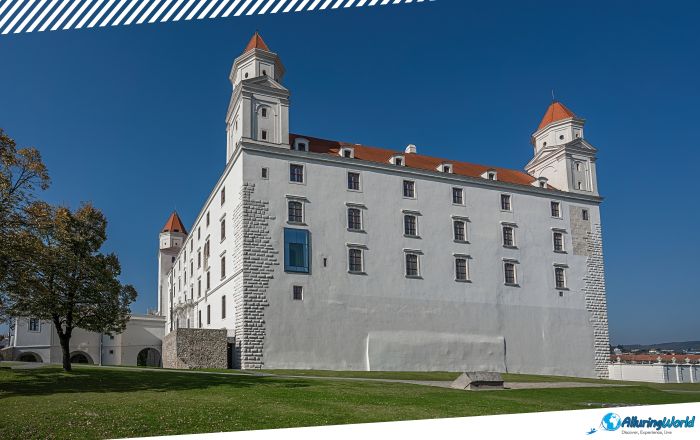
The castle’s silhouette, which we can see today, started to take its familiar shape in 1423 under the rule of King Sigismund of Luxembourg. He transformed the site into a formidable and quite impressive for its time Gothic fortress, primarily to defend against Hussite attacks. The Sigismund Gate, with its intricate late-Gothic stonework, remains the most authentic surviving piece of this era, and you can really see the details that have been left on the gate.
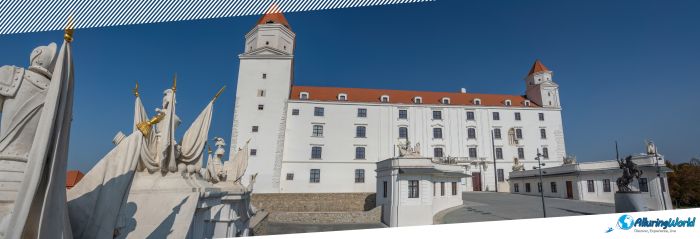
Nevertheless, as Slovakia was not yet formed as a country by the 16th century, and it was instead an integral part of the Kingdom of Hungary, the castle became the “safe house” for the Hungarian Crown Jewels. With the expansion of the Ottoman Empire on the Balkan Peninsula, Bratislava, which at that time was called Pressburg, became the capital of the Kingdom of Hungary, and the castle was upgraded with Renaissance flourishes. This was probably the most notable reconstruction in its history, as it was intended to keep safe the most important things of the former kingdom, while keeping them safe behind thick stone walls.
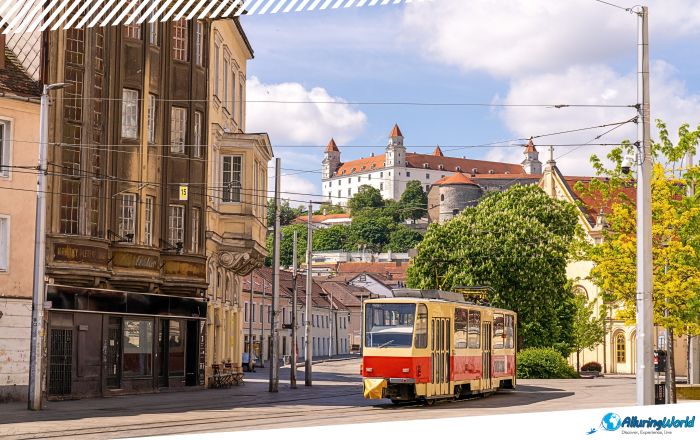
Moving forward, the 18th century brought a touch of Viennese elegance, as the Austo-Hungarian Empire and its ruler, the Empress Maria Theresa, didn’t just see it as a fortress, but rather saw Bratislava Castle as a home. She ordered the construction of the Theresianum, a luxury palace filled with art, and added manicured French gardens and winter riding schools. Until this century, the Bratislava Castle was seen as a fortified place that was intended to keep its residents and important objects safe, but under her reign, the castle shifted from a site of war to a site of high-society balls and political diplomacy.
ADVERTISEMENT
The castle’s luck ran out in May 1811 because a devastating fire, allegedly started by careless Napoleonic soldiers, gutted the palace. Bratislava Castle stood in ruins for 142 years, and as the castle sat as a hollow, blackened shell, there were talks to demolish the ruins to make way for government offices in the 1950s for the Czechoslovak government.
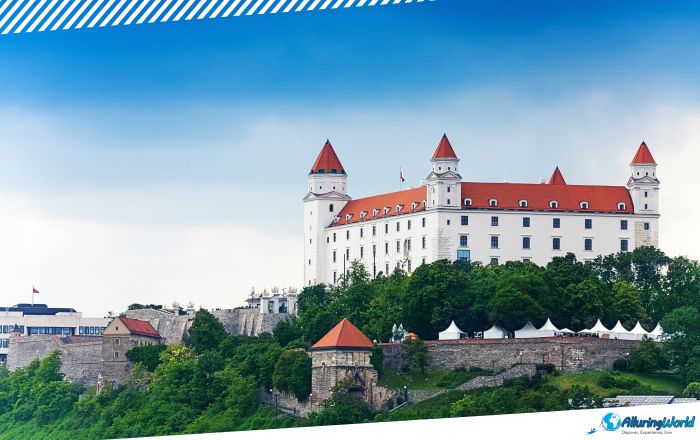
Luckily, this idea was scrapped, and a massive restoration project began in the 1950s, which was completed in 1968. This amazing resurrection saved the skyline of Bratislava. It brought Bratislava Castle once again to its former glory, thus allowing the palace to house, this time, the Slovak National Museum and the ceremonial halls of the National Council of the Slovak Republic.
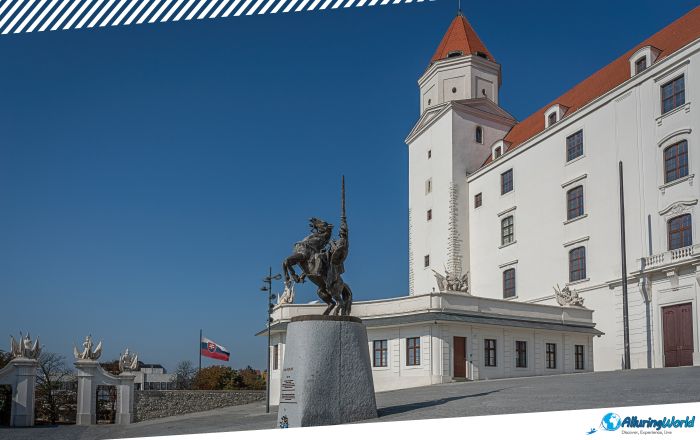
Architecturally, the Bratislava Castle has Gothic and Theresian Baroque elements that were the result of centuries of reconstruction, but some interesting details that should be mentioned are the Crown Tower. This Crown Tower is located in the southwestern section of the castle, and it is the oldest one that once held the royal regalia. If you are visiting the castle, then you can still climb it for a 360-degree view that stretches into Hungary and Austria on a clear day.
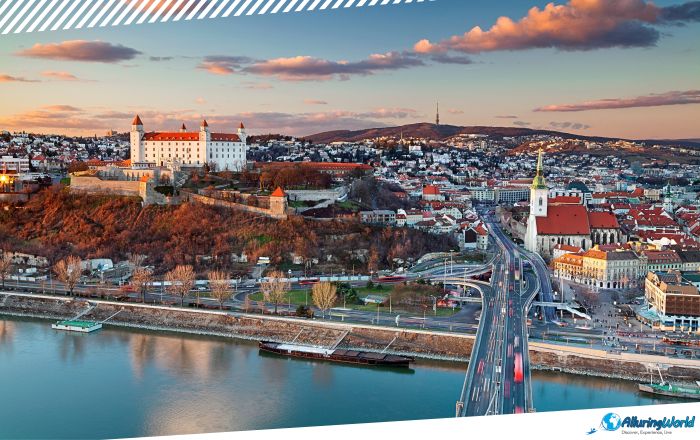
Another detail is the Deepest Secret, which is actually located in the courtyard. This was a well that is about 80 m (262 ft) deep, and as it was hand-carved into the solid rock, it was made to ensure the castle could survive a long siege and would have fresh drinking water during those harsh times.
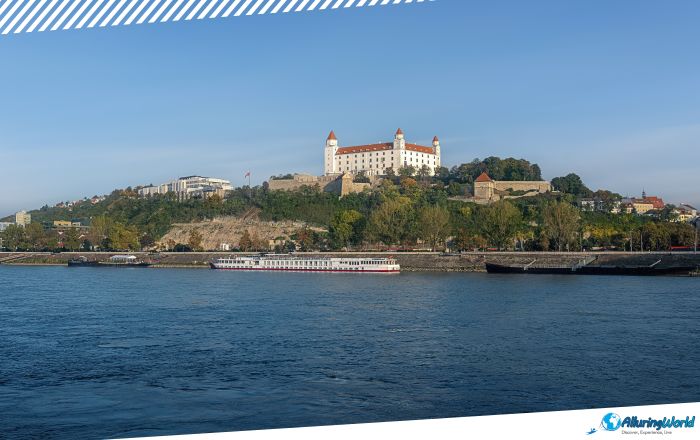
Lastly, the Baroque Garden is the recently restored garden that was based on Maria Theresa’s original plans. Today, this garden is an important feature of the Bratislava Castle because these silver-and-red gardens offer a quiet, symmetrical escape from the city’s bustle, high above the busy city streets.
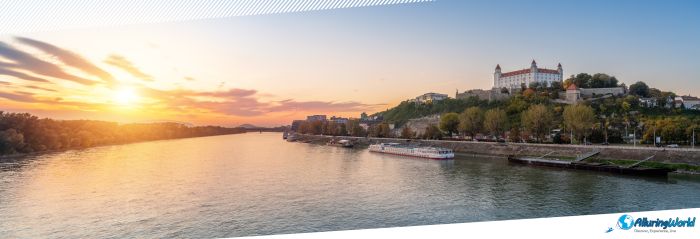
In conclusion, the Bratislava Castle stands as more than just a stone monument from historic times. This castle is a resilient symbol of Slovak identity that has survived Celtic tribalism, royal opulence, and devastating ruin, so if you are walking through its Baroque gardens or gazing at its silhouette from the Danube, the castle remains the definitive landmark of this town that will always captivate your attention. Overall, Bratislava Castle serves as a bridge between a turbulent past and a vibrant, modern European capital that is open and welcomes visitors from the entire world.