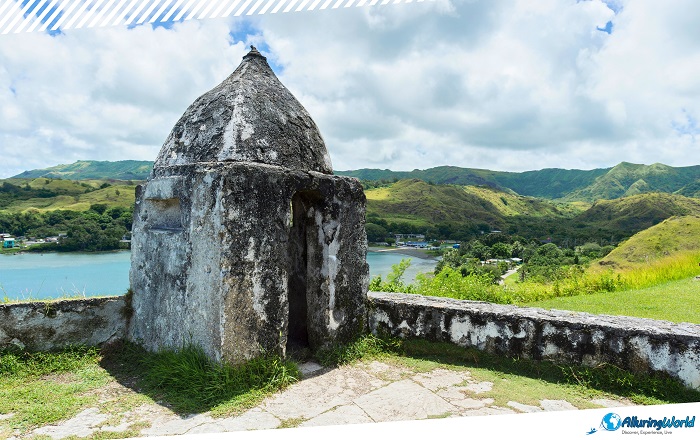
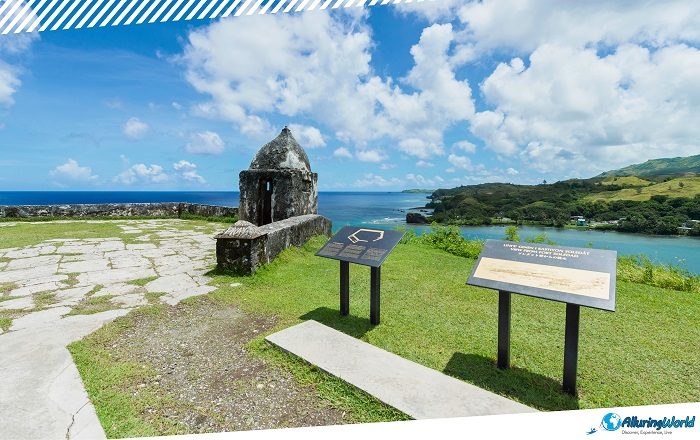
Fort Nuestra Señora de la Soledad is an important historic fortification located in the vicinity of the village of Humåtak, previously known as Umatac, within the southwestern part of the organized, unincorporated territory of the United States in the western section of the Pacific Ocean, Guam. Standing as one of the most enduring symbols of Guam’s Spanish colonial past, this fortress is perched high above the picturesque Umatac Bay on the small island, and it translates to Fort Our Lady of Solitude. Still, this is a striking reminder of the era when Guam served as a vital outpost in Spain’s trans-Pacific trade network several centuries ago, making it heavily influenced nowadays by Spanish infusion. As it was built during the late 17th and early 18th centuries, nowadays the fort remains one of the island’s most important cultural landmarks, and it attracts those visitors who are interested in history, architecture, and panoramic ocean views that reveal the same strategic vantage once valued by Spanish defenders.
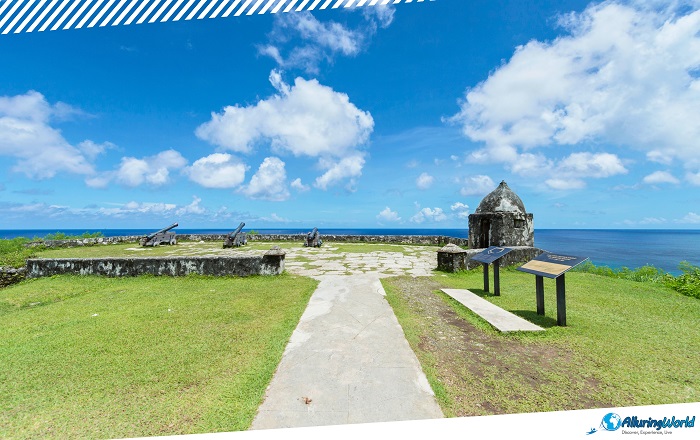
Being only about 35 km (22 mi) southwest of Hagåtña, Guam’s capital, Fort Nuestra Señora de la Soledad occupies a commanding hilltop position overlooking the bay and the open sea, giving it quite the strategic location. Overall, its location was not chosen by chance because Umatac Bay served as the official anchorage for the Spanish galleons that were traveling between Manila in the Philippines and Acapulco in Mexico, making it a crucial stopover for repairs, resupply, and protection during the long transoceanic voyage. The fort, along with others built along the coastline, was intended to safeguard these ships from pirates and rival colonial powers who posed constant threats to Spanish maritime dominance.
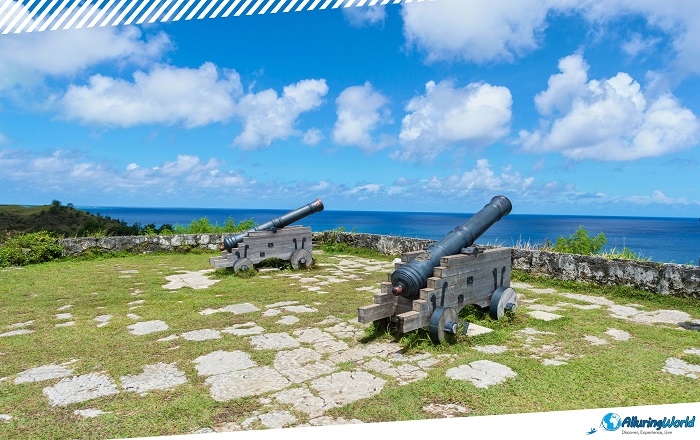
The Spanish colonial government ordered the construction of Fort Nuestra Señora de la Soledad under the administration of Governor José de Quiroga y Losada, who served in the early 1700s. Although the exact date of completion is not definitively recorded, most historians agree that the fort was built around 1802, making it one of the last of Guam’s coastal defense structures constructed during the Spanish period. It was designed as part of a network of four main fortifications that included Fort Santo Ángel, Fort San José, and Fort Santiago, all situated strategically around Umatac to ensure full defensive coverage of the bay and its approaches.
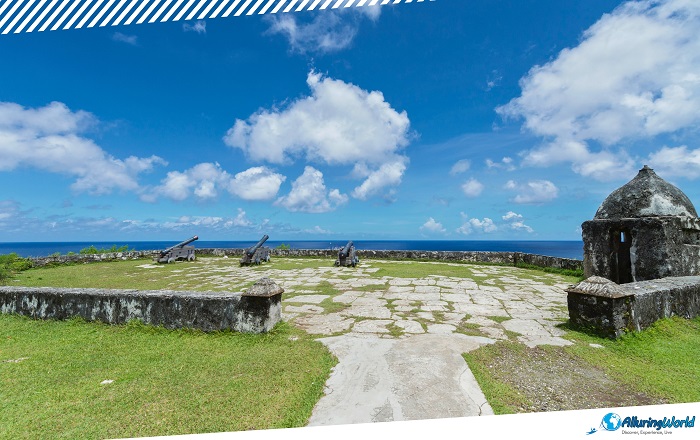
Built primarily by Chamorro labor under Spanish supervision, the fort’s construction used materials that were locally available at that time. These materials were mostly coral limestone, volcanic rock, and mortar made from burnt coral and lime, and these were chosen for their durability and availability, as importing heavy materials from abroad was impractical. The walls of the fortress, some over a meter (3.3 ft) thick, were designed to withstand both cannon fire and the harsh coastal weather conditions, including tropical storms and intense humidity. The fort’s design reflected typical Spanish colonial military architecture of the period, as it is a simple, robust, and functional rather than ornate, with an emphasis on clear lines of defense and commanding visibility over strategic areas.
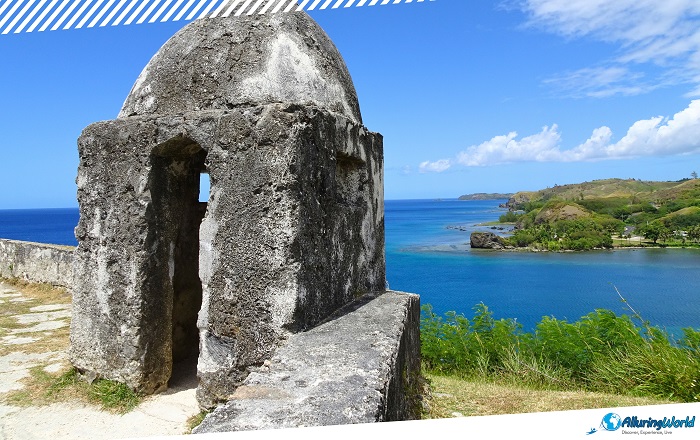
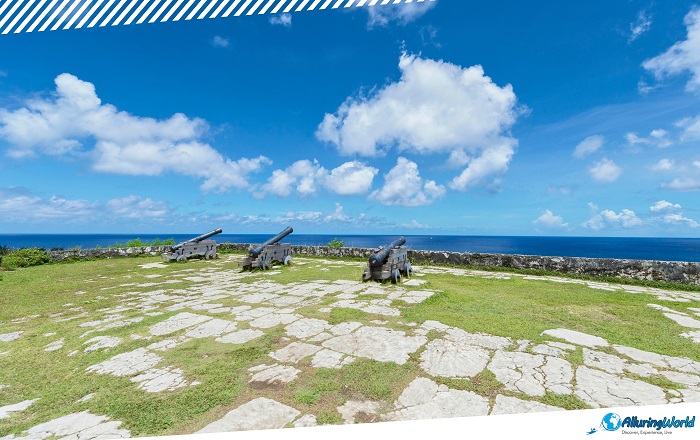
Still, the layout of Fort Nuestra Señora de la Soledad is compact yet efficient. Consisting of a square or trapezoidal platform which is bordered by thick stone parapets, there are gun emplacements facing the bay. The fort was equipped with several cannons that could be rotated to cover different angles of approach from the sea. A small guardhouse and storage area were also part of the structure, built to accommodate a limited garrison responsible for maintaining watch over Umatac Bay. From this position, Spanish sentinels could see far across the ocean, detecting approaching ships long before they reached the coastline.
ADVERTISEMENT
The importance of the fort during the Spanish era cannot be overstated. Between the 16th and 19th centuries, Guam served as the only Spanish possession in the Pacific between the Philippines and Mexico. The island was a critical refueling point for the Manila Galleons, large trading vessels that transported Asian goods such as silk, spices, and porcelain to the Americas, and in return brought silver and manufactured products back to Asia. Because Umatac Bay was the designated port of call, the protection provided by Fort Nuestra Señora de la Soledad and its sister forts was vital for the safe passage of these ships.
Throughout the 18th and early 19th centuries, the fort played an active role in deterring pirates, privateers, and hostile navies, particularly during periods of tension between Spain and other European powers. Although no major battles are recorded at the site, the fort’s very presence served as a strong deterrent. It was also an essential communication point, signaling incoming ships and coordinating defense efforts across the island’s western coast.
By the mid-19th century, however, changes in trade routes and maritime technology had gradually diminished the fort’s importance. Due to the decline of the Manila Galleon trade after 1815, as this was followed by Mexico’s independence from Spain, it simply led to Guam’s reduced role in the Pacific network. Fort Nuestra Señora de la Soledad was eventually abandoned as an active military post, left to the elements and slow decay. When the United States took control of Guam after the Spanish-American War in 1898, the fort was already in ruins, though its strategic location continued to be recognized.
In modern times, the site has been restored and preserved as a historical monument, reflecting Guam’s layered history of indigenous Chamorro culture, Spanish colonization, and later American governance. The Department of Parks and Recreation, with support from cultural preservation organizations, undertook efforts to stabilize and partially reconstruct what remained from the historic walls and cannons of the fortification. Today, visitors can walk along the restored bastions, see how it once looked, and with the replica cannons that stand in place of the originals, evoke the fort’s defensive past.
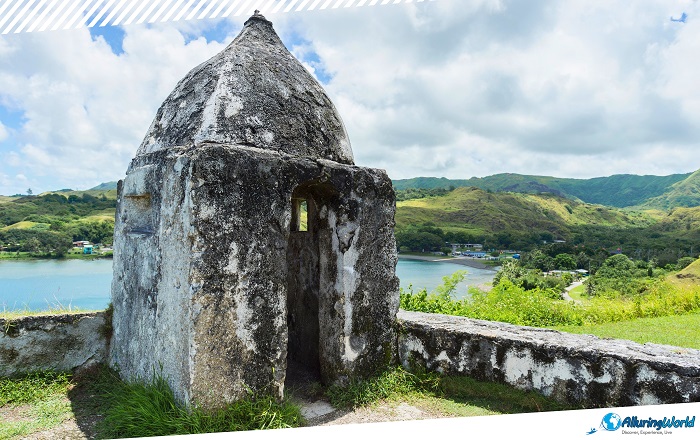
The fort’s contemporary significance lies not only in its architectural value but also in its cultural symbolism. It represents a tangible link to Guam’s colonial history and the island’s role in global maritime exchange. Serving as an educational site to guide visitors and give them details they can learn about the blending of Chamorro and Spanish influences that shaped Guam’s identity, altogether with the location above the Umatac Bay the fort simply offers an amazing spot that blends history and one of the most scenic viewpoints on the island, with sweeping vistas that extend across the turquoise waters, rugged coastline, and the small village below.
Nevertheless, visiting Fort Nuestra Señora de la Soledad is quite a straightforward and rewarding experience. Accessible by road from the capital Hagåtña via Route 2, it gives people a very scenic drive along Guam’s western coast that passes through small villages and coastal viewpoints. The site is open year-round, with no admission fee, making it one of Guam’s most visited historical attractions. Interpretive signs provide background information on the fort’s history and construction, while the open layout allows for leisurely exploration.
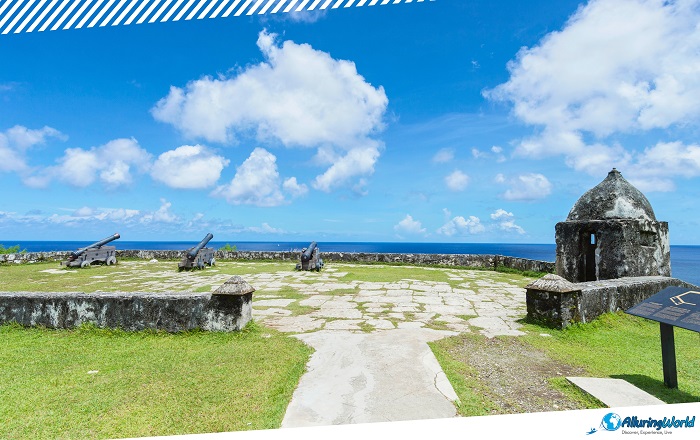
The best time to visit is during the dry season, which runs from December to June, when skies are clear, and the views over the bay are most striking. Early morning and late afternoon visits are perfect for photography, because it is at this time that the sun casts a warm glow over the fortress and sea below. In addition to this, the fort also serves as a peaceful spot to reflect on Guam’s past while appreciating its natural beauty.
In conclusion, Fort Nuestra Señora de la Soledad stands as a remarkable testament to Guam’s colonial legacy and its strategic importance in the history of Pacific exploration. Built solely with local materials and human ingenuity, as it once served as a guardian of one of the world’s most important maritime routes when the Spanish Empire ruled this part of the world, nowadays it is regarded as a cultural and historical landmark. Through its commanding presence above Umatac Bay, the fort continues to tell the story of resilience, adaptation, and the enduring connection between the people of Guam and their island’s rich past.