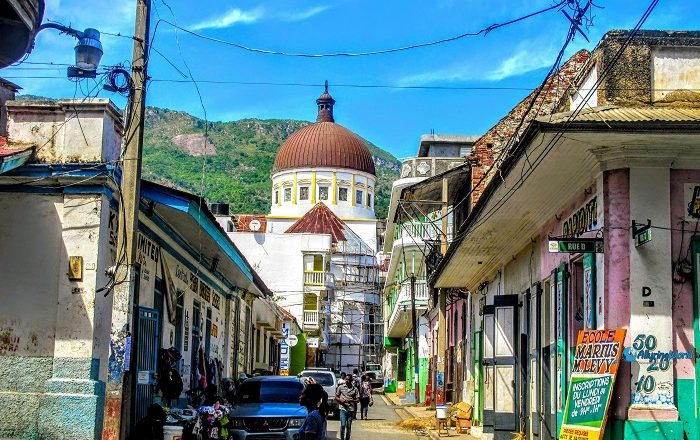
Cap-Haïtien Cathedral, also known by its official name as the Cathedral of Our Lady of the Assumption, is a prominent religious and historical landmark situated in the central part of the city of Cap-Haïtien, which is a commune, within the northeastern section of the Nord Department, within the northern part of the Republic of Haiti. Serving mainly as a spiritual hub for local Catholics, its second role is a testament to the architectural heritage and cultural identity of the region, which was under heavy French colonial influence. Due to its location, it presents a commanding feature within the urban landscape, thus reflecting the importance of religion in the social and historical fabric of Haiti.
Originally constructed in the 18th century, when the French were ruling Haiti as a colony of theirs, it reflects the influence of the European architectural styles that were brought by the colonizers. As it happens with other historic structures, this one too, over the centuries, has undergone several renovations due to natural disasters, including earthquakes and hurricanes, which are quite common in Haiti. Despite these ongoing challenges, the cathedral still managed to retain its historical significance and, to this day, remains a functioning place of worship, welcoming parishioners and visitors alike.
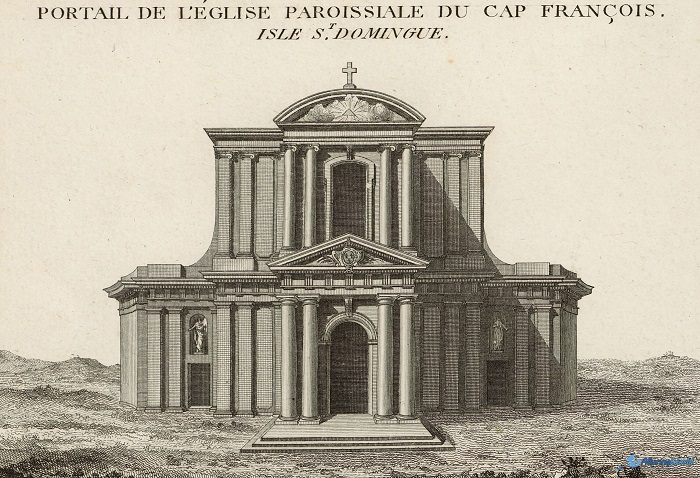
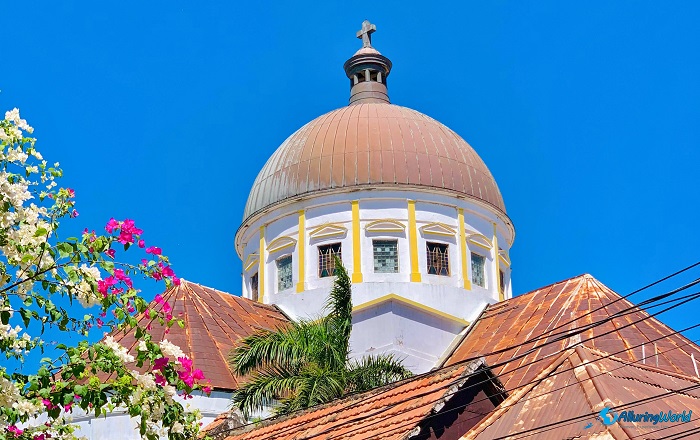
Seen from an architectural perspective, Cap-Haïtien Cathedral showcases elements typical of colonial ecclesiastical design. The exterior has a robust façade with arched entrances, tall windows, and subtle ornamental details that blend European Baroque influences with local construction techniques. The main part of the church is the walls, which are constructed from stone and masonry, thus providing durability against the tropical climate and the seismic activity that has historically affected the region. There are two bell towers that rise above the city, flanking the main entrance, along with a large dome at the rear. The twin towers are a prominent architectural feature of the cathedral; however, as an ensemble with the dome, they serve as a spiritual symbol and a navigational landmark for residents.

The interior of the cathedral is organized to accommodate large and small congregations for a variety of religious ceremonies. The nave is spacious, with rows of wooden pews leading to the altar, which is elaborately adorned with religious iconography, statues, and traditional artwork depicting biblical scenes. Each of the windows of the cathedral is featured with a stained glass, consequently allowing natural light to brighten up the interior. This creates a serene church-like atmosphere that is suitable for prayer and reflection, so it is a common place for Haitians to come here for a prayer in solitude. Nevertheless, the interior also includes side chapels and sacristies that support liturgical activities, providing a comprehensive environment for worship and community gatherings.
ADVERTISEMENT
There was a previous structure that was in its place, but during the 18th century, the local parish decided to rebuild a bigger structure in its place. The foundation stone was laid by the then French colonial Governor, Monsieur de Vaudreuil, on 28 March 1748, when the city was known as Cap-Français, and this building was a forerunner to the present cathedral. That cathedral was officially completed in 1774, though it was later heavily damaged in the devastating 1842 earthquake, necessitating the subsequent reconstructions that gave the building its current appearance. Overall, since the constant cathedral’s construction and maintenance were commissioned mostly by colonial authorities, they were continued by the local community, henceforth reflecting the central role of the Catholic Church in the social and cultural life of the modern Haitians. There have been numerous significant events that have happened here, and these include religious ceremonies marking colonial rule to modern-day celebrations of Haitian independence and even community milestones. As the cathedral witnessed an unknown number of celebrations and festivities, its endurance over centuries highlights the resilience and importance it has as a cultural and spiritual center.
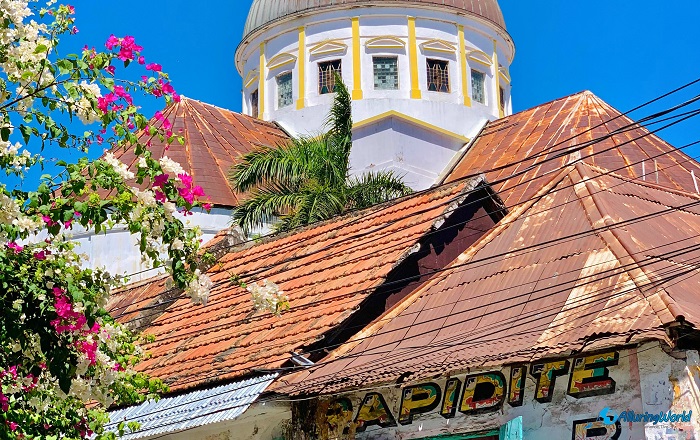
Despite the continuous struggle of the Haitians to get their country up and running as a normal state, visiting the cathedral is somewhat difficult. Still, visitors who dare to travel to Cap-Haïtien can explore the exterior and interior, therefore appreciating the historical architecture and the serene ambiance within. With its central location, you can access it quite easily, and if you talk to the locals, they will often provide insights into its historical context, architectural features, and religious significance. If you are lucky enough and manage to visit it during the services, you can certainly experience local religious practices, hymns, and community gatherings that provide a deeper understanding of Haitian culture and devotion.

Haiti is always best visited during the dry season, and this period runs from November to March, because this is the period of favorable weather conditions, perfect for exploring the city and its historical sites. If you visit during Christmas or Easter, this will allow you to witness the cathedral’s role in communal celebrations and spiritual observances.
Cap-Haïtien Cathedral also contributes to cultural tourism in the northern part of Haiti, because it is attracting visitors who are interested in architecture, history, and the unique heritage of the city, who can go further and explore even other parts of the country, such as the Sans-Souci Palace. To be able to save and preserve this architectural wonder will ensure that future generations will be able to get an insight into the former colonial past the country endured, but also how it was transformed into an object of spiritual, architectural, and historical value.

In conclusion, Cap-Haïtien Cathedral is a landmark whose importance cannot be really measured. Having a great religious impact in northern Haiti, this is a religious structure that will forever be linked with historic events that shaped the nation. As the building managed to overcome centuries of natural and social challenges, it remains a center for worship, cultural identity, and historical reflection. Its colonial architecture, enduring structure, and vibrant interior create an immersive experience for visitors, while its role in local religious life underscores its significance for the community. If you ever visit Haiti, traveling to Cap-Haïtien should be something you consider because the cathedral offers a unique opportunity to engage with Haitian history, faith, and culture in a meaningful and memorable way.