
Read time ca. 6 minutes
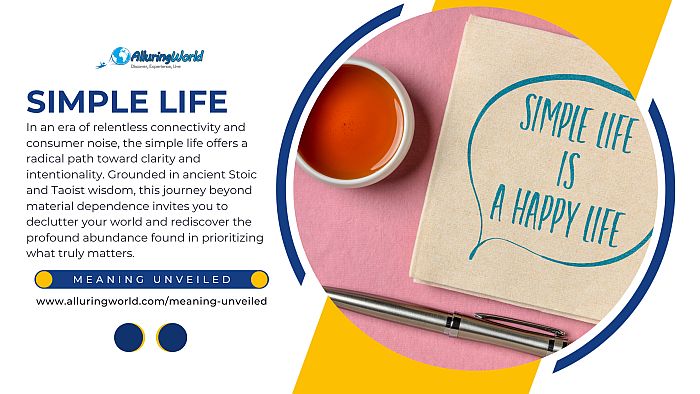
The notion of a simple life is universal; it is practiced and advocated in various contexts and by different groups of people. However, the meaning of a simple life might be diverse depending on a situation and the person who explains it. By definition, a simple life can be described as a type of life where people strive to live with the focus on clarity and simplicity, rather than pursuing material possessions and meeting expectations. The increasing influence of technological progress, consumer culture, and the need for connectivity has made simplification one of the major issues people struggle with today. This article gives you the meaning behind the term simple life and will try to de-influence you from the norms of today, where you are bombarded with to-do, must-have, shopping lists, and the fear of missing out.
Historical and Philosophical Roots:
The simple life is not a trend that originated only in modern times. In fact, many of the philosophies and religions practiced by ancient people emphasize the importance of simplicity as a path to enlightenment and true happiness that every human being should strive for.
In the philosophy of Taoism, which originated in China, there is an intrinsic relationship between simplicity and the principle of “wu wei,” which means “actionless action.” Taoism emphasizes the need to minimize excessive desires, practice moderation, and maintain harmony with nature, and only then will you be able to achieve the simple life, which you must later maintain.
Likewise, it was the Roman Emperor Marcus Aurelius who introduced the Stoic philosophy in ancient Rome, and he emphasized the significance of living in accordance with nature and reason, thus stressing the importance of self-restraint and abstaining from excesses. Still, according to Stoicism, happiness does not come from external things or one’s status in society, but it can be achieved through developing virtues and wisdom and learning to find satisfaction in the necessities of life.
Modern Interpretations of a Simple Life:
In today’s world, simplicity has taken on new forms and has come to involve such concepts as minimalism and intentional living, such as vanlife. In modern definitions, simplicity involves intentionally minimizing clutter of both tangible and intangible kinds in order to focus on things that matter.
For instance, minimalism is known to encourage people to declutter themselves from unneeded things and concentrate only on those that bring some worth into their lives. On the other hand, intentional living takes this approach one step further by helping us choose what we should spend our time doing both socially and professionally.
Simple living concepts are also advocated for by other ideologies like mindfulness or slow-living movements. Meditation, digital detox, and nature walks are all techniques that allow people to pause their lives momentarily and enjoy the present. They demonstrate that simplicity does not necessarily mean deprivation; rather, it means being fully engaged and aware of what one does.
Core Principles of a Simple Life:
A simpler life can be described based on certain principles that help people make decisions on a daily basis:
- Prioritization and Focus: In order for a person to live a simpler life, they should have the capability to recognize important matters from unimportant ones. By recognizing one’s main priorities, such as health, relationships, or personal development, one can spend their energy on doing significant things.
- Reducing Material Dependence: Although it is not meant to imply a life of asceticism, a simple lifestyle entails less attachment to worldly goods. This can be achieved by purchasing only those things that will be used for a long time or have some significant meaning.
- Embracing Mindfulness and Presence: Simplicity focuses on the present moment; thus, pay attention to where you are. Being mindful makes individuals capable of completely enjoying their surroundings, interactions, and activities, making them appreciate what they have and eliminating stress from planning and comparing.
- Intentional Relationships: A simple life focuses on the quality of relationships rather than the quantity. You might have a hundred friends, and you try to maintain the friendship all the time, but you probably don’t pay attention to the people who really matter in your life. Developing significant relationships with certain individuals while minimizing insignificant and anxiety-producing ones provides emotional balance and promotes community connections.
- Alignment with Nature: Simplicity enthusiasts accentuate the harmony one has with nature. When you are interacting with nature, as well as doing gardening and living sustainably, you are encouraged to feel a sense of interdependence and reminded of the cycle of nature in life.
ADVERTISEMENT
Benefits of a Simple Life:
Consequently, when you adopt a simpler lifestyle, you are offered a variety of benefits that will impact your mental and physical well-being. The benefits of having a simple life can be different, so here is a range of advantages that would impact both mental and physical well-being:
- Reduced Stress: Having fewer possessions and commitments can aid in reducing stress levels and cognitive overload.
- Increased Freedom: Simplifying one’s life allows room for self-improvement and exploring one’s passions.
- Financial Stability: When one focuses on what they need rather than what they desire, chances are that they will manage their finances better.
- Enhanced Relationships: Paying attention to relationships can improve one’s communication skills and empathy levels.
- Sustainability: Adopting a simplistic way of living helps preserve the environment by conserving resources.
Overall, this is just a short list of what you can achieve with the simple life you can choose to have, and if you decide to have a simple life, then be ready to enjoy the numerous benefits of pursuing this lifestyle.
Practical Steps Toward a Simple Life:
Living a simple life requires taking action, as it is not just the desire to have this lifestyle. Some actions that are required for you to take include:
- Decluttering Spaces: This step involves getting rid of unnecessary things in the workplace and at home to make room for useful things that you will be using on a daily basis.
- Digital Minimalism: This step is reducing the time spent looking at screens by limiting notifications and removing apps that you barely use or really need.
- Mindful Consumption: This step involves being selective when purchasing items or eating foods and even conserving energy.
- Time Management: This step will involve choosing to spend time on those activities that are important in life.
- Simplifying Routines: Creating an easy-to-follow routine can help minimize unnecessary stress and prevent exhaustion.
While these five steps are just one straightforward way of directing you to a simple life, they will make it easier for you to adopt this lifestyle and reap the benefits afterward.
Cultural Influence and Popular Movements:
The idea of leading a simple life has inspired many cultural movements and ways of life in today’s world. From books to documentaries and the internet, many have promoted the ideas of minimalism, tiny houses, slow tourism, and sustainability as alternatives to a consumer-based way of life. These movements show that leading a simple life is not just something a person can do but is something that can also be done collectively. Overall, the influences and movements we see throughout the world are slowly gaining people’s attention, and even though the way of simple life is not yet fully popularized, one thing is certain: more and more people recognize it and decide to accept it, if not fully, then partially.
Conclusion:
Therefore, a simple life is one where an individual chooses to concentrate on what really counts in their life. This approach to living has its foundations in different philosophies that were practiced thousands of years ago, including Taoism and Stoicism, among others. The contemporary minimalist and intentional lifestyles are some of the variations of the practice, which enable individuals to benefit from lowered stress levels and heightened fulfillment.
The process of understanding the concept of living simply requires that one take time to introspect one’s own values and beliefs, analyze what is important, and choose a way of life that recognizes the need for balance both internally and externally. This is evidence that the practice of simplicity is more than just living without; it requires living abundantly.