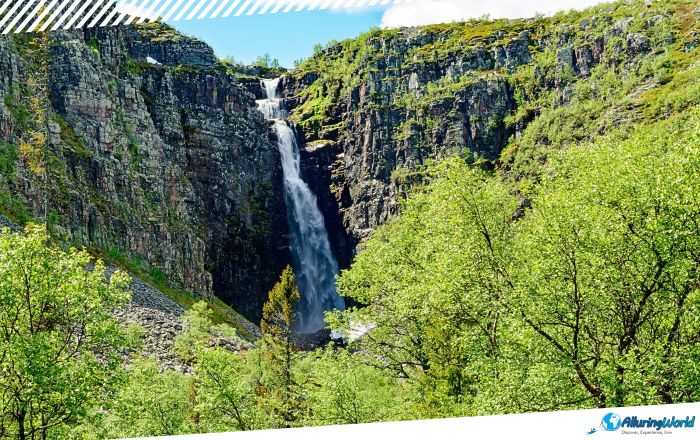
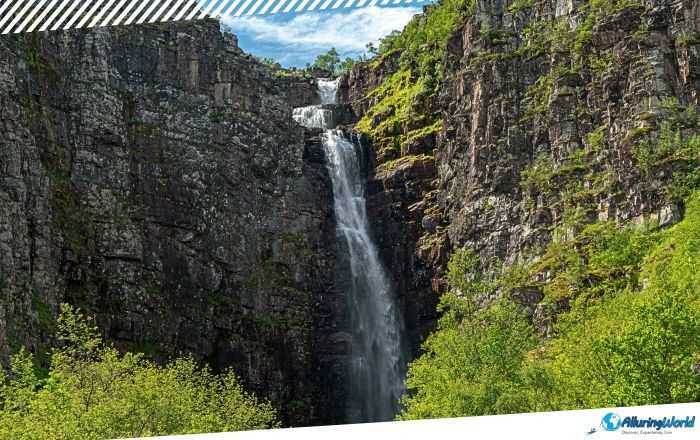
Njupeskär Waterfall is one of the most impressive and grandiose natural waterfalls, which is part of the Njupån River in the Fulufjället National Park within the southwestern part of the Kingdom of Sweden. With a total height of about 93 meters (305 ft), it is definitely the highest waterfall that can be found in Sweden; nevertheless, with the new technologies, some are estimating the fall to be around 125 meters (410 feet) tall with a plunge of 95 meters (312 feet).
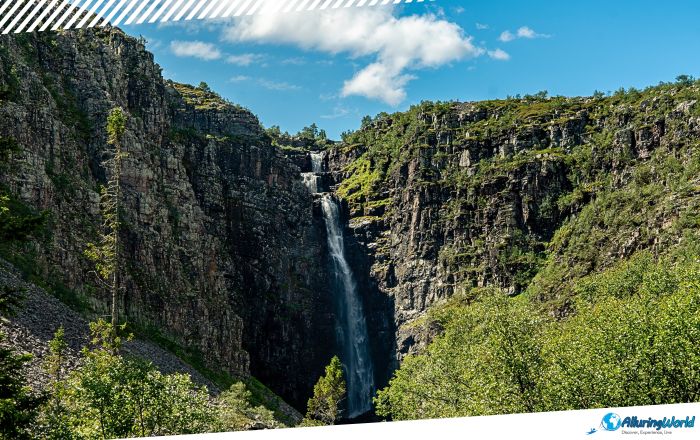
The size of the waterfall can be heard through the great volumes of water crashing down, where the falling water creates a thick fog that is beneficial for a large number of unusual mosses and lichens along the precipices. There is the possibility of hiking on the Njupeskär trail, which is fairly easy.
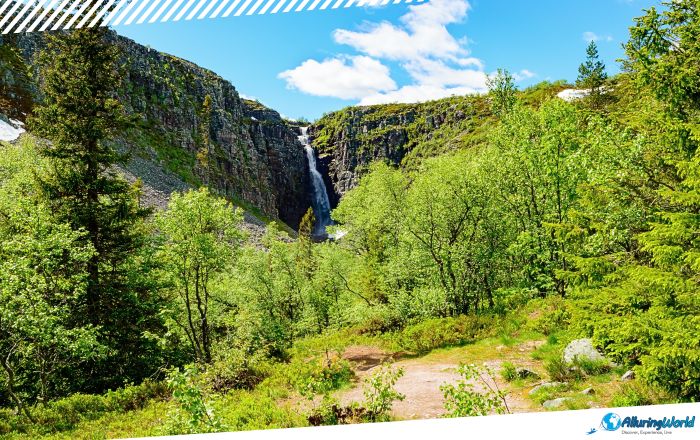
The sheer volume of water crashing over the sandstone plateau creates a deafening roar and a perpetual shroud of thick fog, which in turn has a constant moisture that has birthed a unique, prehistoric-looking ecosystem. The flora is the usual one that can be seen throughout Sweden, and the precipices are home to unusual mosses and lichens that thrive in the spray.
ADVERTISEMENT
One of the most elusive sights at Njupeskär is the sunlight, at least when the sun is shining bright over Sweden. Because of its position within a deep canyon, the sun only hits the water for a few days each year, and this is usually during the early morning hours in midsummer. Midsummer in June is considered a national holiday in Sweden. Hence, seeing the water glow against the dark sandstone plateau is a rare reward for the punctual hiker, and a great activity to do when Sweden celebrates this very important holiday.
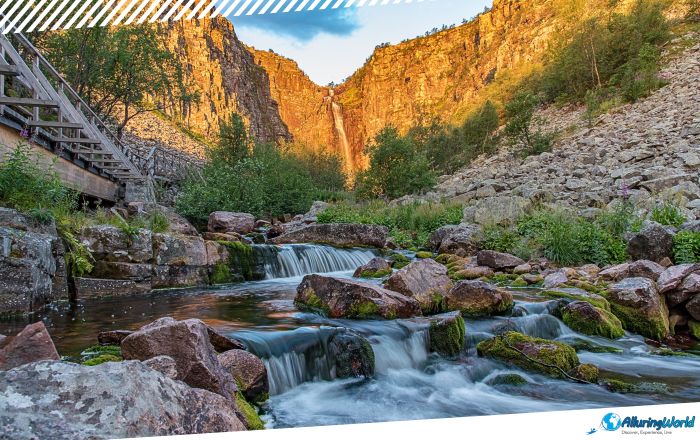
Nonetheless, still being questioned as to whether it is the highest waterfall in the Kingdom, it is something extraordinary from the Swedish nature, which is beautiful and alluring at the same time, whether one is visiting in summer or winter. If you decide to get to Njupeskär Waterfall, then you will be surprised how easy it is. The Njupeskär trail is a well-maintained, fairly easy 4 km (2.5 mi) loop that winds through ancient forests.
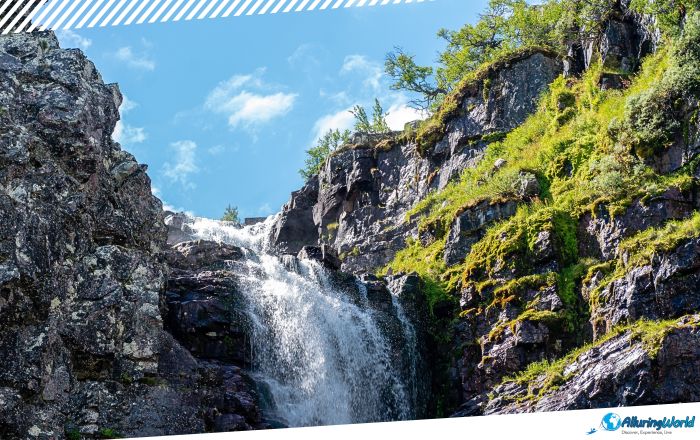
If you are in the park, then don’t miss the Old Tjikko tree as well. You will get the chance to see near Njupeskär Waterfall the world’s oldest clonal tree, a Norway Spruce estimated to be over 9,500 years old. But probably the most amazing sight is if you visit the waterfall during wintertime, when it offers amazing winter magic. In the winter, the waterfall transforms into a massive, shimmering ice sculpture, thus attracting daring ice climbers and photographers who create a landscape of small people trying to reach the peak.