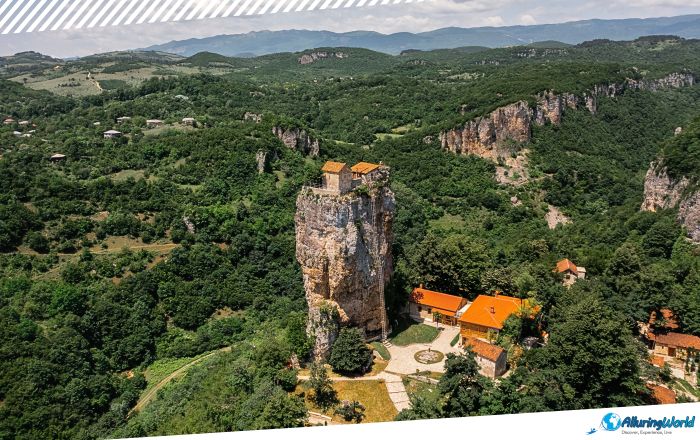
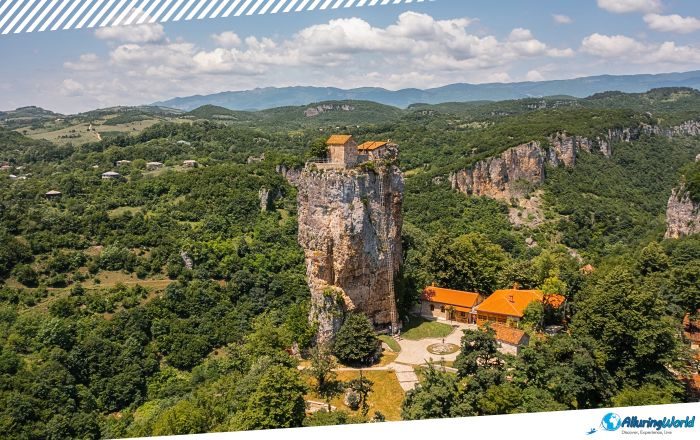
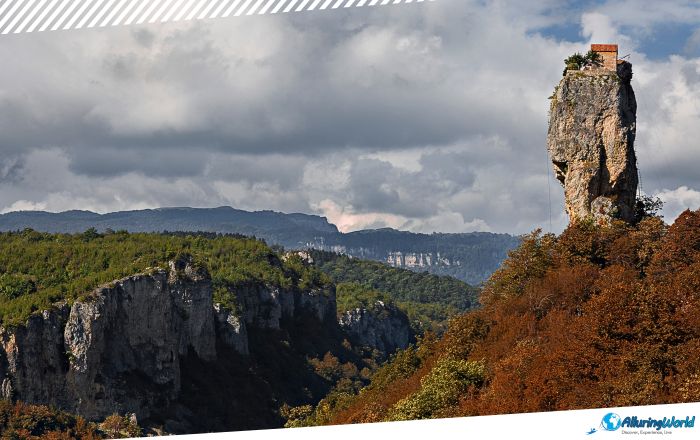
The Katskhi Pillar is a towering natural limestone monolith with the ruins of two Byzantine churches that can be found on top of it, and it is located in the village of Katskhi, in the Region of Imereti, within the central-western part of the Republic of Georgia.

It is approximately 40 metres (130 feet) high, and overlooks the small river valley of Katskhura, which is in fact a right affluent of the river Q’virila. There are no clear sources that would suggest the date of construction, and since nobody knows for sure when it was built, most people agree that it was around the 9th or 10th century.
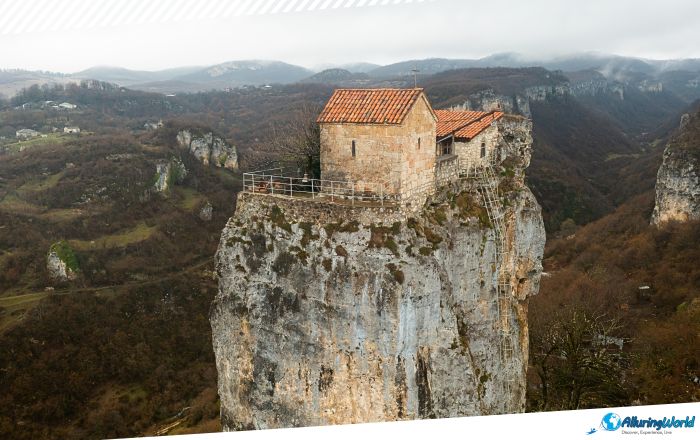
The first mention of the ancient monastery was in the 18th century, when a Georgian scholar and prince described it thus: “There is a rock within the ravine standing like a pillar, considerably high. There is a small church on the top of the rock, but nobody can ascend it; nor do they know how to do that.”

For centuries, the Katskhi Pillar was uninhabited and left to the natural forces, but it was in 1995 when a local monk named Maxim Qavtaradze, who is a native of Chiatura, moved in and began to restore the vertiginous churches himself. Due to the years of not being taken care of, the structures had some decay, but fortunately, Maxim Qavtaradze managed to bring the pillar and its structures to their former glory.
ADVERTISEMENT
He enters and leaves via a 40 m (131 ft) iron ladder, and it takes him about 20 minutes to climb. Qavtaradze had been motivated to change his life after a stint in prison, and actually, when he arrived at Katskhi Pillar, he slept in an old fridge for his first two years, until some supporters built him a cottage. The complex consists of a church dedicated to Maximus the Confessor, a crypt, in other words, a burial vault, three hermit cells, a wine cellar, and a curtain wall on the uneven top surface of the column.
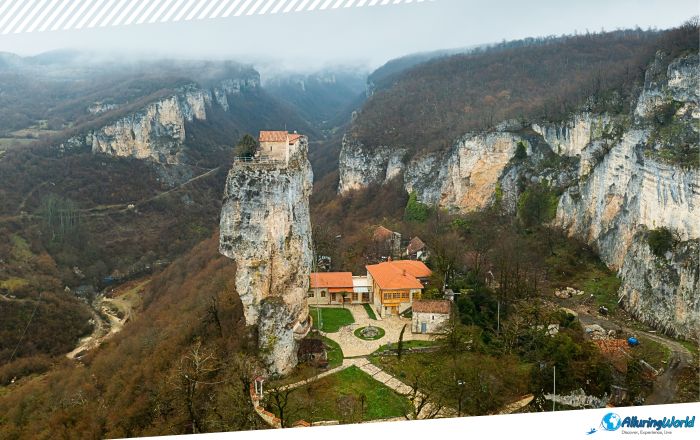
At the base of the pillar are the newly built church of Simeon Stylites and the ruins of an old wall and belfry. Between 2005 and 2009, the monastery building on top of the pillar was restored with the support of the National Agency for Cultural Heritage Preservation of Georgia.
Nonetheless, the rock was once accessible only to male visitors through an iron ladder running from its base to the top, but it has recently been deemed inaccessible to the general public, and nobody is allowed to climb to the top. Overall, just getting under the pillar is enough to admire this alluring place, and admire this side of Georgia.