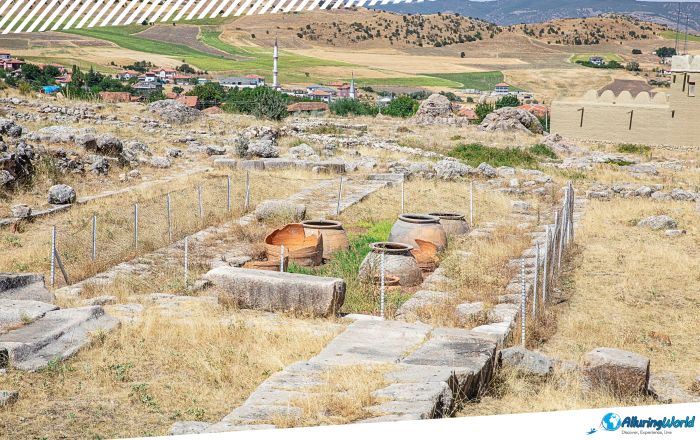
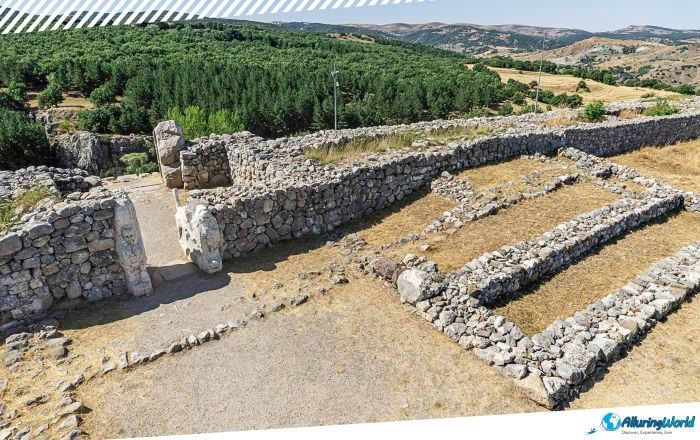
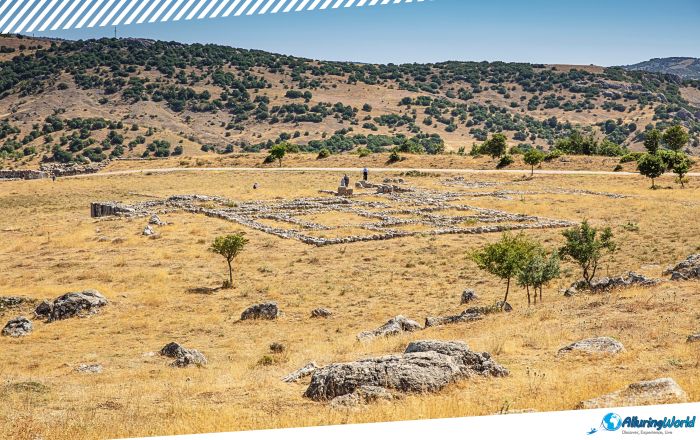
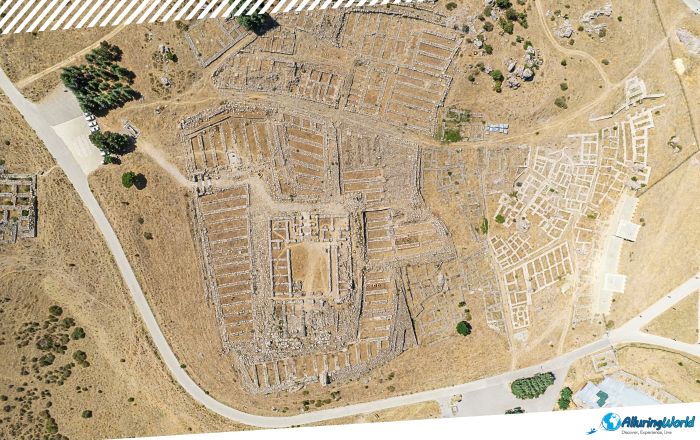
Hattusa, also known as Hattusha, is an archaeological site that was a historic city in ruins today, which served as the capital city of the Hittite Empire from the late Bronze Age, located in the district of Boğazkale in the Çorum Province, within the Republic of Turkey.
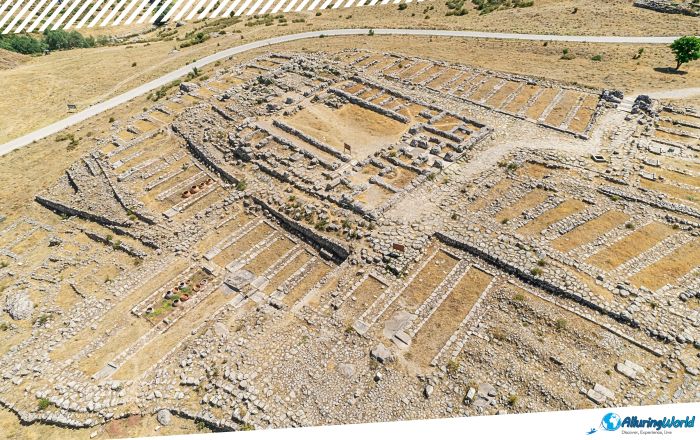
This interesting site is notable for the urban organization of its time, the types of construction that have been preserved, such as the temples, royal residences, and fortifications, together with the rich ornamentation of the Lions’ Gate and the Royal Gate, and the ensemble of rock art at Yazılıkaya. Considered to be founded as a settlement in 6 millennium BC, it is clear why the city enjoyed great importance throughout time.
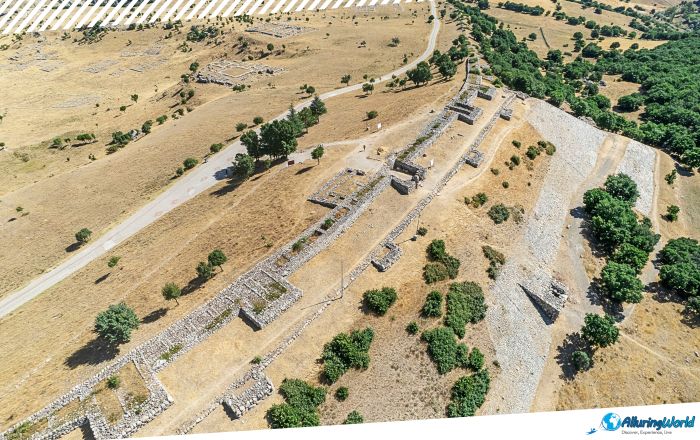
Surrounded by rich agricultural fields and hill lands for pasture as well as woods, it is also on the road of merchants from Assur and Assyria who established a trading post in Hattusa. Worth mentioning are the lush forests, which were an excellent supply of timber for the inhabitants who were using most of them to build their housing units, as well as other structures.
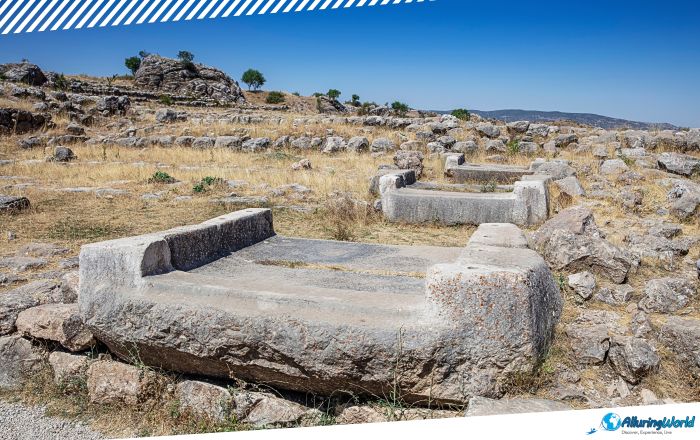
As there were plenty of people, the aforementioned fields were the ones that provided the people with a subsistence crop of wheat, barley, and lentils; however, domestic animals provided the inhabitants with protein. Nevertheless, the city is not the only thing that enriches the area, as there is the rock sanctuary of Yazılıkaya to the north, the ruins of Kayalı Boğaz to the east, the İbikçam Forest to the south, and the monumental enclosure wall, which is more than 8 km (5 mi) in length, that surrounds the entire city.
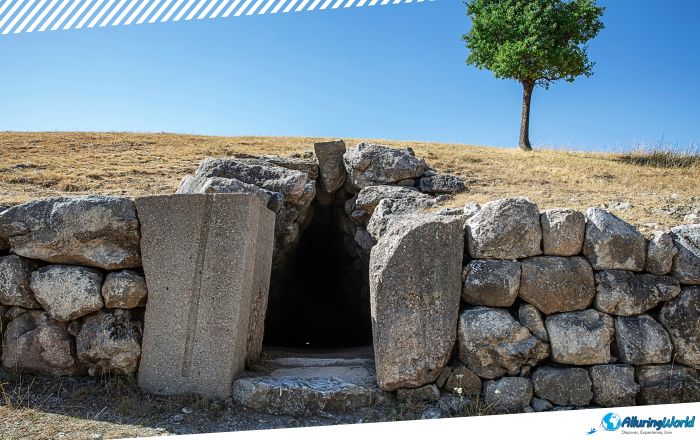
There are remains of older walls around the lower city and section walls dividing the large city area into separate districts, and the ruins of the upper city’s fortification form a double wall with more than a hundred towers. So far, the historians are claiming that there were five gateways, of which two are in the west: the Lion’s Gate in the southwest, the King’s Gate in the southeast, and a procession gate, the Sphinx Gate, in the south of the city.
ADVERTISEMENT
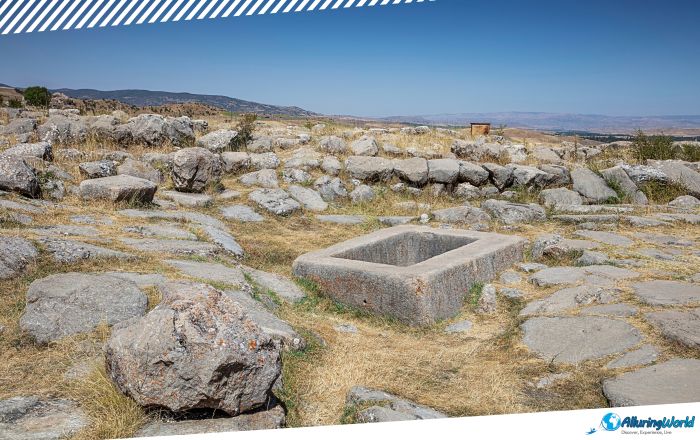
The impressive ruins of fortifications, placed on rocky peaks in the center of the Upper City, bear witness to the complexity of Hittite rock masonry, and the longest known Hittite hieroglyphic inscription from the Hittite Empire can be found in the Upper City at Nişantepe. From all of the temples that were built in the city, the Great Temple located in the Lower City, which dates from the 13th century BC, is the well-preserved Hittite temple.
The rock sanctuary of Yazılıkaya, which is an open-air temple with two natural chambers cut into the bedrock, is some 2 km (1 mi) away from the capital, on a slope of a mountain barrier with its walls covered with the richest and most striking samples of Hittite relief art, featuring gods and goddesses and the figures of the Great King Tuthaliya IV.
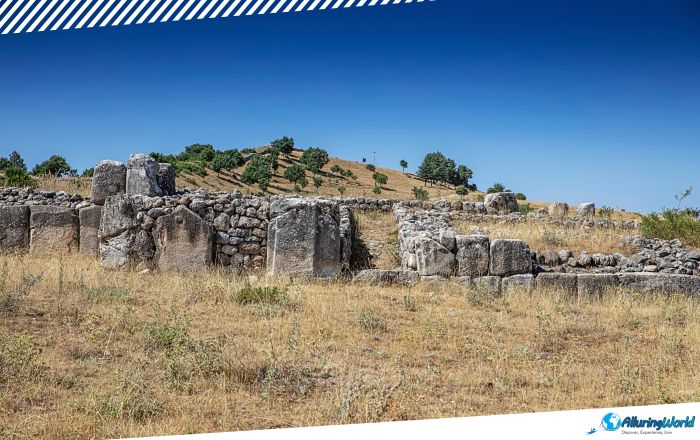
All of these impressive archaeological findings were discovered by Ernest Chantre in 1893 and 1894, when he opened some trial trenches at the village then called Boğazköy. After that, the German Oriental Society has been excavating at Hattusa since 1906, and nowadays there are still some excavations by the German Archaeological Institute.
Hugo Winckler and Theodore Makridi Bey were the first archaeologists who officially began bigger excavations, which later continued under Kurt Bittel, followed by Peter Neve.
Most of the findings nowadays can be seen in the archaeological museums in Ankara and Istanbul, and due to its importance, Hattusa, the Hittite capital, has been listed on the UNESCO World Heritage list since 1986, giving it even greater significance for people to learn more about the great Hittite Empire and the people who once lived here.