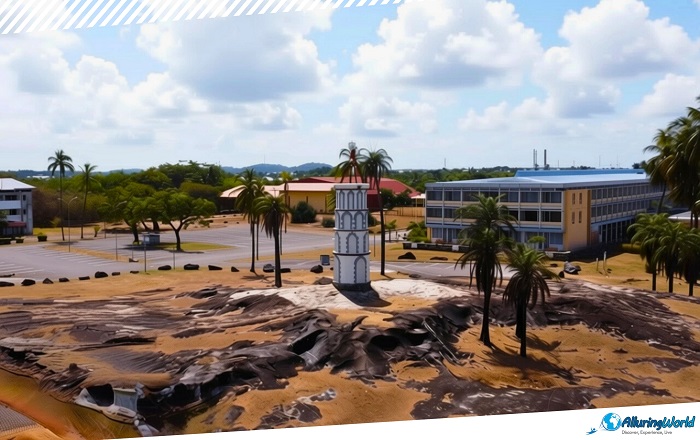
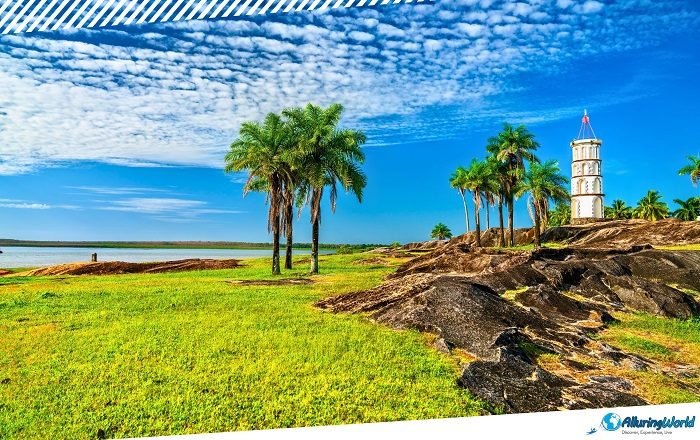
The Dreyfus Tower is a small but very interesting lighthouse tower which was built as a communication tower with the Devil’s Island, and it is located to the westernmost point of the city of Kourou, which is part of the Kourou Commune, within the northern part of the overseas department and region of France that is located on the northern coast of South America, French Guiana. Standing as one of the most evocative historical landmarks that a person can see in the mysterious French Guiana, this quite quiet coastal structure reveals the weight of a turbulent past.
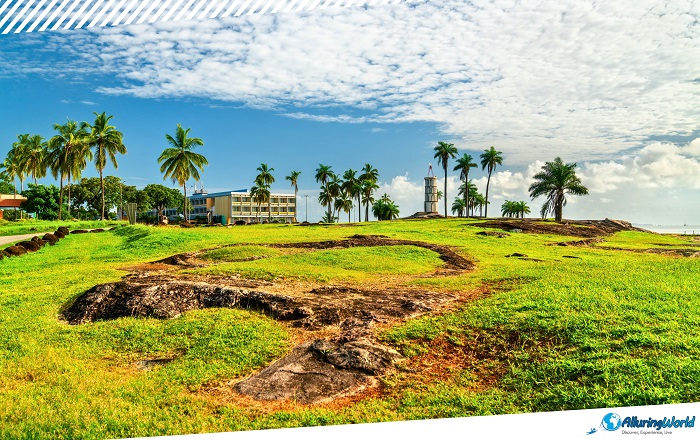
Though modest in size when you compare it to other structures of a similar nature, this tower still manages to occupy an outsized place in the memory of the region, symbolizing both the harsh realities of the French penal colony system and the long-reaching consequences of the scandalous Dreyfus Affair. As the structure is set more precisely on the windswept Pointe des Roches, this is where the Kourou River meets the Atlantic Ocean, so the tower looks out toward the Îles du Salut, the remote archipelago where some of France’s most infamous prisoners were once held. Nowadays, Dreyfus Tower offers a powerful connection link between the serene landscapes of modern Kourou and the grim isolation that occurred here during the time when France had French Guiana as its colony.

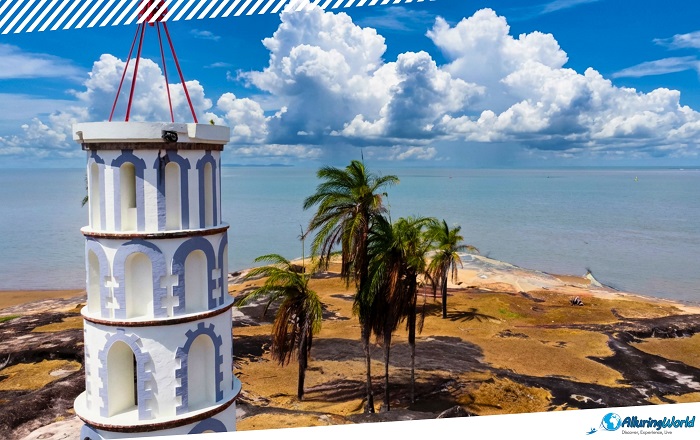
The tower’s geographic location is one of its defining features because it occupies the very edge of the coast on the Pointe des Roches. This is a rocky headland that provides striking views of the ocean and the Salvation Islands, previously referred to as Îles du Salut, roughly 15 km (9 mi) offshore. These islands are comprised of: Île Royale, Île Saint-Joseph, and the notorious Devil’s Island (Île du Diable), and they were the heart of the penal colony, hence why the tower was intentionally built at a vantage point, thus allowing unobstructed communication with them. Even today, when you stand at the tower, you can see the islands on the horizon, which present an eerie visual reminder of the distance and isolation experienced by the prisoners that were once sent there.
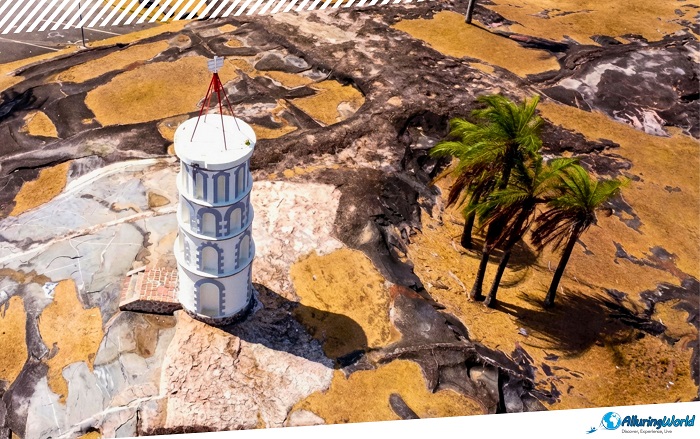
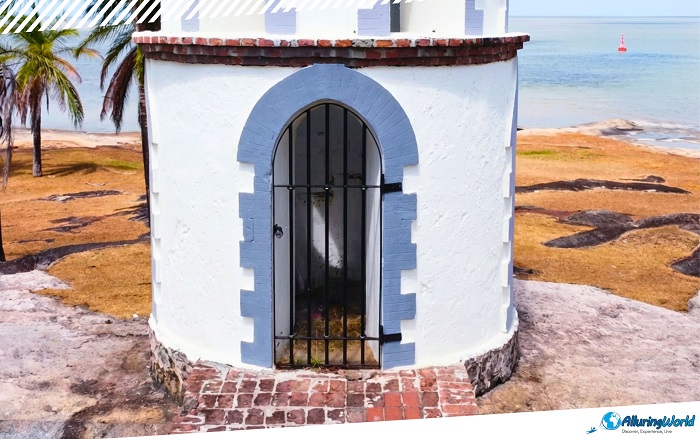
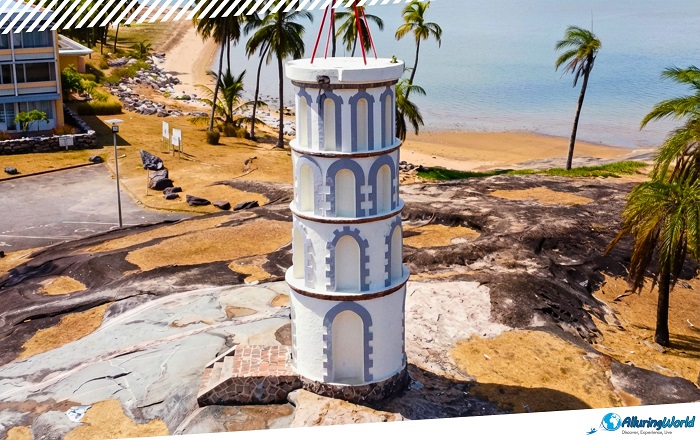
Physically, the Dreyfus Tower is a simple but distinctive structure. There are some descriptions that note that Dreyfus Tower has a slight lean due to age and the shifting coastal terrain, but interestingly, it possesses a rugged character since it was shaped by decades of ocean winds and salt air. Its stone construction bears the marks of endurance, standing as one of the few remaining structures from the once-expansive mainland prison at Kourou. When you see the tower today, you will notice that the structure is a cylindrical masonry tower featuring a weathered white-blue stone exterior that tapers slightly as it reaches the summit.
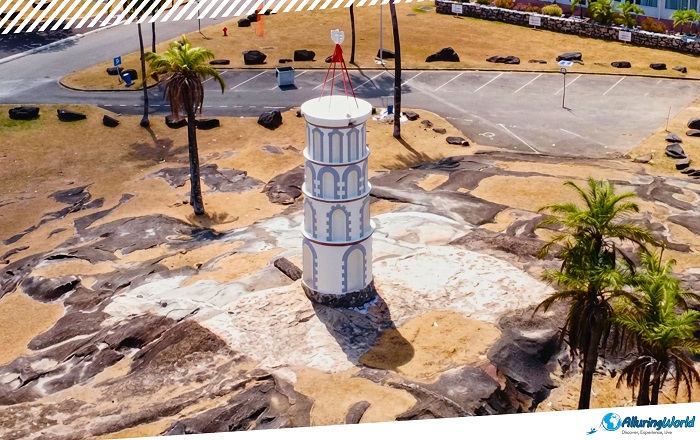
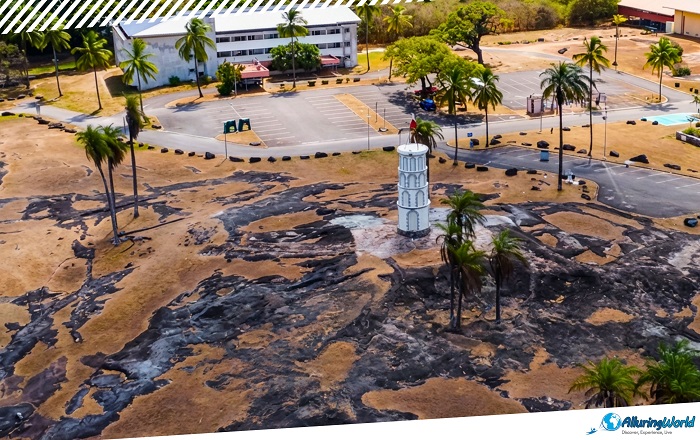
There are no windows to the structure, even though the decorative arches resemble something like windows, and the entire structure is capped by a red-pointed bars which form the conical roof. Still, as much of the penal colony’s infrastructure on land was demolished during later redevelopment, particularly with the construction of the Hôtel des Roches, the tower became more significant as a surviving piece of the original system. Nevertheless, the weathered presence stands almost out of place against the modern developments of the city, but it continues to stand firm as a witness and a great reminder of the events that shaped French Guiana’s identity.
ADVERTISEMENT
Despite its name, the Dreyfus Tower was never a prison facility, nor was it built specifically for Alfred Dreyfus. As the tower was completed around 1856, the original purpose behind its construction was entirely practical. In the late 19th and early 20th centuries, long before reliable radio existed, communication across distances relied on visual signaling. This is where the tower came in very handy, since it served as a semaphore telegraph station by using a system of flags or pivoting arms that transmitted messages across the water.
It was from this vantage point that the authorities sent and received coded signals related to prisoner movements, supply shipments, and crucial security updates, thus avoiding sending ships across the water. Because the penal colony was a massive administrative undertaking, the tower played one of the most vital roles, as it ensured the colony’s operations ran according to protocol.
The semaphore system was essential to the survival and control of the islands, but its significance deepened during the imprisonment of Captain Alfred Dreyfus. He was a Jewish French artillery officer who was wrongly convicted of treason in 1894, so Dreyfus became the most famous political prisoner of his time. He was exiled from 1895 to 1899 to Devil’s Island, where he endured extreme isolation because he was cut off from the world except through communication lines, which were managed from places like the Dreyfus Tower. Though never officially named after him, the tower became symbolically linked to his story because it represented the fragile connection between the solitary island prison and the mainland, where a political storm was raging in France over his wrongful conviction.
The Dreyfus Affair exploded into one of the biggest scandals in French history because it managed to expose deep-rooted antisemitism, governmental corruption, and miscarriages of justice. As a matter of fact, he was wrongly convicted because of a judicial conspiracy that was fueled by rampant antisemitism within the French military. The primary evidence that was presented against him was a torn-up note nowadays known as “the bordereau,” which was mistakenly attributed to him based on flawed handwriting analysis. In addition to this, during his secret court-martial, the judges were also shown a dossier of forged and fraudulent documents that neither Dreyfus nor his attorney was permitted to examine.
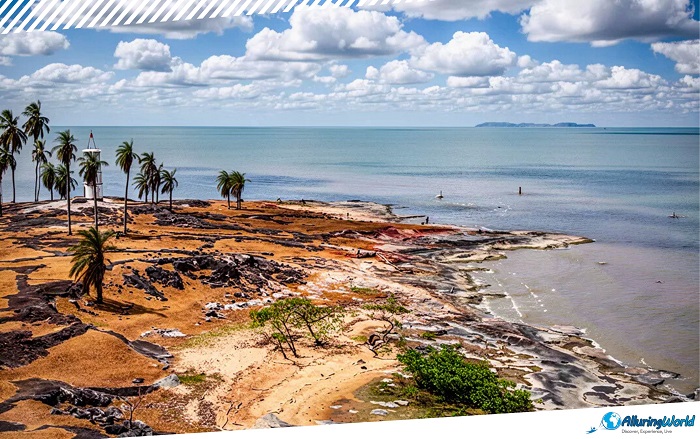
Due to the international pressure that mounted as details of his harsh imprisonment emerged, the penal colony started becoming more infamous for its brutality. Historians often credit the global outrage surrounding Dreyfus’s case as one of the main reasons that led the penal colony to decline and eventually be closed. Still, in this sense, the tower stands as a literal and symbolic link in a chain of events that reshaped the French political and social life of that time. To top it all, Henri “Papillon” Charrière was another famous person who became well-known for his escape from the Salvation Islands.
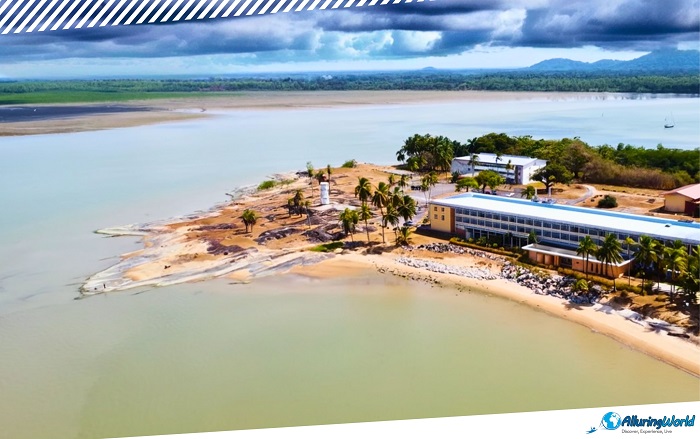
Today, the Dreyfus Tower is preserved as a historical monument that serves as an educational and commemorative tool. Visitors who decide to travel to Kourou often include it as part of their exploration of the region’s long colonial and penal history. Conveniently located within walking distance from several modern attractions, yet it feels like you are stepping onto the Pointe des Roches from a different era. Many travelers use the site as a prelude to their journey of exploring Îles du Salut, which are also accessible by boat from Kourou. When you see the islands first from the tower’s vantage point, it adds a layer of historical context before you head towards them.
If you decide to visit the Dreyfus Tower, you can do it year-round; however, the dry season, which generally runs from July to December, offers the most comfortable weather and the clearest views of the Salvation Islands. Reaching the site is easy, as it is located near central Kourou and can be accessed on foot, by bicycle, or by car. Perhaps the best time to get to Dreyfus Tower is in the early morning or late afternoon because these are the periods when the light softens the landscape, and the ocean breeze makes the walk along the coast especially pleasant.
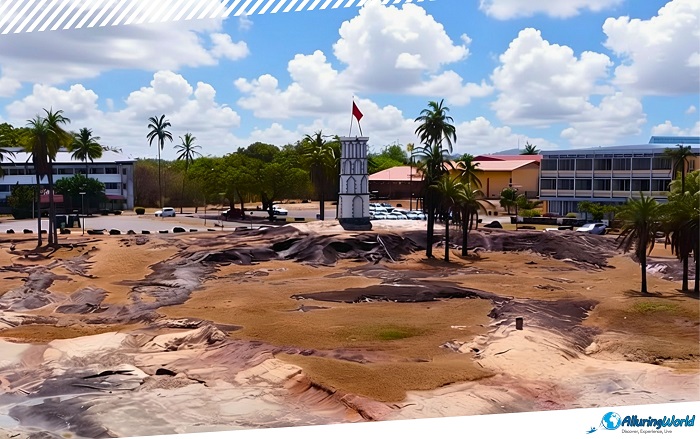
In conclusion, standing before the Dreyfus Tower is a reminder of how places, even small and unassuming ones, can carry immense historical weight. The silent walls that tell the stories of injustice, endurance, and transformation simply invite visitors to reflect on the past and preserve the memory of the times when the penal colony was one of the harsher ones in the region, which somehow shaped the identity of a place long after its original purpose had faded into history.