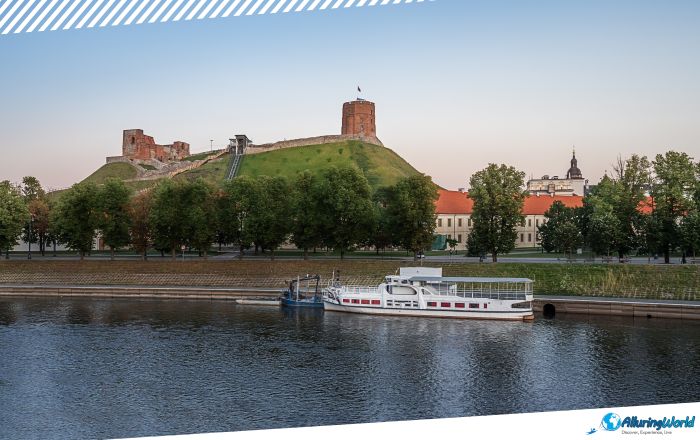
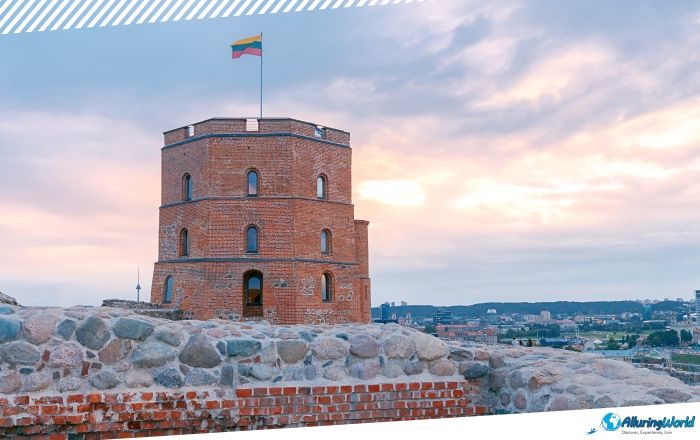
Gediminas’ Tower is a historic fortification and a tower that sits on top of the Gediminas Hill, and it is the highest natural hill that can be found in the capital city of the Republic of Lithuania, Vilnius. The Upper Castle, from which today only the Gediminas Tower has remained, remains a great symbol of Lithuania, and especially of the city of Vilnius. The Castle Hill, surrounded by rivers, was a convenient location to build a castle and establish a bigger settlement.
Archaeological investigations have revealed that there had already been a settlement on Castle Hill in the Neolithic. Archaeologists have determined that in the 9th century, the hill was reinforced with wooden and stone fences by the Grand Duke of Lithuania, Gediminas, whereas in the 11th-13th centuries, a wooden castle had already been erected.
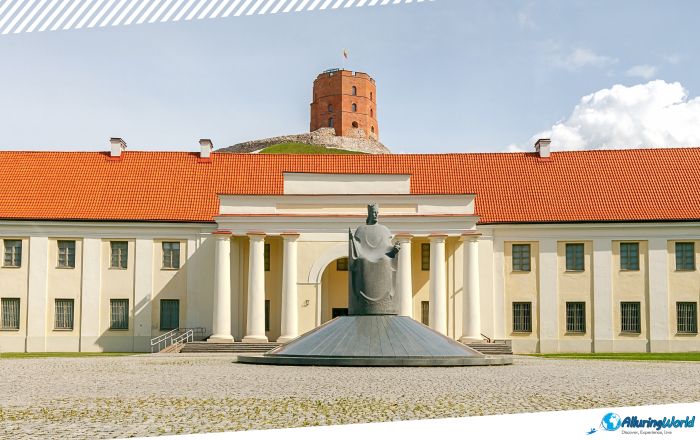
Later, the first brick castle was completed in 1409 by Grand Duke Vytautas. The early history of the castle is closely related to the history of Vilnius’ city development. The Gediminas Tower has seen a lot throughout its history, and it has faced extensive destruction; however, it was rebuilt in 1933 by Polish architect Jan Borowski. There are also some remnants of the old castle that have been restored, and all these restorations have been properly guided by archaeological research. Due to the importance of the Gediminas Tower, nowadays every Lithuanian knows the legend of how the castle was built.
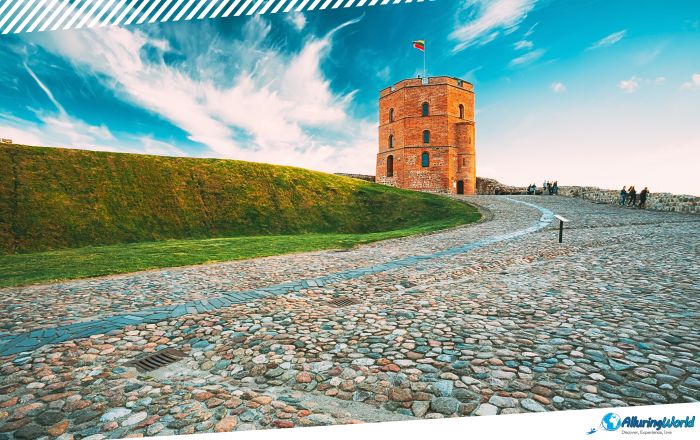
They will tell you that it was the Lithuanian Grand Duke Gediminas who stopped for an overnight near the confluence of the rivers Neris and Vilnele. That night, he dreamed of an iron wolf and how it was howling on a hill. In the morning, his soothsayer (mage) Lizdeika explained his dream as a sign for him to build a city there, as it will become a well-known and widely renowned all over the world. With this interpretation, Gediminas ordered to pour a mound at the same place where he slept.
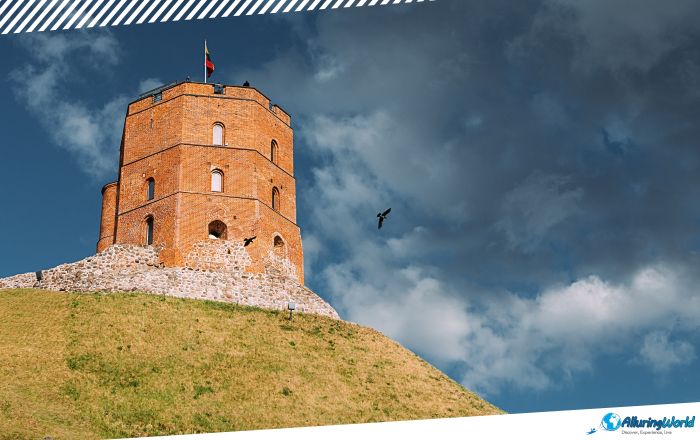
As per Gediminas’ request, the fort was built on the hill, which was the predecessor of the current Gediminas Castle. Sadly, during the Second World War, the tower was damaged, but with the importance it brings, it was reconstructed again during the Cold War in 1956 – 1960. At that time, a museum was opened, and this museum is still functioning to this day.
ADVERTISEMENT
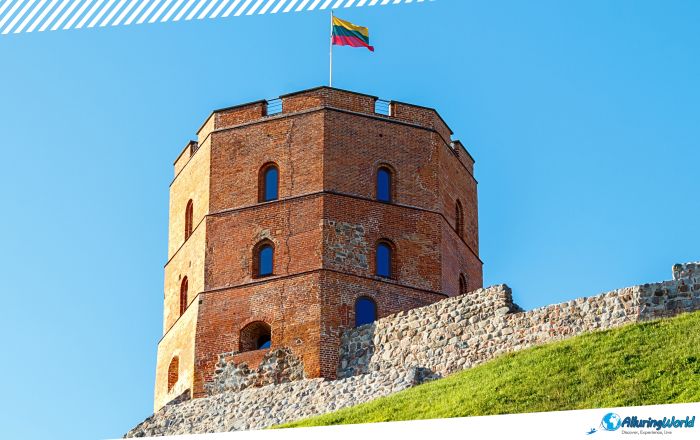
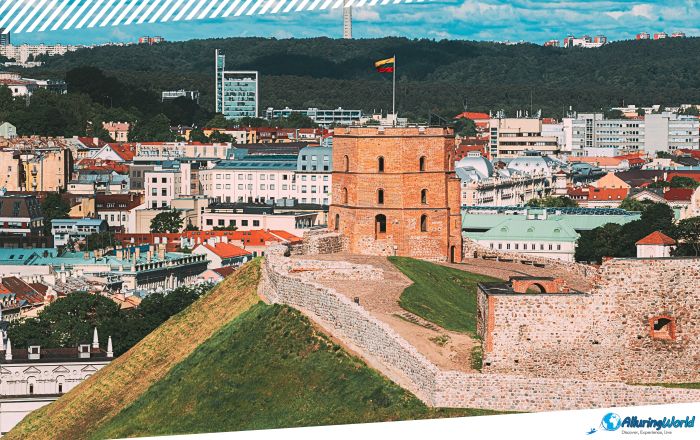
Architecturally speaking, Gediminas Tower is an octagonal building; its foundations were laid in stone, and its walls were built in Gothic style with bricks. There is a beautiful viewpoint opening from the top of the tower, from where most of the old town buildings can be seen, as well as the churches, and a beautiful sea of red roofs in Vilnius. The view stretches from a nearby Vilnelė and Neris river valleys to a new-town district in the southern part of Vilnius.
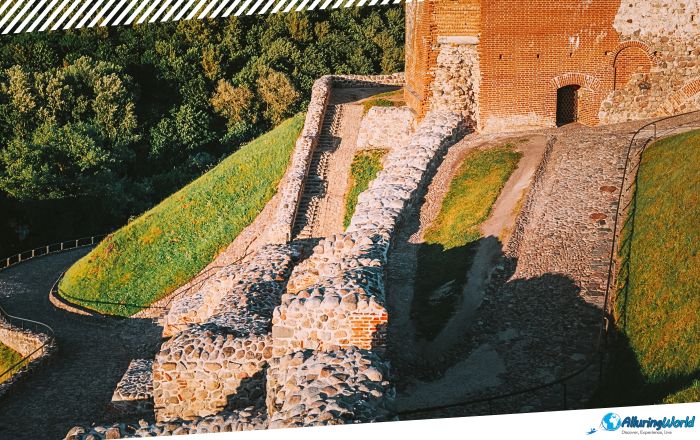
Some remains of a defensive wall can be seen nearby Gediminas tower – 10 m (33 ft) south, and 22 m (72 ft) of it lies north of the tower. Also, some remains of the northern gateway, and the lower part of the southern tower can be seen on the hill. On the eastern side, there are some remains of a mansion-house, which is considered to have been a palace.
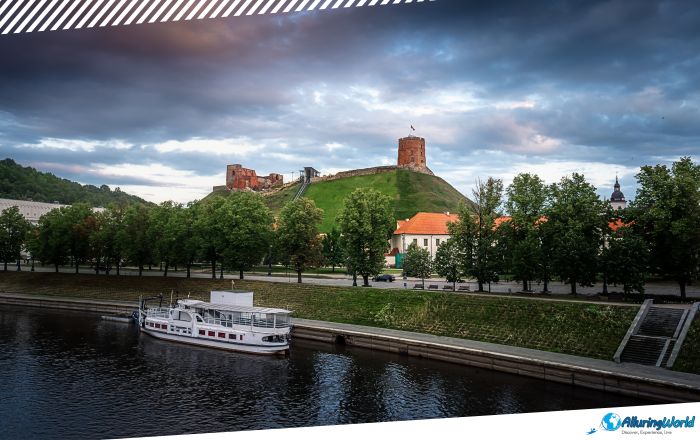
The palace was built with 4 m (13 ft) thick walls and sharp Gothic arcs, but due to the centuries of not maintaining it, there are only small remains today. Still, Gediminas’ Tower is an important state and historic symbol of the city of Vilnius and of Lithuania itself. It was depicted on the former national currency (the litas) and is mentioned in numerous Lithuanian patriotic poems and folk songs.
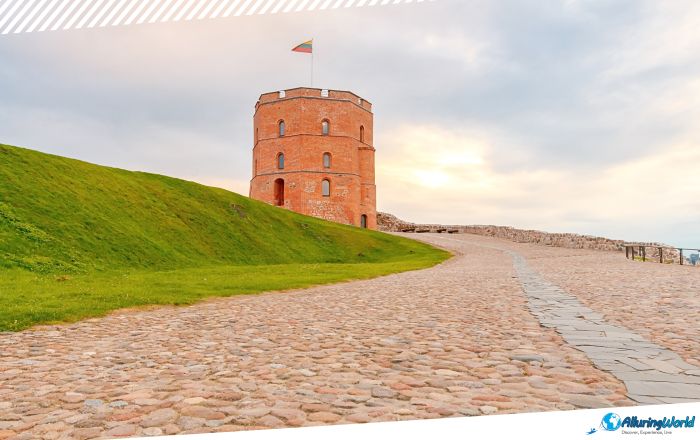
The Flag of Lithuania was re-hoisted atop the tower on 7 October 1988, during the independence movement that was finalized by the Act of the Re-Establishment of the State of Lithuania on 11 March 1990. One more thing worth mentioning is that the beginning of the Baltic Way was in Vilnius, just outside the Gediminas tower.
The Baltic Way was a peaceful form of resistance against the Soviet rule of the Baltic states, and from here, a magnificent row of people stretched over three countries, ending at Hermann Tower in Tallinn, with the hope that the three Baltic states would receive their independence from the USSR without any difficulties. Overall, a Lithuanian symbol that is hard to miss, and it is certain that it will be shown in all tourist and promotional content.