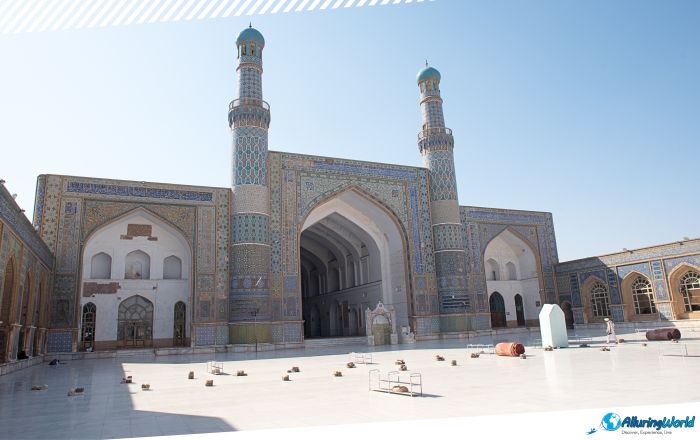
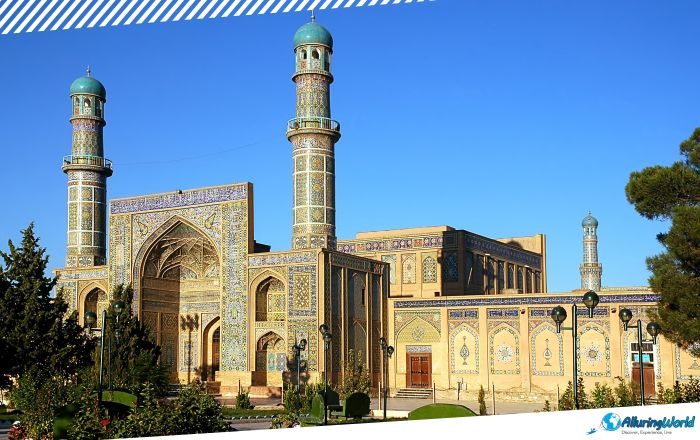
The Jama Masjid of Herat, also known as the Great Mosque of Herat, is an impressive and very colorful mosque that is located in the city of Herat, in the north-west part of the Islamic Republic of Afghanistan. Due to its eccentric and very colorful stance, the Great Mosque of Herat is well-known worldwide, and it is one of the most favorite religious structures to the people of Afghanistan.
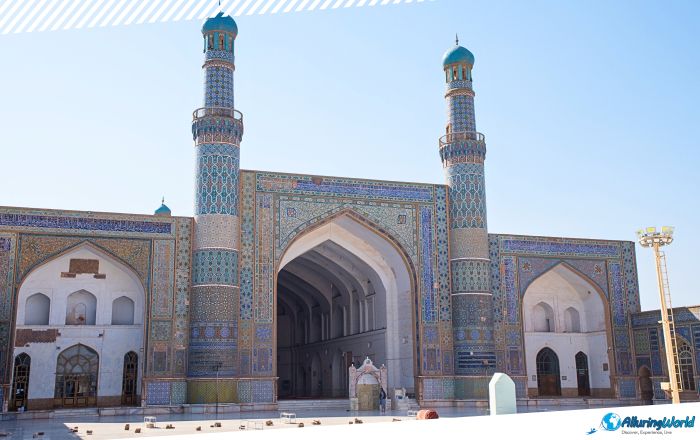
The foundation of this interesting structure was laid in 1200 by the famous Sultan of the Ghurid dynasty, the Sultan Ghayas-ud-Din Ghori; however, as it is usually expected from religious structures, as time passed and the rulers changed, the mosque was expanded too, and the structure was updated to cope with the change in design, further adding additional facilities to meet the demand from the worshippers.
The official completion of the mosque is considered to be in 1446, with the Safavids, Mughals, and the Uzbeks leaving their footprints on the mosque. As it has the traditional Islamic design, very recognizable for Central Asia, like the mosques found in Uzbekistan, the Great Mosque of Herat has 8 minarets, and it is considered by some people to be the first mosque in the city of Herat, where the Friday congregation was held.
ADVERTISEMENT
The rectangular design with a big verandah in the middle is filled with unique ornamentation, which throughout the years has been replaced; nonetheless, the lavish tiling that now covers the mosque is the product of the mosque’s tile workshop, an ongoing restoration project since the 1940s. With the continuous care of the building, the Great Mosque of Herat today is in a very good shape, and still serves as the central place for prayer.
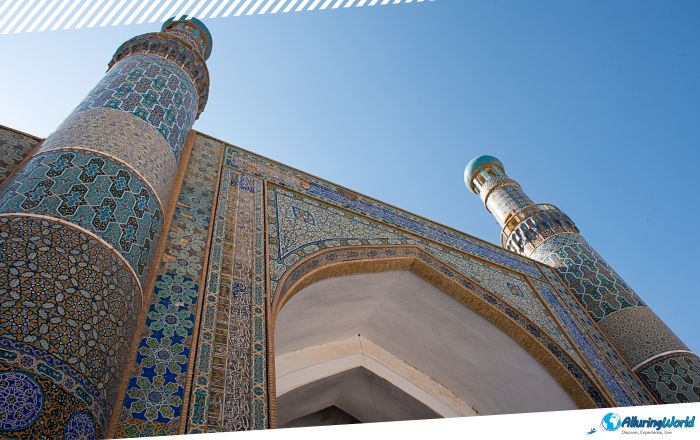
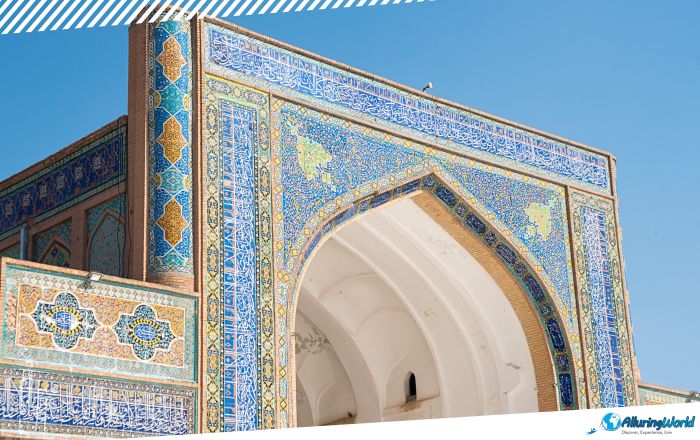
While many of the mosaics are based on Timurid originals, it is expected that the workshop would introduce its own designs, colors, and calligraphy, so today we can see some influence on the structure. This traditional-meets-modern approach has led to the creation of one of the gems of contemporary Islamic abstract expressionism that can be easily recognized by people worldwide.
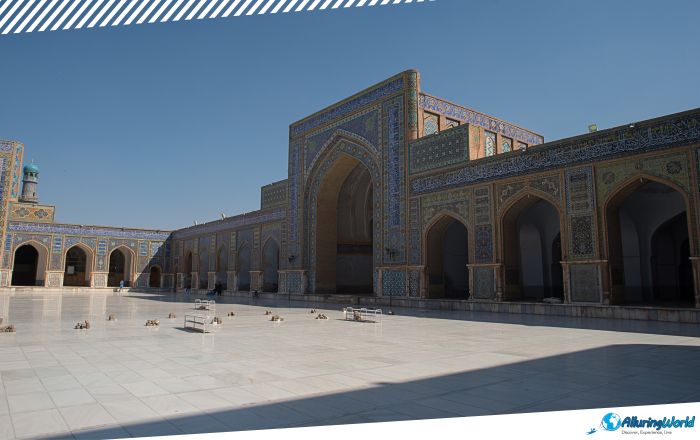
As one of the most unique structures in the country, there is always an ongoing restoration trying to make it as it once was, grandiose and lavish, gorgeous and quite impressive, not just to the worshipers, but to the other visitors as well. Considering the turmoil Afghanistan has been through in recent decades, the Great Mosque of Herat was fortunately saved from destruction, and it will continue to be the gathering place for worshippers who would like to pay their respect to their God and Prophet.