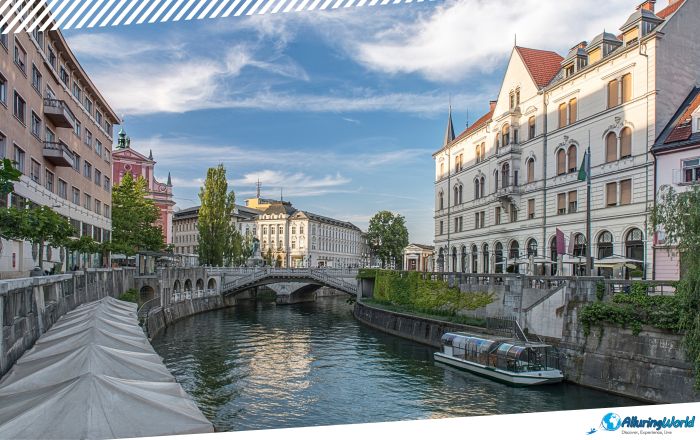
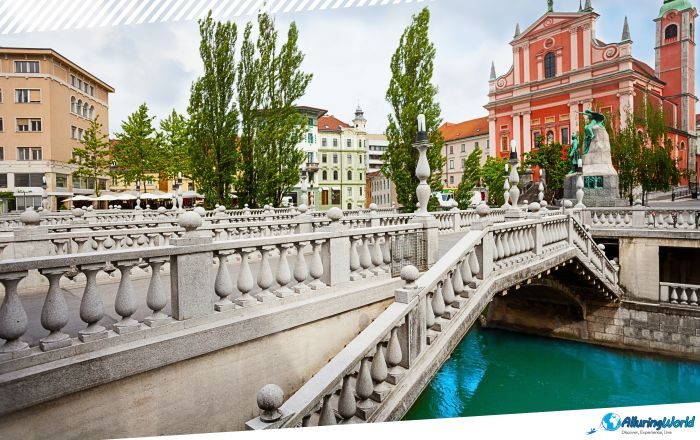
Triple Bridge is a group of bridges that has three bridges over the Ljubljanica River, located in the capital city of the Republic of Slovenia, Ljubljana. While the Triple Bridge is not just a functional crossing, it is rather considered the architectural heart of Ljubljana and a global symbol of the city’s unique charm. Spanning the Ljubljanica River, it connects the historic medieval town on one bank with the modern central Prešeren Square on the other.
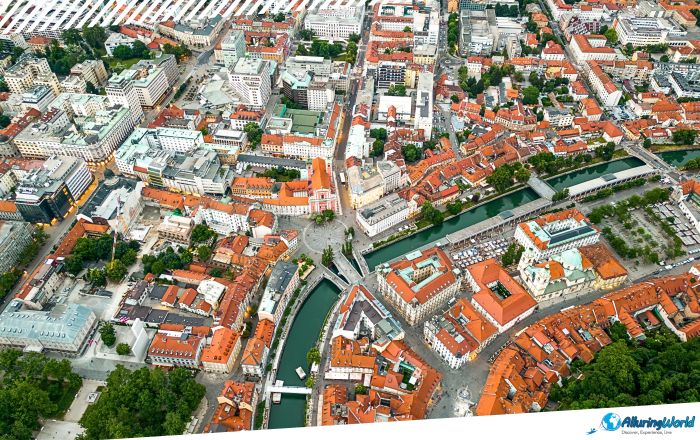
The current location of Lubljana’s great symbol has been the place of another crossing since at least 1280, and the first official structure built in its place was out of wood. As this original structure was made out of a simple wooden structure known as the Old Bridge (and later the Lower Bridge), it served as a vital artery for trade. As we know, wooden constructions are prone to decay and fire, so in turn, this wooden bridge was being replaced throughout the years, and a new bridge has been emerging in the same place.
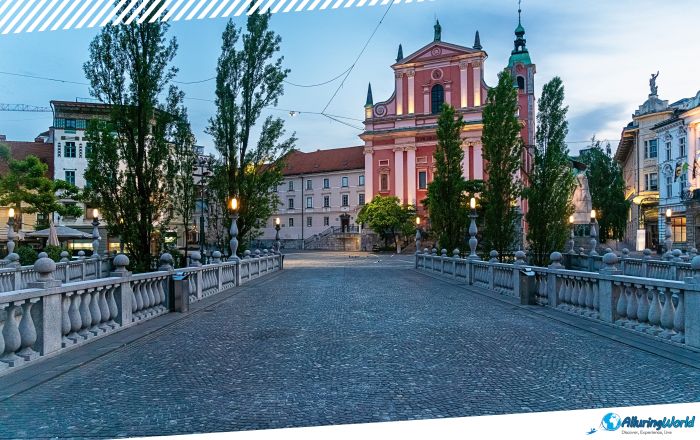
The then-wooden bridge was replaced in 1842 by a robust stone arch bridge designed by the Italian architect Giovanni Picco, and ever since then, this central span has remained the anchor of the current complex. The bridge was this time constructed from Glinica limestone, concrete, artificial concrete, and granite blocks, which gave the Triple Bridge the robust structure needed to survive for centuries.
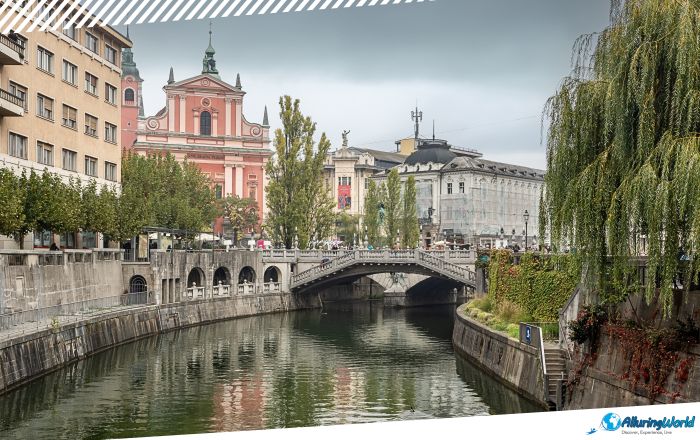
Its historical significance is immortalized by the Latin inscription on the central pier: “ARCHIDVCI. FRANCISCO. CAROLO. MDCCCXLII. CIVITAS.” – translated to “To Archduke Franz Karl in 1842 by the Town.” This dedication honored the Austrian Archduke, leading many to refer to it as Franz’s Bridge during the 19th century. Throughout the decades, the bridge was the main artery of the city of Ljubljana, and it was not fully ready for the incoming changes to how people travelled.
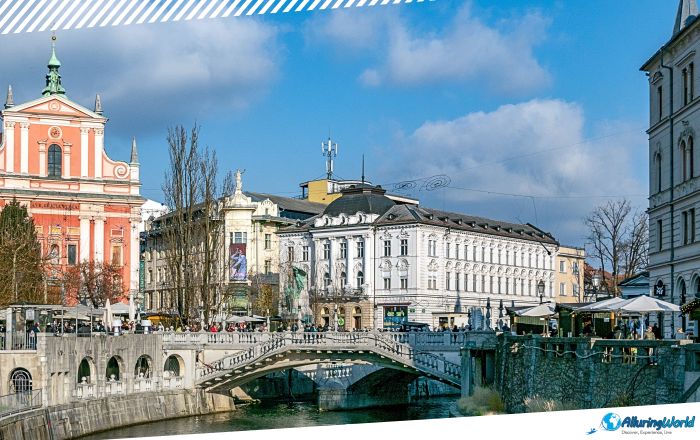
By the early 20th century, the 1842 bridge faced a modern crisis as the rise of automobile traffic was increasing, and it created a dangerous bottleneck for pedestrians who were still using the bridge to get to each of the Ljubljanica riverbanks. The idea of solving this issue came in 1929, when the renowned Slovene architect Jože Plečnik proposed a radical yet quite elegant solution. Rather than demolishing the historic bridge and rebuilding something new, he chose to flank it with two narrower footbridges.
ADVERTISEMENT
This idea made sure that the historic 1842 bridge will remain as it is, and intact, will go through the new century, thus creating the iconic “fan” shape we see today. Plečnik was quite inventive in Triple Bridge’s reconstruction and building projects, so he replaced the old metal railings with massive stone balustrades and unique lamps, consequently creating a visual rhythm that unifies the three separate spans.
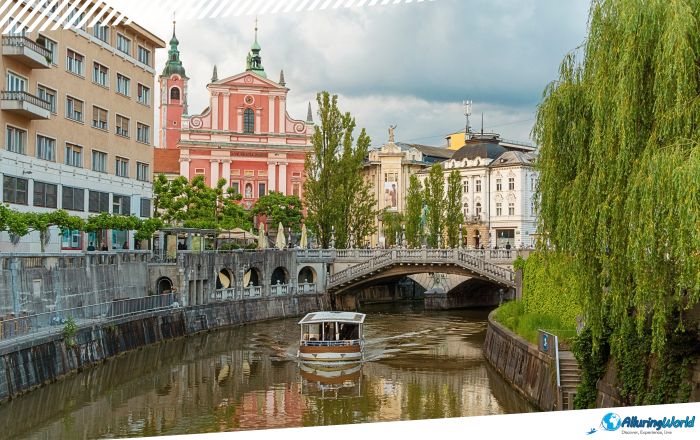
Interestingly, Plečnik added stone staircases on each of the side bridges, which lead down to the lower river-level terraces, where poplars were planted to blend the urban structure with nature. The construction of the side bridges began in 1931 and was completed in the spring of 1932, with the official opening held in April of that year. Ever since then, the bridge has been known as the Triple Bridge, and it is the most recognizable landmark in Slovenia’s capital, Ljubljana.
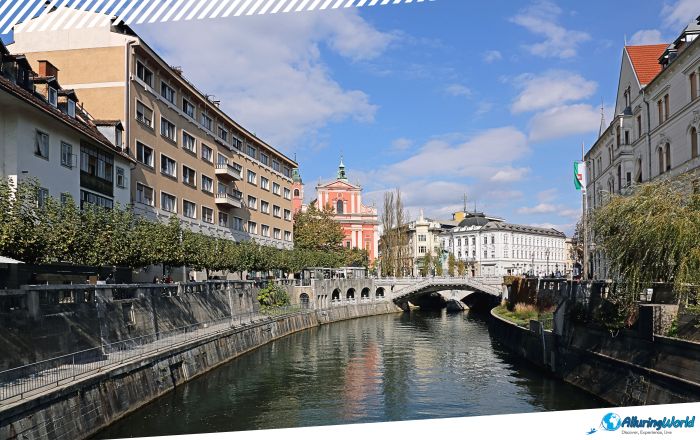
For decades, the central bridge carried motor vehicles while the side spans served pedestrians, but there was a minor change in 2007. As part of Ljubljana’s “Vision 2025” to create a green, car-free city center, the entire Triple Bridge was restricted to pedestrians and cyclists only, and that restriction is still in force today. While being a great landmark, the Triple Bridge today also serves as the primary stage for street performers, festivals, and the daily pulse of Slovenian life.
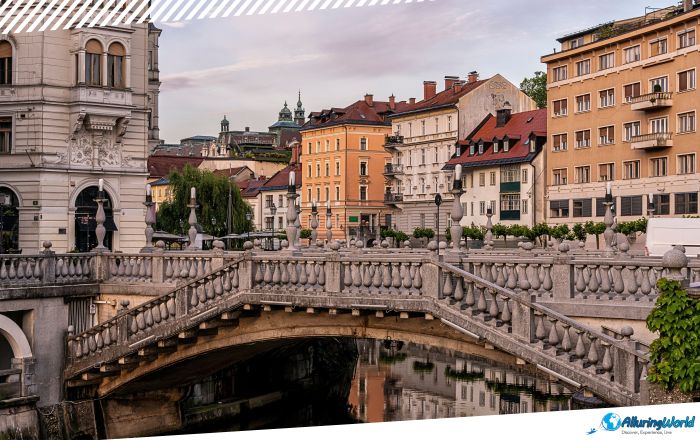
In conclusion, as the Triple Bridge stands as a testament to the seamless blend of historical preservation and modernist vision, it will remain the crown jewel of Ljubljana’s urban landscape. It is more than a mere crossing, but it is considered today as a living monument where the 19th-century elegance of Giovanni Picco meets the transformative genius of Jože Plečnik.
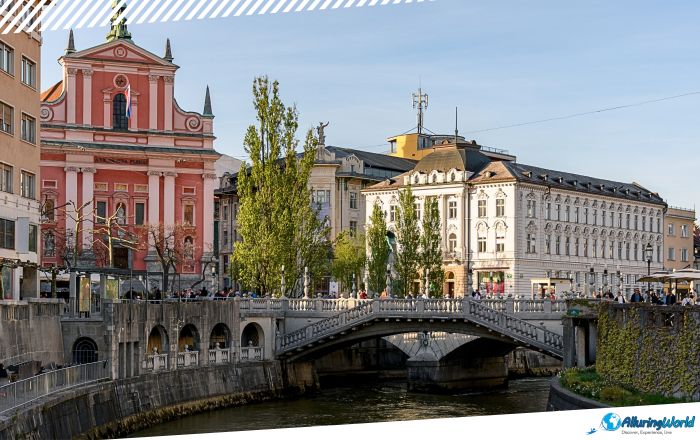
By evolving from a congested transit point into a tranquil, pedestrian sanctuary, the bridge reflects the spirit of the city itself: a city that values its architectural heritage while prioritizing a green, human-centered future. If you are visiting this Balkan nation, it would be impossible for you to miss it, and whether viewed from the riverbanks or crossed on foot, it will remain an essential stop for any traveler seeking the heart of the Republic of Slovenia.