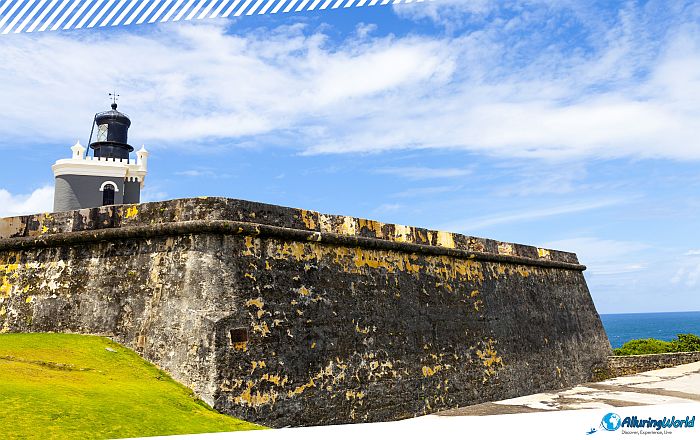
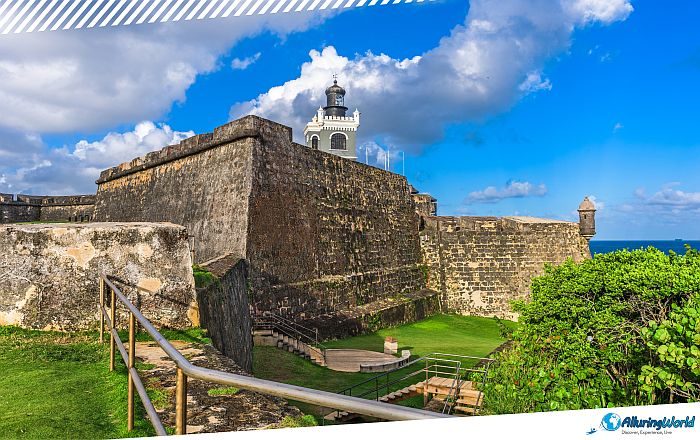
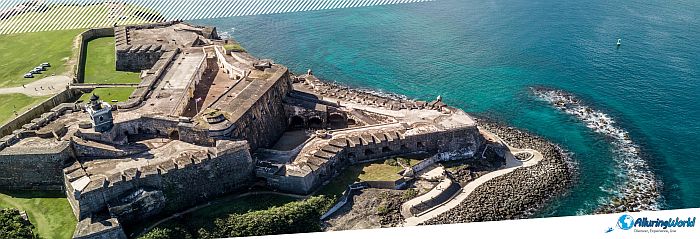
Castillo San Felipe del Morro, or as it is better known, Morro Castle, is a citadel that dates back to the 16th century, located in the capital city of the island nation of Puerto Rico, San Juan. Standing guard at the entrance of San Juan Bay, acting like a huge stone warship, Castillo San Felipe del Morro is considered to be Puerto Rico’s quintessential military heritage. Standing tall at the extreme northwest tip of Old San Juan, looking out towards the Atlantic Ocean, El Morro was built in the 16th century, and ever since then, it has stood its ground in protecting the Caribbean island.
For history buffs, architecture enthusiasts, and casual travelers alike, El Morro offers a journey through four centuries of imperial warfare, pirate raids, and structural evolution, and if you are visiting Puerto Rico’s capital, then this is a place that you will not want to miss. The tale of El Morro starts with the castle being built in 1539 through the instructions given by the King of Spain at that time, King Charles V, although despite the castle not being named after him, it was named in honor of his successor, King Philip II.
San Juan was an important harbor for the Spanish Empire, and Spain desperately needed to defend its role in the region due to the critical role because the island was the first major port of call for the Spanish treasure fleets returning from the Americas loaded with silver and gold. In other words, if an enemy power captured San Juan, they could choke off the entire Spanish empire’s supply line, and Spain would suffer great losses.
Although the initial fortification consisted of a mere masonry tower, the fear of any foreign attack led to a drastic re-planning of the structure. During the latter part of the 16th century, field marshal Juan de Tejada, along with the celebrated Italian military architect Juan Bautista Antonelli, came to Puerto Rico to design the final layout of the fortress. With this said, El Morro was not built overnight; rather, it took over 200 years of continuous labor to reach its peak form, adapting constantly to keep pace with changing military technologies.
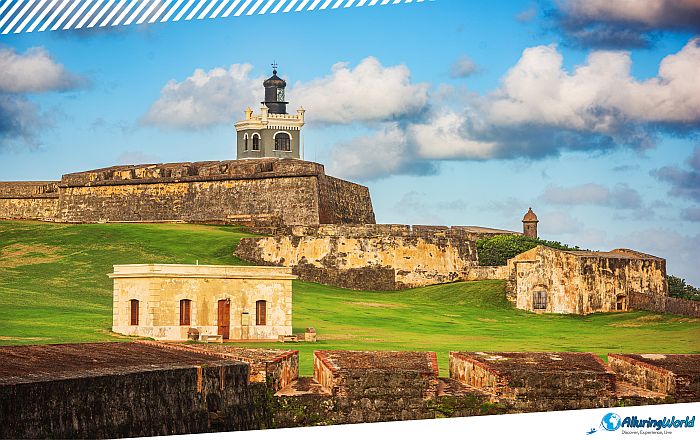
The evolution of its defensive walls tells the story of this escalating arms race, as we witness the entire structure today:
- The Original Shield: In the late 1500s, the outer walls were constructed with a modest thickness of roughly 1.8 meters (6 feet), designed to withstand early artillery.
- The Imperial Upgrade: By the end of the 18th century, as explosive cannonballs became standard, engineers augmented the walls to a staggering 5.5 meters (18 feet) in thickness, packing them with a mixture of limestone, mortar, and broken seashells to absorb impacts.
- The Walled City: To prevent land-based attacks, Governor Enrique Enríquez de Sotomayor initiated construction of the massive San Juan city walls in 1680. It took 48 years to wrap the entire islet in stone, effectively turning Old San Juan into a closed military stronghold.
ADVERTISEMENT
Throughout the years, we can see that El Morro is a colossal stone maze built in six staggered layers. This particular layout was constructed deliberately, as it allowed the defenders to move up to higher levels if the enemy were able to invade the lower levels, and attack from above. To get a small glimpse of its organization, we need to consider the following together with the diagram:
- The Dungeons and Storerooms: Located in the dark, damp belly of the lower tiers, these rooms held prisoners, gunpowder, and enough food rations to survive a multi-month siege.
- The Main Courtyard: Situated on the upper levels, this open area features barracks, a chapel, and a grand triangular ramp that allows soldiers to haul heavy cannons between tiers quickly.
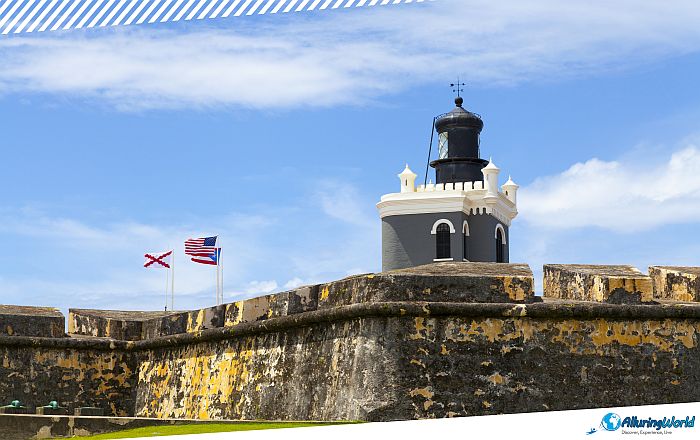
- The Modern Lighthouse: While the fort is ancient, its distinctive gray lighthouse was added by the Spanish in 1843 and later rebuilt by the U.S. Navy in 1908 after it sustained damage during the Spanish-American War.
+----------------------------------------+
|       Level 6: The Lighthouse/Crest    |
|   +--------------------------------+   |
|   |    Level 5: Main Courtyard     |   |
|   |   +------------------------+   |   |
|   |   | Level 4: Santa Barbara |   |   |
|   |   | +--------------------+ |   |   |
|   |   | | Level 1-3: Battery | |   |   |
+---+---+--+--------------------+--+---+---+
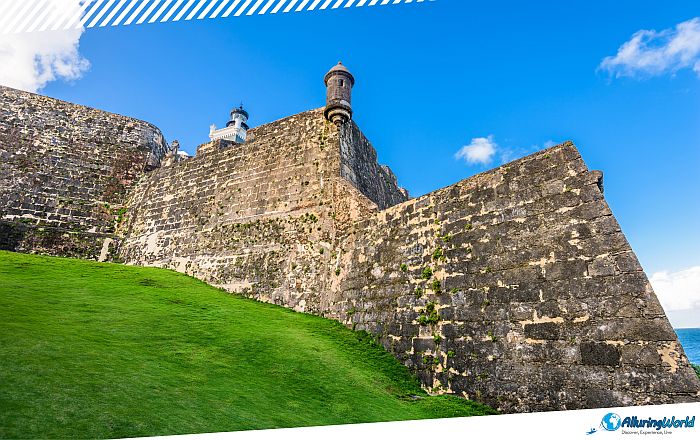
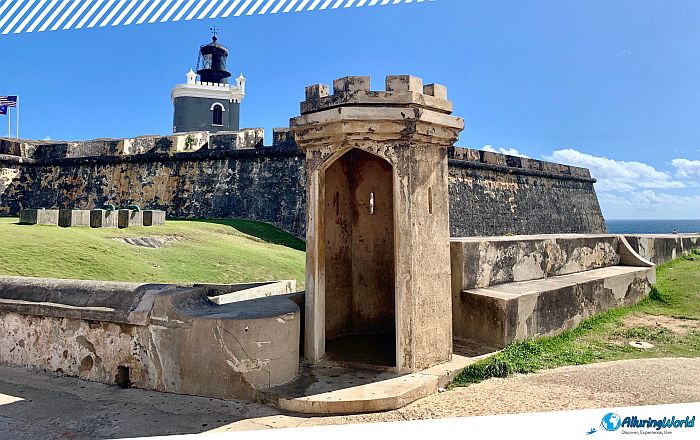
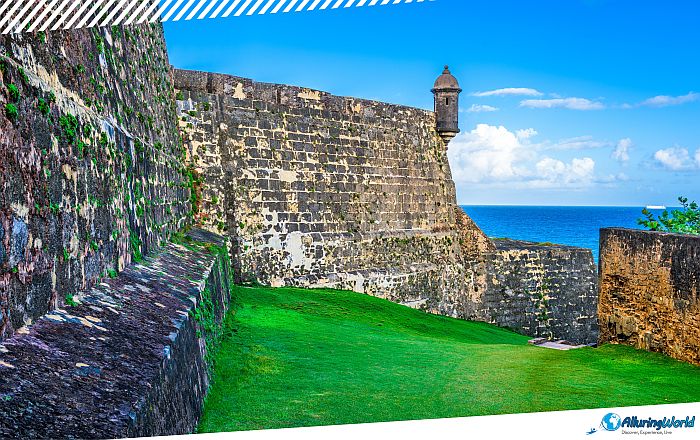
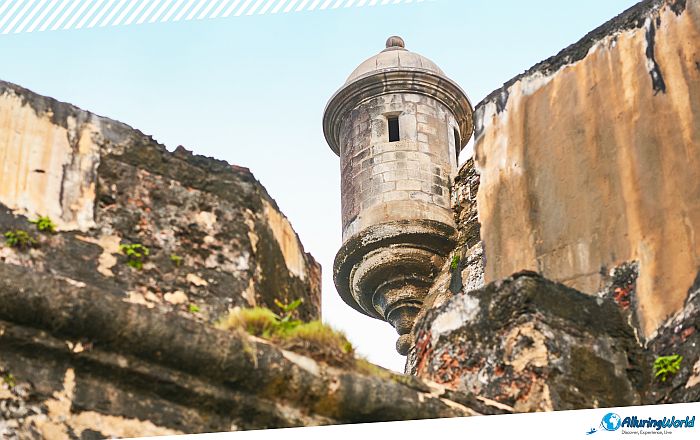
However, strategically placed throughout the walls are the garitas, which are dome-shaped guardhouses. These guardhouses provided cover for watchmen to observe enemy ships approaching without exposing themselves to gunfire. Even though they had very important roles in the past, the garita today serves as a national symbol for Puerto Rico, representing its rich culture despite its dark history. The garita can be seen everywhere in Puerto Rico, including on license plates and souvenir merchandise.
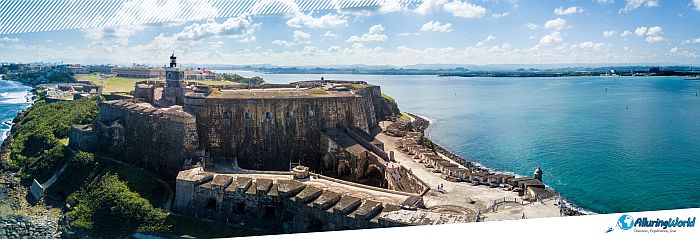
When we look at the entire history of El Morro, we will see that the fortress’s formidable reputation was earned in combat. It successfully repelled some of the most famous naval commanders in world history:
- Sir Francis Drake (1595): The legendary English privateer attacked San Juan with a massive fleet, but gunners from El Morro fired a cannonball straight through the cabin of Drake’s flagship, forcing an English retreat.
- George Clifford, Earl of Cumberland (1598): Clifford managed to capture the fort from the landward side, but a devastating outbreak of dysentery among his troops forced the English to abandon the island after just a few months.
- The Dutch Assault (1625): Dutch forces under Boudewijn Hendricksz burned the city of San Juan, but they could not breach El Morro’s walls and were eventually driven away.
In 1898, following the Spanish-American War, the fortress transitioned into American hands, serving as part of Fort Brooke during World War II. It wasn’t until 1961 that the military officially stepped aside, turning the grounds over to the U.S. National Park Service.
Recognizing its unparalleled historical and architectural value, UNESCO declared El Morro, along with the rest of the San Juan National Historic Site, a World Heritage Site in 1983. Today, the massive green lawn that once served as a clear firing line for Spanish cannons is used by locals and tourists alike for flying kites, picnics, and taking in the sea breeze; a peaceful transformation for one of the Caribbean’s most historic battlegrounds.
In conclusion, Castillo San Felipe del Morro stands as a timeless monument to engineering resilience and imperial ambition. From its 16th-century origins to its status as a UNESCO World Heritage Site, El Morro has seamlessly transitioned from an impenetrable military stronghold into a cherished cultural sanctuary. As its historic garitas continue to look out over the Atlantic, the citadel remains a bridge between Puerto Rico’s dramatic history and the millions of visitors who walk its staggered stone levels today.