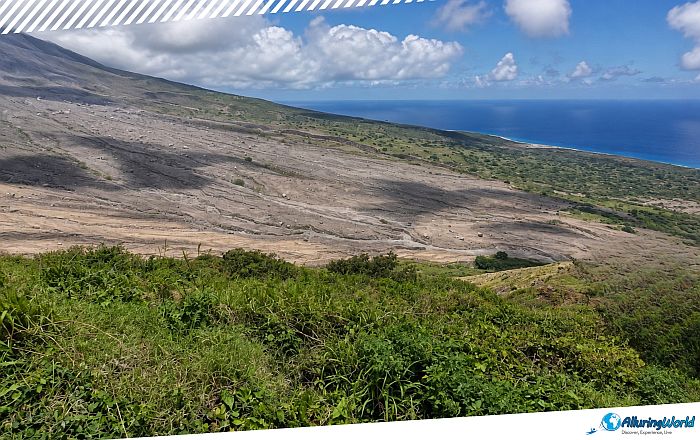
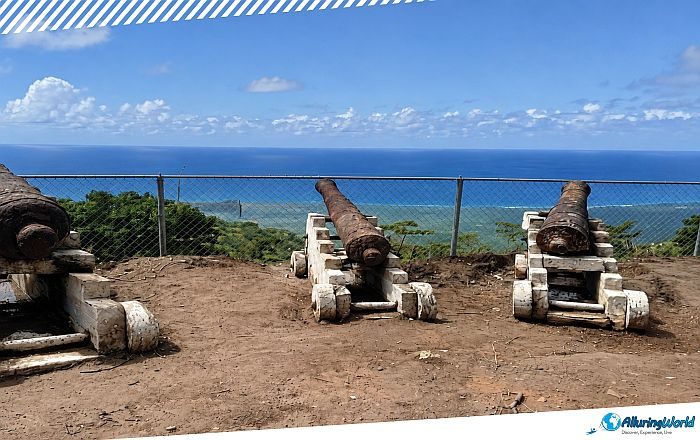
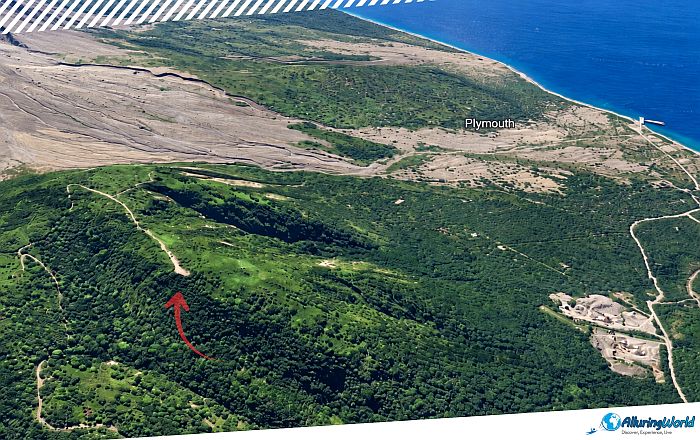
Fort St. George, sometimes referred to as St. George’s Hill Fort or St. George’s Hill Historical Site, is a historic military fortification and scenic viewpoint located on St. George’s Hill, in the northwestern part of the Saint Anthony Parish, within the southern part of the British Overseas Territory in the Caribbean, Montserrat. Fort St. George stands at an elevated position overlooking the southern part of the island, thus being at a very special location that represents the blend of military strategy of the 18th century and natural history. While most forts in the Caribbean region still retain their stone walls, ramparts, and cannons, Fort St. George has lost all this, and it has become a scenic viewpoint for tourists. Though the original structures are gone, the hill position provides a great view over the ruined capital Plymouth and the Soufrière Hills volcano.
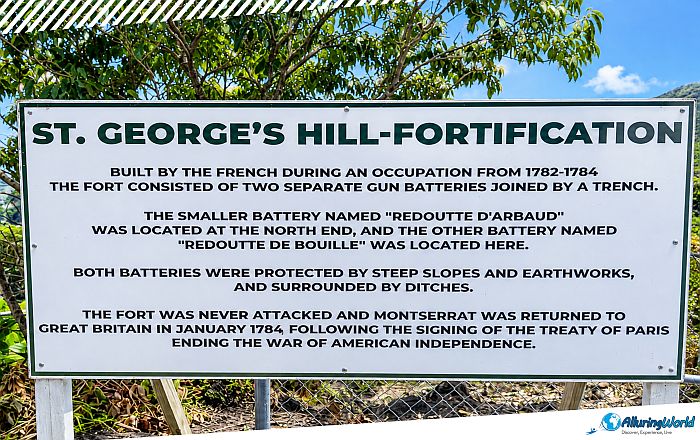
Fort St. George’s history belongs to an era when the island of Montserrat was in a very exposed situation due to its location in the Eastern Caribbean island chain. Today, if you are interested in Caribbean colonial history, military heritage, and volcanic geology, then this spot will offer you something that you will not experience in other places. From historical records, it is evident that Fort St. George was built in 1782 when Montserrat was occupied by the French. Contrary to being a large fortified stone building, Fort St. George was a small fortification with two gun batteries supported by a magazine in between, and its purpose was to protect the nearby shipping routes and coastal approaches with targeted artillery. The construction happened during the American Revolutionary War, which made the Caribbean a crucial area of battle between Great Britain and the French Empire. For these big empires, the islands within the Lesser Antilles were valued due to their sugar estates, good harbors, and strategic position on important maritime trade routes, so it was expected that they would fight for every island.
Montserrat had previously experienced eras of conflict, especially during the 17th century, leading to the creation of defense positions along different coastal areas. Fort St. George was one of several fortifications built within the island for the purpose of safeguarding the settlements and harbors in Montserrat. Historians have identified complementary battery sites at Plymouth, Kinsale, Bransby Bay, and Old Road Bay. The construction of Fort St. George in 1782 was directly tied to the brief control of the French over Montserrat, and its construction had a lot to do with the short period of French control of Montserrat.
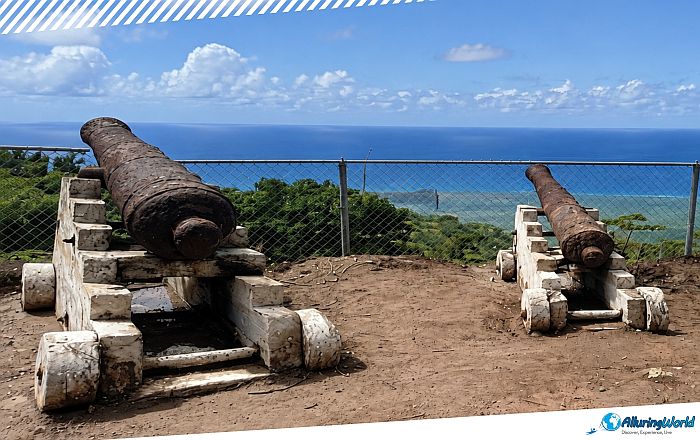
Nonetheless, the management of the fort by the French was only temporary, because according to the treaty that was signed on 3 September 1783 between Great Britain and France, ending the war between the two countries, the sovereignty of Montserrat was restored to Great Britain. The fast shift between powers meant that the period of the fort’s active use was quite short. Still, this fort is valuable as a source of information on the rivalry between the empires and military strategy in the West Indies in the 18th century.
ADVERTISEMENT
Unlike larger defense forts such as Brimstone Hill in Saint Kitts or Fort Charlotte in Saint Vincent, Fort St. George was considerably smaller. The defense capability mainly relied on its two battery placements and its protected powder magazine. Overall, the importance of Fort St. George lay not in its structure but in its geographical location. The fort’s location on high ground gave it control of the valleys surrounding it as well as of the approaches to Plymouth and the coast. If you visit this place, you will not find intact outer walls or restored barracks. The original structures that comprised the fortification largely disappeared over time, thus making the site a historical landmark that is embedded in the natural setting.
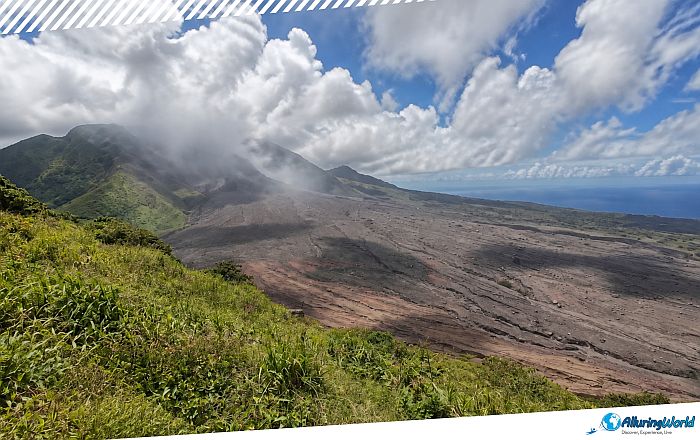
The biggest change in the disappearance of the fort was the Soufrière Hills volcano, which reawakened in July 1995 with a series of steam and ash eruptions. Between 1996 and 1997, intense pyroclastic flows and heavy volcanic debris swept down the southern slopes, burying the capital city of Plymouth and forcing permanent evacuations. Large portions of southern Montserrat were subsequently placed under strict exclusion zones. Fort St. George is situated in Zone V, which is the main restricted zone around the volcanic mountain. The Fort is just 3.2 km (2 mi) away from the main crater, and hence it underwent serious environmental transformations during the eruption. When you are visiting the area today, you get a perspective quite different from the standard historical tours. Surrounded by vegetation, exposed volcanic rock, and massive boulders, the area showcases the sheer force of the eruptions. From the high point of the former fort, you will gain clear, elevated views of the buried Plymouth and the volcanic dome.
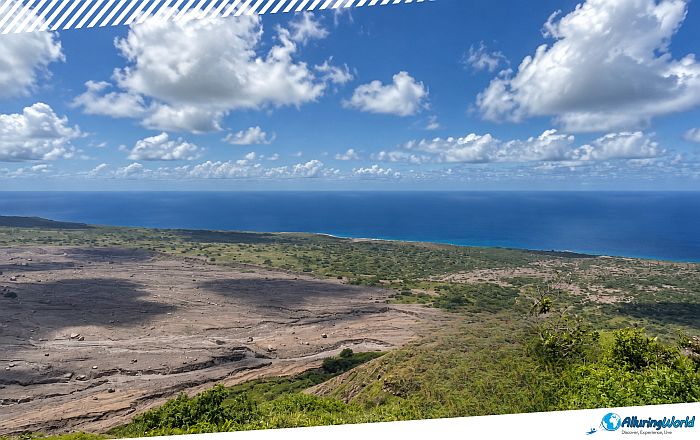
If you are interested in seeing the Fort St. George site, it will be difficult for you to get there on your own since Fort St. George falls under Zone V. Montserrat’s Disaster Management Coordination Agency (DMCA) ensures that all access to the exclusion zone is properly regulated, and tourists can visit this place only through tour operators and taxi drivers. Access to St. George’s Hill and Fort St. George Point during daytime hours is possible through guided tours, led by a licensed guide with a valid safety permit. Due to changes that might be made in terms of access to the zone depending on volcanic activity status, you might need to check the current access status with the DMCA or a licensed local guide. You should plan to visit Fort St. George because the physical absence of a complete fortress allows the surrounding landscape to take center stage; thus, from a single viewpoint, you can stand at an 18th-century military position, look down upon the ruins of a 20th-century disaster, and observe an active volcanic system, all within one panoramic view.
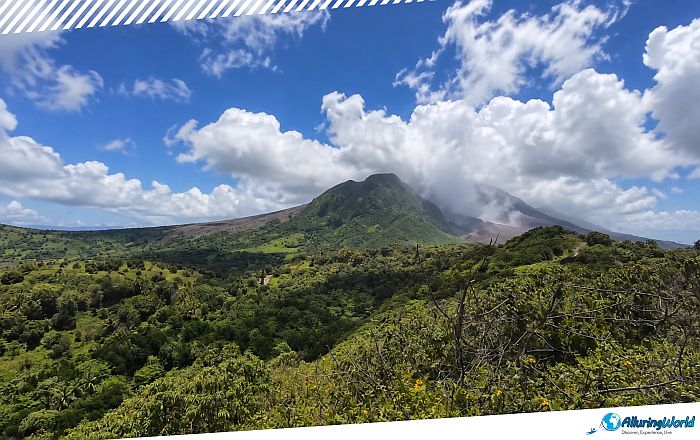
In summation, Fort St. George is a place that provides a rare combination of historical layers within the Caribbean region, which successfully bridges the distance between 18th-century military conflicts and contemporary natural power. Although there are few visible elements left from the original battery walls and powder magazine of the fort, the geographic importance of this area is still preserved. The visit to Fort St. George with the help of certified local guides makes tourists feel the depth and meaning of the island’s past and present; thus, Fort St. George demonstrates that even without any physical evidence, the historical site is able to convey its message.