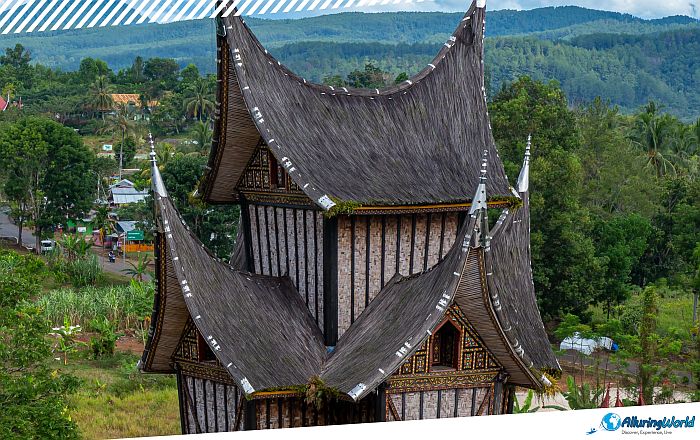
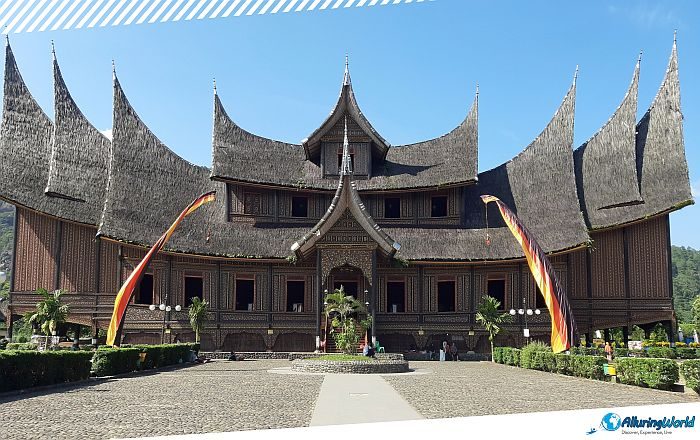
Pagaruyung Palace is a grandiose royal palace, also referred to as the istana of the former Pagaruyung Kingdom that once ruled parts of Southeast Asia, and the palace is located in the Tanjung Emas district near Batusangkar town, Tanah Datar Regency, West Sumatra, Indonesia.
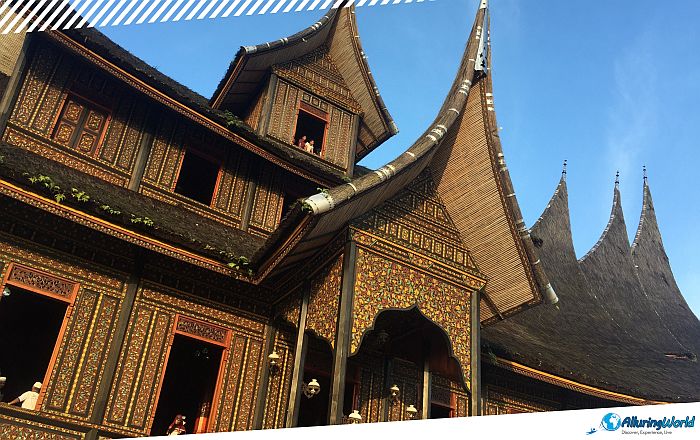
Pagaruyung Palace was built in the traditional Minangkabau rumah gadang vernacular architectural style, but had a number of atypical elements, including a three-floor structure and larger dimensions compared to the common rumah gadang.
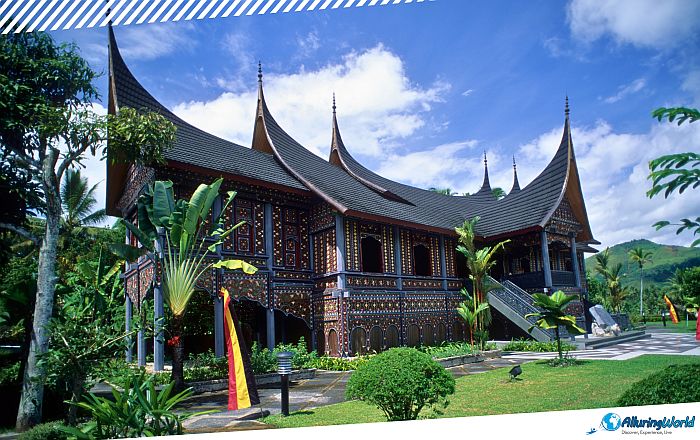
However, the original Pagaruyung Palace was standing on the peak of Pagaruyung’s Batu Patah hill. It was burnt to the ground during a bloody riot in 1804. After that, it was reconstructed and burned several times in 1966 and again in 2007. The recent Pagaruyung Palace is only a replica made for the second time, but it resembles the original one, as close as possible to the original one. This replacement structure was constructed to the south of the original one.
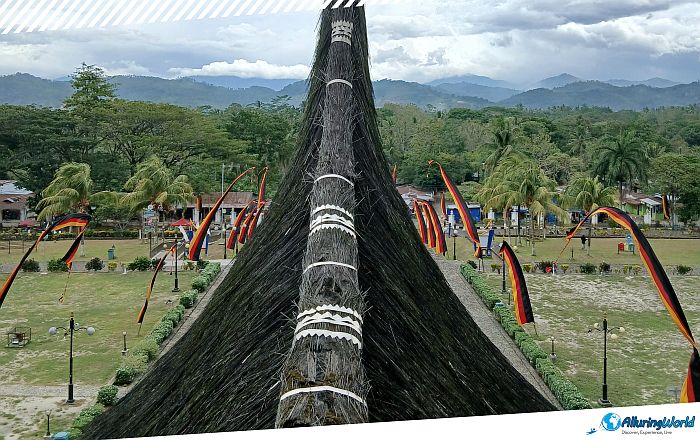
The palace on the peak of the hill was the center of the fourteenth-century Pagarayung Kingdom. According to local myth, the Pagaruyung Kingdom, also called Batu Patah Hill Kingdom, was the origin of all Minangkabau people. It was where Bundo Kanduang, one of its queens, once ruled the kingdom. She is considered the founder of the matriarchal system of Minangkabau society.
ADVERTISEMENT
Although today no king or royal family is residing in this palace, since the Pagaruyung Kingdom was disbanded in 1833, the palace is still held in high esteem among Minangkabau people as the descendants of scattered Minang nobles (bangsawan) still seek their roots and link to the former royal house of Pagaruyung.
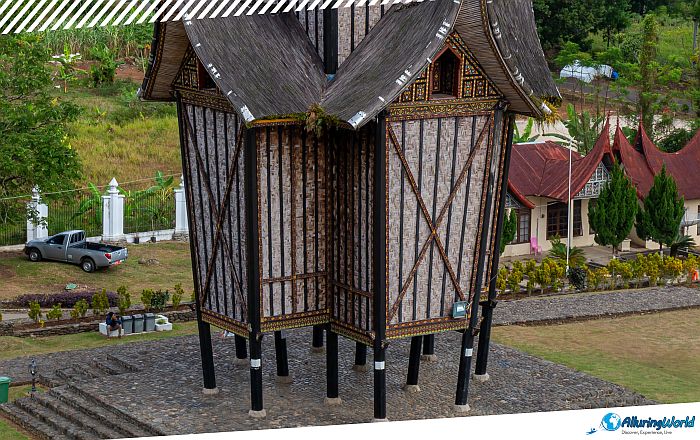
The original Pagaruyung palace was built entirely from timber masonry; the current building frame was built using a modern concrete structure. Nevertheless, the Istano Basa Pagaruyung was quite faithfully restored using traditional techniques and materials adorned with 60 carvings that signify Minang philosophy and culture.
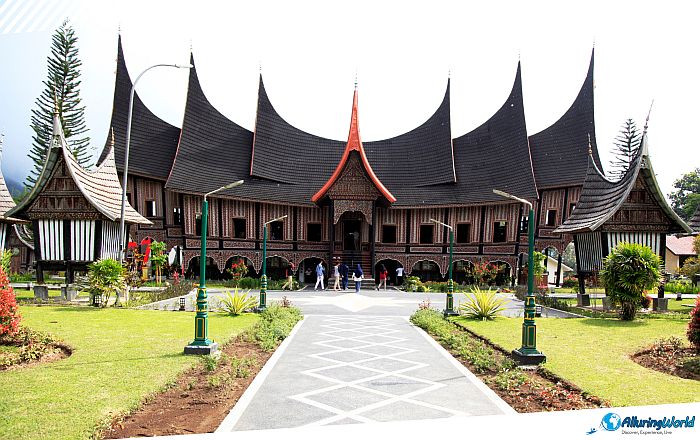
The palace has three floors with 72 pillars and the typical rumah gadang gonjong, with a horn-like curved roof made from 26 tons of black ijuk aren palm fibers. The palace is also furnished with over 100 replicas of Minang antique furniture and artifacts, aiming to revive the palace as a Minangkabau cultural center as well as a tourism attraction in West Sumatra.
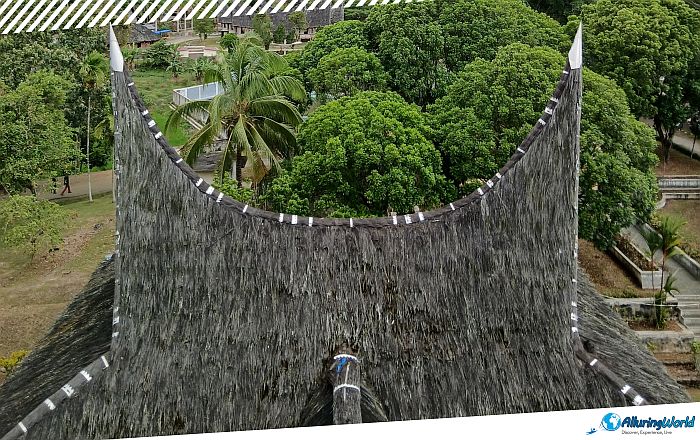
In conclusion, despite not having the original structure preserved for future generations to be able to admire and get inspired to follow the traditional roots of their ancestors, the current structure is still used as an inspiration and a guide for future traditional architectural buildings, and it is represented as one of the greatest monumental structures that has been built in Indonesia.