
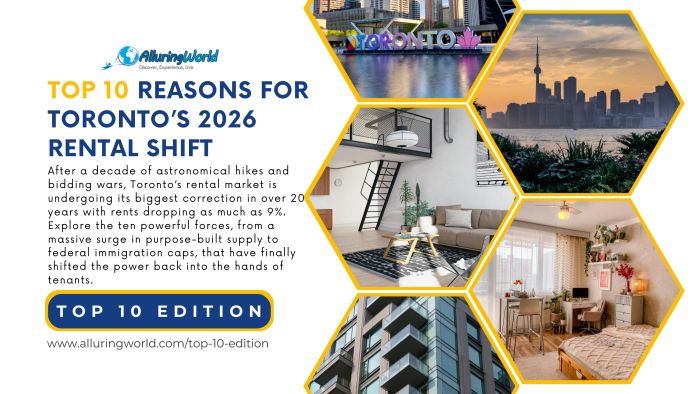
The Toronto apartment rental market has been characterized by intense competition, chronic undersupply, and astronomically high prices for nearly a decade. Toronto tenants got accustomed to bidding wars and phantom listings, while the annual rent hikes were consistently being increased and outpaced inflation, but all these are facing a new reality in 2026. After the market peaked in 2024, asking rents across the Greater Toronto Area (GTA) started to slowly decline, but in recent years, they have had a notable and sustained decline. This decline is the biggest change in the rental market in over 20 years that the city has experienced, and it completely changes who has the most power: landlords or tenants.
According to current listings seen on places where renters can check Toronto apartments for rent, a one-bedroom unit has dropped roughly 7% year-over-year as of March 2026, while two-bedroom units have seen an even steeper decline of nearly 9%. This reversal is the culmination of several powerful economic, demographic, and developmental regulatory forces that converged simultaneously and created the current situation.
The article below provides a comprehensive analysis of this unprecedented market shift, as it outlines the top ten factors that are responsible for the downward pressure on Toronto rental prices in 2026.
1. Surge in Purpose-Built Rental Completions
The primary catalyst for the price correction is a massive influx of new supply. Following years of government incentives, such as the waiver of GST on new rental construction, the city of Toronto saw thousands of purpose-built rental units that broke ground between 2022 and 2024 have finally reached completion. In 2025 alone, Toronto saw a record number of rental starts, and the momentum has carried into 2026, flooding the market with designated rental stock and reducing the dependency on investor-owned condos.
2. The Great Condo Surplus
Simultaneously, the secondary rental market, which is mainly composed of individually owned condominium units, has experienced a “glut.” A wave of pre-construction condo projects that were purchased during the 2021–2022 period are now completed. Many of these investors, who were under the impression that the prices would remain high, are now facing high interest rates upon mortgage renewal, and they are opting to lease their units rather than sell into a soft resale market. This double-whammy of purpose-built rentals AND investment condos has created an inventory surplus.
3. Higher Vacancy Rates across All Segments
The surge in supply has naturally led to a dramatic rise in the vacancy rate. After hovering around a critically low 1.5% for years, Toronto’s overall rental vacancy rate has jumped to 4.2% in 2026. Within the newer, luxury condo-rental segment, vacancy rates are even higher, exceeding 6%. This excess inventory means units are sitting on the market longer, forcing landlords to lower their asking prices to attract tenants quickly.
4. The Return of Generous Renter Incentives
In a bid to combat rising vacancies, landlords of newer, non-rent-controlled buildings have pivoted from raising rents to offering aggressive incentives. It is now commonplace to see listings promoting “one or two months of free rent,” “free parking for one year,” or “complimentary internet and moving services.” What these incentives effectively do is lower the net rent paid by the tenant over the lease term, even if the base “asking” price appears higher.
5. Impact of Federal Immigration Caps
Demand growth has slowed noticeably following the federal government’s decision to implement strict caps on temporary residents, including international students and temporary foreign workers, which began in 2024. As a major landing hub for newcomers, Toronto has historically relied on immigration to drive rental demand. The reduced inflow has shallowed the pool of prospective tenants, particularly for starter and studio apartments.
ADVERTISEMENT
6. Stabilizing Mortgage Rates and Improved Affordability
Following the rate hikes of previous years, the Bank of Canada has held interest rates steady at 2.25% through early 2026, with variable mortgage rates stabilizing. This stability, combined with a modest decrease in average home sales prices in Toronto, has finally allowed some long-term renters to transition into homeownership. This exodus of financially stable tenants has further eased pressure on the high-end rental market.
7. Increased Tenant Negotiating Power
The shift from a landlord’s market to a balanced or renters’ market has given tenants unprecedented negotiating leverage. Renters are no longer rushing to sign the first lease they find, and they always take their time. The renters are now actively comparing multiple units, seeing what the unit has to offer compared to others, and even requesting viewings without the pressure of imminent competition. This allows the renters to successfully negotiate lower base rents, utility inclusions, or cosmetic upgrades before signing a lease.
8. Geographic Softening beyond the Downtown Core
It is interesting to see that the downward price trend is no longer confined to the downtown waterfront communities. Today, even the peripheral regions such as Etobicoke, North York, Scarborough, and neighboring municipalities like Mississauga and Vaughan are experiencing rental price declines. This widespread softening means the renters and future tenants can find more affordable options in some other places without committing to extreme commutes, further lowering the once-high demand within the central core of Toronto.
9. Shifting Household Dynamics and Roommate Mobility
Years of extreme unaffordability forced many young professionals to rely on roommate arrangements. With the rental prices dropping, a notable shift toward household “de-bundling” is now very noticeable. Many roommates are now leveraging lower prices to move into their own one-bedroom or studio apartments so that they can enjoy their well-deserved freedom and privacy. However, this mobility has increased turnover in larger units, thus contributing to the surplus of two- and three-bedroom listings.
10. Normalization after Post-Pandemic “Catch-Up”
The astronomical rent increases seen in 2023 and 2024 were, in part, a temporary phenomenon of post-pandemic “catch-up,” driven by the return of workers and students to the city. By 2026, this artificial surge had normalized, and things were back to normal. Nevertheless, the current market reflection is more accurately aligned with actual local economic fundamentals rather than speculative or reactionary demand. Even though there will always be a demand for rental units in Toronto, the prices will continue to fluctuate and will adjust based on demand.
To sum it all up, the 2026 rental shift in Toronto is not merely a temporary lull. This is rather a fundamental market recalibration that has been overdue. The confluence of a record-breaking supply of purpose-built rentals, a surplus of investor-owned condos, and a slowdown in demand growth has created a much-needed cooling period. For the first time in nearly a decade, current listings on Toronto apartments for rent offer a great variety, value, and most importantly, the negotiating room for tenants to get the best possible deal. While Toronto remains a comparatively expensive city, the 2026 correction provides a substantial relief, and it further signals a more balanced, sustainable future for the urban rental landscape. Based on the current situation, the local government will decide if new constructions are needed and/or if Toronto will be expanded even more.