
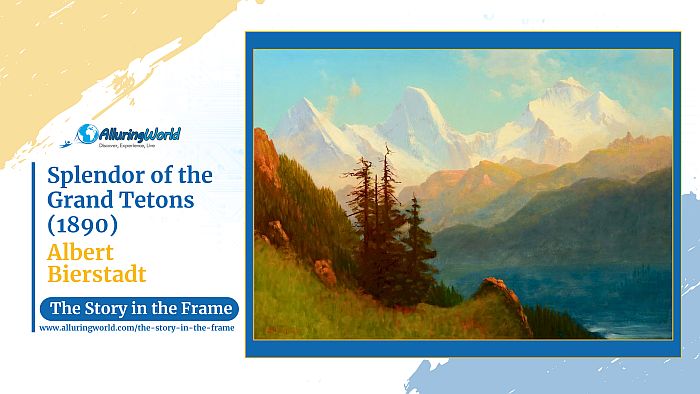
The painting Splendor of the Grand Tetons, painted by the American painter Albert Bierstadt, is often dated to 1890, and it is considered to be one of the most amazing paintings in the art world, depicting the grandeur of the Teton mountain range. Even though the exact date when the painting was completed is not confirmed, it is safe to say that it was painted toward the end of the 19th century. The painting is noted for its brilliant composition, brilliant lighting effects, and a romantic interpretation of the nature of the American West, thus embodying the grandeur and awe-inspiring beauty of untouched wilderness.
About the Painter:
Albert Bierstadt was a German-American painter (1830 – 1902), renowned for painting vast landscapes of the American West as well as his connection with the Hudson River School. Albert Bierstadt was born in Solingen, Germany, and later trained in Düsseldorf, where he gained fame for his mastery of light, fine details, and portrayal of vast natural scenery with great delicacy. He earned a reputation as one of the best and leading landscape painters of the 19th century.
Inspiration and Reasons Behind the Painting:
The Splendor of the Grand Tetons is a perfect example of Bierstadt’s admiration of the unspoiled grandeur of the American frontier. This painting was created under the influence of Bierstadt’s trips to the West and is supposed to instill reverence for nature through the depiction of its grandiose beauty. The sublime beauty of the mountains, rivers, and forests is what inspired Bierstadt to concentrate his work on the landscapes of the American West and create memorable works of art that influenced other artists as well. Overall, the idea of the grandeur of nature and its harmonious coexistence with people was always present in Bierstadt’s works.
What is Depicted in the Painting:
This artwork presents the majesty of the Teton Mountains in the form of huge and steep mountain peaks being highlighted with the glow of the golden light from the setting or rising sun. While the attention should be set on the Grand Tetons, the addition of the tranquil foreground includes a river, a meadow, and scattered trees. This landscape creates contrast with the dramatic verticality of the mountains, while showing a surrounding river valley away from the Grand Tetons. Overall, this scene combines meticulous observation with romantic idealization, thus presenting the landscape to the viewer as realistic and emotionally resonant. The Grand Tetons are shown in the background with snow-covered peaks, and the sunrise/sunset is intimately illuminating them while scattered clouds are slowly enveloping the snowy peaks. The landscape around the river is already in a darker tone, which would deepen the sense of stillness and invite the viewer to linger in the quiet drama of the untouched frontier.
Colors and Techniques:
The use of blue, green, gold, and earthy tones helps Bierstadt depict the sense of depth, mood, and light interaction in the landscape. The artist’s accurate brushstrokes create the texture of rocks, vegetation, and water, and light creates the majestic atmosphere of the painting. Furthermore, Bierstadt skillfully uses atmospheric perspective and colors to create the illusion of endless space and the sublimity of wild nature.
Conclusion:
Splendor of the Grand Tetons by Albert Bierstadt illustrates perfectly all the skills that made him such an amazing painter of landscape paintings. The picture is full of magnificent light, perfect composition, and grandeur, and it shows the beauty and grandeur of nature as well as how wonderful the American West can be. This work of art by Albert Bierstadt will always be considered one of his most admired works, as it can inspire wonder and convey the enduring magnificence of the natural world.