
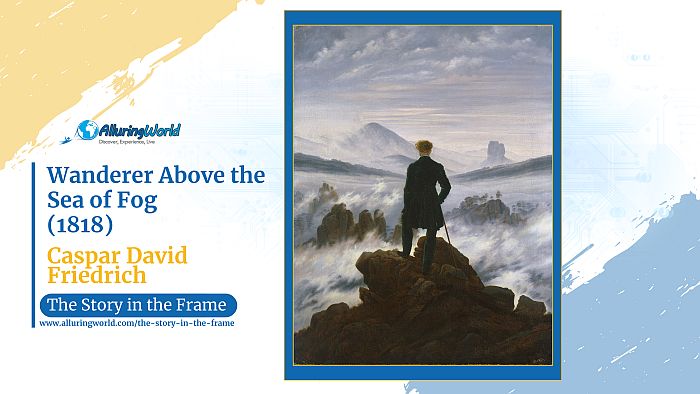
Painted in 1818, the painting Wanderer Above the Sea of Fog by the German Romantic painter Caspar David Friedrich is the epitome of Romanticism, focusing on the sublimity, human reflection, and emotional connection to nature. It has become an iconic image that symbolizes human reflection in the midst of nature and showcases how small humans can be in a big, wide world.
About the Painter:
Caspar David Friedrich (1774-1840) is one of the most famous German Romantic painters and is best known for his landscapes, which have an aspect of spirituality, solitude, and the sublime. Friedrich studied at the Academy of Copenhagen and then in Dresden, where he created landscapes that were realistic and imaginary, which can evoke mood, introspection, and philosophical reflection.
Inspiration and Reasons Behind the Painting:
Wanderer Above the Sea of Fog is an illustration of Friedrich’s admiration for the Romantic fascination with nature in the form of the sublime, where the fear-inducing and inspiring power of nature captivated artists. He was inspired by the idea of the individual who is set against the backdrop of large, unknown landscapes and is experienced as a spiritual and existential force.
What is Depicted in the Painting:
This painting is focused on the image of a lone figure who stands on a rock ledge, looking out on a sea of fog that hides the valleys and mountains below him. He is turned away from the viewer, emphasizing the contemplative and introspective nature of the scene. He wears a dark green coat, referred to as altdeutsche Tracht (old German coat), and holds a walking stick in his hand, in a posture that shows him as calm as possible, while capturing the mesmerizing vista that stands before him. His gaze across the fog-filled sea conveys an element of domination and a quality of humility with respect to the vastness of nature. In this imaginative landscape based on the Elbe Sandstone Mountains in Germany and the Czech Republic (historically Bohemia), there are several rocky, towering peaks that jut out of the fog. At the same time, there are additional hills that compete and slowly try to get the viewer’s attention. Overall, the layered landscape of rocks, mist, and distant peaks evokes a sense of infinite space and mystery.
Colors and Techniques:
In this masterful painting by Friedrich, the color scheme is subtle yet highly expressive. In particular, he uses colors like green, gray, blue, and earthy tones to emphasize the feelings of solitude and contemplation. Additionally, the artist’s brushwork, which is detailed but very expressive at the same time, adds depth and texture from the rocky foreground to the foggy background. The contrast shown between the person admiring the landscape and the nebulous topography heightens the tension between the human presence and the sublime environment, thus giving the painting some mystery that is open to interpretation about what the viewer could be thinking.
Conclusion:
Wanderer Above the Sea of Fog is a perfect example of the skills that Caspar David Friedrich had for Romantic landscape painting, which incorporates emotions, philosophy, and aesthetics. Through the use of the lone figure, the landscape, and the atmosphere, Wanderer Above the Sea of Fog manages to express the sublimity of nature and the experience of the person within it. To this day, it remains one of Friedrich’s most celebrated works of art and a defining image of Romantic art that should be known to art lovers.