
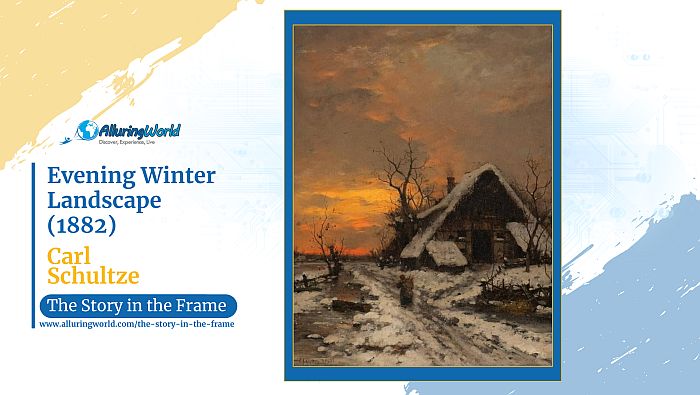
Evening Winter Landscape is an amazing artistic expression that was painted by the German artist Carl Schultze in 1882, and it captures the quiet beauty and stillness of a winter evening. Known for his landscape paintings, Schultze often explored the subtleties of light, season, and atmosphere, as this allowed him to create works that evoke realism and emotional resonance, leaving behind a truly unique art piece. This painting in particular exemplifies his ability to convey the serene and contemplative qualities of the natural world.
About the Painter:
Carl Schultze (1856–1926) was a German painter recognized for his landscapes and depictions of natural scenery. Trained in Germany, Schultze developed a skill for observing and rendering the nuances of light, weather, and seasonal change. His works often focus on rural or forested settings, emphasizing mood, atmospheric depth, and the poetic qualities of the environment. Schultze’s landscapes are celebrated for their careful composition, subtle color harmonies, and the ability to evoke both the physical and emotional aspects of nature.
Inspiration and Reasons Behind the Painting:
Schultze painted during a period when German landscape painting was deeply influenced by realism and the naturalistic observation of seasonal changes. Evening Winter Landscape reflects his fascination with the quiet and contemplative moods created by winter light. The painting likely draws inspiration from the stillness and introspective qualities of the season, emphasizing the contrast between the cold environment and the warmth of evening light, inviting reflection and appreciation of nature’s beauty.
What is Depicted in the Painting:
The composition presents a snowy landscape under the fading light of evening, with trees and fields in a distant village subtly integrated into the scene. The snow-covered ground reflects the soft light, while shadows and silhouettes enhance depth and atmosphere. The scene is devoid of human figures, focusing instead on the tranquil beauty of the winter environment. Schultze emphasizes the interplay of light and shadow, the textures of snow and trees, and the subtle gradations of color in the sky and landscape, creating a meditative and immersive experience.
Colors and Techniques:
Schultze employs a cool, muted palette dominated by whites, blues, and grays, reflecting the winter setting, with subtle warm tones in the evening sky to provide contrast and depth. His brushwork is refined and precise, capturing textures of snow, foliage, and distant landscape elements with realism. Light is treated delicately, highlighting the softness of snow and the atmospheric glow of the evening. The combination of tonal variation, careful composition, and textural detail evokes a sense of quiet, reflective beauty.
Conclusion:
Evening Winter Landscape exemplifies Carl Schultze’s mastery in portraying the serenity and subtle drama of nature. Through careful attention to light, color, and composition, the painting captures the contemplative mood of a winter evening, inviting viewers to appreciate the quiet beauty of the natural world. It stands as a testament to Schultze’s ability to transform a simple landscape into an evocative and emotionally resonant work of art.
NOTE: This painting is part of Schultze’s winter scenes, as this was a recurring theme for his paintings. While there is no definitive proof that he titled the painting Evening Winter Landscape, this name is generally accepted as it showcases the work he has done in this artistic expression.