
Read time ca. 8 minutes
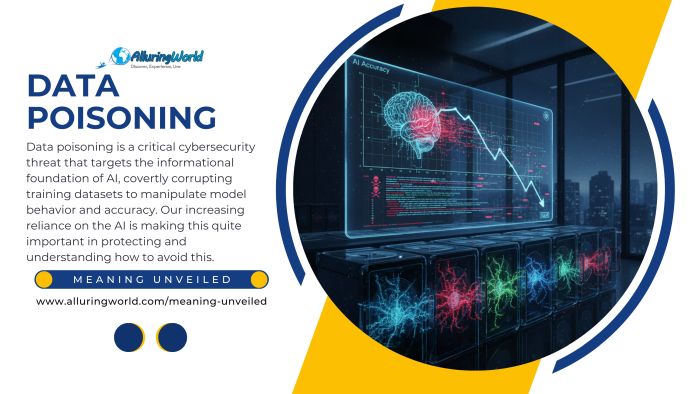
Data poisoning has become one of the most critical concerns in the modern digital landscape, especially with the further development of artificial intelligence and large-scale datasets, which shape today’s decisions in finance, healthcare, security, and online platforms. The term ‘data poisoning’ refers to deliberate attempts to corrupt data that is used to train machine-learning models, which in the end will ultimately influence their behavior, accuracy, or integrity. Because the reliance on automated systems grows every day, if we manage to understand why data poisoning is essential for anyone interested in cybersecurity, artificial intelligence, or digital ethics, we would be able to address the issues, and be able to use the AI models for better improvement of daily tasks, instead of using them for a generic creation of TikTok reels, as an example. Exploring how this threat works, its growing relevance, and the response strategies used today allows readers to fully grasp why protecting data is now as crucial as protecting physical infrastructure.
What Data Poisoning Represents:
In short, data poisoning describes intentional manipulation of datasets before or during the training phase of a machine-learning system. These systems learn by extracting patterns from vast amounts of information, and any alteration in that information can shift the model’s learned patterns in subtle or dramatic ways. Far from the traditional hacking, which often targets software vulnerabilities, data poisoning targets the informational foundation of the system itself. When the foundation is altered, the resulting decisions or predictions become unreliable, misleading, or biased, and this, unfortunately, will not necessarily trigger any alarms.
This form of attack is particularly concerning because modern AI uses enormous datasets gathered from public sources, user interactions, and automated collection tools. If adversaries manage to add some misleading entries or perhaps if they alter existing records, then the model’s future behavior may be influenced long before the corruption is discovered. The threat exploits a fundamental truth: a model is only as trustworthy as the material it learns from.
How Data Poisoning Works:
There are several forms of data poisoning attacks, and each one of them is designed to affect the system in a specific way. One type introduces incorrect examples into the training data, causing the model to generalize improperly. Another strategy manipulates the distribution of data so the model prioritizes flawed patterns. In more targeted scenarios, attackers may craft subtle entries intended to produce a desired outcome with minimal detection.
Unlike visible system breaches, data poisoning is often difficult to identify. The altered information may appear legitimate at first, and the model may still perform normally in most cases. The damage becomes clear only when the manipulated pattern is activated, resulting in flawed behavior, and this can be manifested as misclassification, incorrect predictions, or unintended prioritization. This hidden nature makes data poisoning particularly effective and challenging to counter.
Why Data Poisoning Is Becoming More Common:
The expansion of AI into every primary industry has increased the incentive for malicious actors to exploit data vulnerabilities. Many organizations collect information from external sources, crowd-generated content, or automated scraping tools, while competition can also use data poisoning towards their competitors to slow down their progress. Despite being efficient, this model creates opportunities for harmful entries to blend into legitimate datasets, and false information to spread as a valid and correct one. When harmful input is aggregated at scale, even minor modifications can have significant repercussions.
At the same time, the growth of open machine-learning frameworks and publicly released models has created opportunities for adversaries to analyze training processes. Understanding how models are built allows attackers to craft precise, subtle manipulations. Furthermore, the modern emphasis on automation means AI systems are often retrained continuously, increasing the window in which harmful data can enter unnoticed.
ADVERTISEMENT
Sectors Most Vulnerable to Data Poisoning:
AI-driven systems are now embedded in many essential operations, and several fields face heightened risks:
- Finance: Because algorithms today evaluate creditworthiness, detect fraud, or manage automated trading, they rely heavily on clean, reliable data. Poisoning these datasets can influence financial decisions or disrupt markets.
- Healthcare: Systems that assist in diagnostics or treatment recommendations require highly accurate and verified information. Altered medical datasets could produce misguidance with serious consequences.
- Security and Policing: Facial recognition and threat-detection algorithms depend on datasets that, if corrupted, may misidentify individuals or misinterpret behaviors.
- Content Platforms: All of the recommendation engines, moderation tools, and ranking mechanisms rely on massive volumes of user-generated content. When such data is poisoned, it can influence visibility, spread misinformation, or distort user experience.
- Autonomous Systems: With the advancement of technology, vehicles, drones, and industrial automation require precise pattern recognition. When sensor data or training sets are manipulated, this can lead to unpredictable and unsafe responses.
As we can see, each of these sectors demonstrates how deeply data poisoning can influence modern infrastructure, thus shaping outcomes in invisible ways.
The Motivations Behind Data Poisoning:
The reasons for conducting data poisoning vary widely. Some attackers use these tactics for financial gain, influencing algorithms in a way that benefits them directly. Others may aim to cause operational disruption by degrading the accuracy of critical systems. When it comes to the competitive fields, data poisoning may be used to sabotage rival technologies. There are also ideological motivations, where groups attempt to distort datasets to influence public perception or manipulate automated content systems.
In some rare cases, there are individuals who may use data poisoning to expose vulnerabilities, acting as activists or security researchers. Regardless of the motive, the effect remains the same: a compromised system that no longer behaves as intended.
The Consequences of Data Poisoning:
The impact of data poisoning extends far beyond system malfunction, but as this is a serious threat that can erode trust in technological infrastructure, compromise safety, and undermine public confidence in automated decision-making, it is something that should always be on everyone’s mind. In sectors such as healthcare or transportation, errors can have tangible consequences. In financial or governmental contexts, corrupted data can distort policy or amplify inequities.
Another concern is reputational damage. If an organization deploys a compromised model, the resulting failures reflect poorly on its credibility. Because data poisoning often remains undetected, organizations may not realize the root cause until after harm has occurred.
Defensive Strategies and Emerging Solutions:
To be able to protect organizations from data poisoning, there are different and multilayered approaches. The first, and probably the most critical line of defense, involves rigorous dataset verification. Organizations increasingly use auditing tools that scan for anomalies, inconsistencies, or suspicious patterns before they incorporate the new information into their training pipelines. These audits are becoming essential as datasets grow in size and complexity.
Another strategy involves maintaining more transparent oversight of data sources. Systems trained on verified, internally curated datasets face fewer risks than those that rely on large public repositories. Some developers now incorporate techniques that make models resilient to small manipulations, helping them remain stable even when minor corruptions occur.
Monitoring during deployment is equally important. When organizations continue to evaluate the data, they can reveal unexpected model behavior early, prompting further investigation. As AI adoption expands, researchers and industry experts are developing defensive frameworks that anticipate potential attacks and reinforce system reliability long before issues arise.
Why Understanding Data Poisoning Matters Today:
The conversation around data poisoning reflects a broader shift in thinking about technology. Because AI is assisting everyone in shaping decisions across different societies, this is no longer a peripheral tool. With this influence comes the responsibility to understand the vulnerabilities built into the systems we depend on. To be able to recognize how data poisoning works empowers professionals, policymakers, and everyday users to advocate for stronger protections, and at the same time, to influence data poisoning from ever happening.
By learning about the risk, organizations and individuals can support safer digital ecosystems, but this topic is not merely technical. This topic involves ethics, transparency, and responsible innovation because awareness strengthens resilience, encourages better data practices, and supports a future where AI will remain a force that can bring positive outcomes rather than a platform for manipulation.
Conclusion:
In conclusion, data poisoning represents a modern and very important challenge in an era that is mainly defined by data-driven decisions. Since it affects sectors at the heart of daily life, from healthcare to online platforms, and it exposes vulnerabilities within systems that many assume to be objective and reliable, it is crucial to understand and address the complexities behind it. Understanding how this threat emerges and why it matters equips readers to recognize the importance of safeguarding information at every stage, from collection to deployment. As AI continues to expand in influence, awareness becomes one of the most powerful tools for protecting the integrity of the digital world, and you should be aware of any information that you are reading because it might come from a data-poisoned model that treats the information as a correct.