
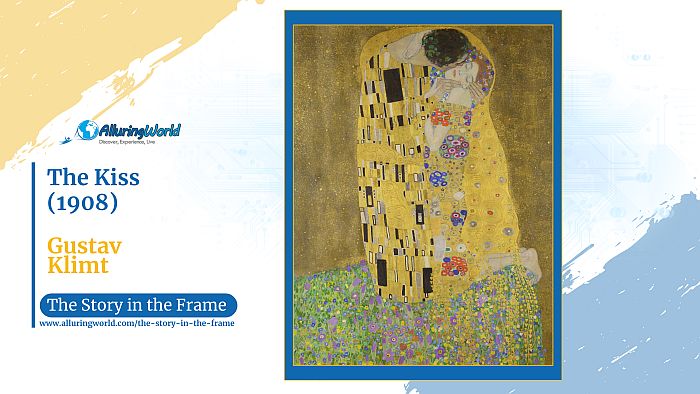
Painted between 1907 and 1908, The Kiss by Austrian Symbolist master Gustav Klimt is a luminous and intimate portrayal of love, passion, and sensuality. The painting is one of Klimt’s most celebrated works, exemplifying his golden period and his distinctive fusion of symbolism, ornamentation, and expressive human emotion.
About the Painter:
Gustav Klimt (1862–1918) was an Austrian painter and a leading figure of the Vienna Secession movement. Trained at the Vienna School of Arts and Crafts, Klimt developed a style characterized by decorative patterns, symbolic imagery, and a combination of realism and abstraction. His works often explore themes of love, eroticism, and the human condition, merging ornamental beauty with profound psychological insight.
Inspiration and Reasons Behind the Painting:
Klimt painted The Kiss during his golden period, influenced by Byzantine mosaics, Symbolist ideas, and the Art Nouveau movement. The work reflects his fascination with human intimacy, sensuality, and the transcendence of love. Klimt sought to capture not just the physical act of a kiss, but the emotional and spiritual connection between two individuals, elevating a personal moment to universal significance.
What is Depicted in the Painting:
The composition shows a couple embracing, the man bending to kiss the woman, who tilts her head in surrender. Both figures are enveloped in a richly patterned golden robe adorned with geometric and floral motifs. The background dissolves into gold, creating a sense of timelessness and ethereal radiance. The focus is on the intimate gesture and the enveloping, ornamental patterns that symbolize unity, passion, and transcendence.
Colors and Techniques:
Klimt employs a lavish palette dominated by gold leaf, combined with earthy tones, greens, and subtle reds to enhance depth and luminosity. His technique integrates oil paint with gold and silver leaf, creating a shimmering, mosaic-like effect. Decorative patterns contrast with the realistic rendering of faces and hands, blending abstraction with naturalism and emphasizing both the physical and spiritual dimensions of love.
Conclusion:
The Kiss exemplifies Gustav Klimt’s genius in merging symbolism, ornamentation, and emotional expression. Through golden surfaces, intricate patterns, and intimate human connection, the painting celebrates love, sensuality, and transcendence. It remains one of Klimt’s most iconic works and a timeless symbol of romantic and artistic passion.