
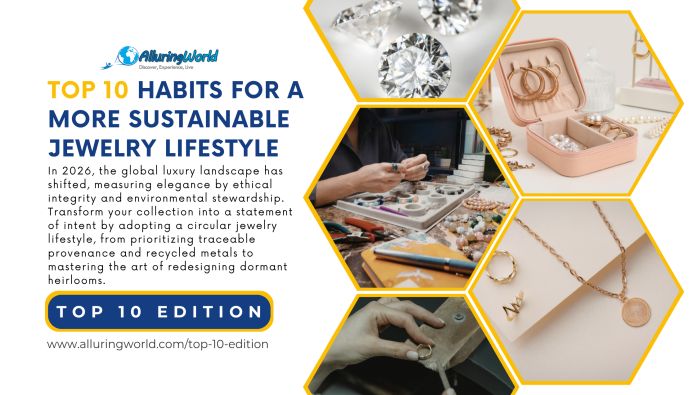
The global luxury landscape is undergoing a profound transformation. In 2026, elegance is no longer measured solely by brilliance and rarity but equally by responsibility and ethical integrity. For the modern collector, a jewelry lifestyle is no longer a static statement, but this is seen today as an active participation in what we have as a circular economy, which accentuates the environmental stewardship and human rights without sacrificing the aesthetic joy of fine craftsmanship. When you adopt sustainable habits, you are making sure that your personal collection reflects your values, transforming objects of beauty into statements of intent. If you are honest and care about the jewelry you wear, then here are the ten essential habits that will help you to cultivate a truly sustainable jewelry lifestyle.
1. Adopt an “Editor’s Mindset” Through Regular Audits
You should always start by reviewing what you have in your jewelry box because sustainability begins with this understanding. Many jewelry boxes contain a “dormant portfolio” of pieces that are rarely worn due to shifting tastes, broken clasps, or outdated styles, and you definitely have something that you haven’t worn in a long time. By having an editor’s mindset, you can audit your collection annually, and you can identify which pieces still define your signature style and which no longer serve you. With this, you can make intentional decisions about maintenance, redesign, or recirculation.
2. Prioritize Traceability and Provenance in New Purchases
When you are obtaining new pieces, your first question should be: Where did this come from? Traceability is the hallmark of ethical luxury in 2026, so you should seek the origin of the piece you like. A reputable jeweler should provide documented provenance, particularly for gemstones, to ensure that they are properly traceable. There are always scientific documentations that can list the gemstone, such as GIA Diamond Origin Reports, which physically link polished stones to their rough origin. This document will confirm to you that they were sourced in regions adhering to strict labor and environmental standards, and you can proudly wear them.
3. Verify Third-Party Ethical Certifications
While the term “ethical” can be a vague marketing statement that is most of the time abused, you can still have a clear answer. To ensure your purchase supports legitimate, responsible practices, you should rely on accredited third-party certifications. The Responsible Jewellery Council (RJC) sets mandatory standards for ethical, human rights, social, and environmental practices throughout the supply chain. Fairmined Gold is among the other valid certifications, since they guarantee a fair price and developmental premium for small-scale miners, and SCS-007 for certified sustainability-rated diamonds.
4. Embrace the Elegance of Vintage and Antique Pieces
When you opt to use jewelry that already exists, such as vintage or antique jewelry, you are making the decision to entirely bypass the environmental impact of modern mining. These vintage and antique pieces offer a unique historical narrative, a story that might be linked to them and you can share, and even exceptional craftsmanship that cannot be replicated with modern tools. When you preserve and proudly wear an heirloom left to you from your mother or grandmother, then you are honoring its legacy while participating in the ultimate circular act: extending the lifecycle of luxury.
5. Support the Use of Recycled Precious Metals
Even though certain metals can degrade when they are recycled, fortunately, the precious metals like gold and silver can be recycled indefinitely without degrading in quality. When you choose your jewelry from 100% recycled sources, you are deciding to significantly reduce the demand for newly mined ore. According to current standards, the carbon footprint of recycling gold is dramatically lower than that of traditional extraction methods. You should look for brands that have verified commitments to recycled metals, thus contributing to a system that reclaims value from “dead” capital rather than ecosystems.
ADVERTISEMENT
6. Curate a Versatile, High-Quality “Capsule” Vault
When you think of the minimalist wardrobe, then the philosophy applies to fine jewelry as well. A sustainable lifestyle favors owning fewer, higher-quality pieces that offer maximum versatility over a large collection of rarely worn items. A curated capsule vault might include a signature watch, classic studs, and a versatile chain. If you invest in exceptional craftsmanship, you are ensured longevity, preventing the cycle of “disposable” luxury that cannot endure daily wear.
7. Actively Participate in the Circular Economy
Sustainability means keeping valuable materials in motion. As with other things in life, a major key habit with the jewelry is deciding when a piece is ready for its next life. If your audit reveals items in good condition that you no longer consider to wear, then the most efficient way to sell your unused jewelries online is through verified circular luxury platforms. When you re-home these pieces via reputable reselling channels, you can recoup the asset’s value while providing other jewelry lovers with access to sustainable, pre-owned luxury, thereby reducing the need for new material extraction.
8. Master the Art of Sustainable Restoration and Redesign
Even if you do not want to have a piece of jewelry in your box, before parting with that piece, consider its potential for transformation. A sustainable collector builds a relationship with a skilled jeweler specializing in restoration and custom redesign. A setting from a past era can be remounted, a damaged family heirloom can be repaired, or multiple small gems can be compiled into a single modern masterpiece. When you decide to redesign, this breathes new life into existing assets, further conserving the raw materials while creating a bespoke heirloom.
9. Understand the Ethical Landscape of Alternative Gemstones
We started 2026 with more choices than ever regarding alternative gemstones. Natural, ethically sourced gems and lab-grown alternatives have a place in a sustainable collection, provided the consumer understands the trade-offs. While lab-grown diamonds bypass mining impact, natural diamonds from verified ethical mines (like those in Canada or Botswana) provide crucial economic support to local communities. This economic support is especially important to communities in underdeveloped African countries. The habit here is informed decision-making based on transparency.
10. Implement Proper Preservation for Long-Term Value
If you really adore a piece of jewelry from your collection, then the longevity of that specimen is directly tied to how you care for it. While fine jewelry requires careful preservation to maintain its structural integrity and value for future generations, there are others that might not need that special care. Still, if you manage to adopt gentle cleaning habits like using natural, unscented soaps and soft tools, you will get the most out of it as you are avoiding harsh chemicals that can damage porous gems or patinas. Furthermore, if you have the option to store pieces separately in lined pouches, then you should always do this because it prevents them from scratching. When the jewelry pieces do not touch, you are ensuring they remain pristine without requiring energy-intensive professional refinement later.
In conclusion, a sustainable jewelry lifestyle is not defined by perfection, but by a consistent commitment to informed, intentional choices. When you adopt these ten habits, you transform your engagement with luxury from passive consumption to active stewardship. The value of a jewelry collection today is measured by its fiscal worth and by the clean conscience and positive legacy it carries forward. With all this said, you should not postpone implementing these habits in your daily life, but you should make them your mantra if you want to be part of the sustainable generation that will have a great legacy for themselves.