
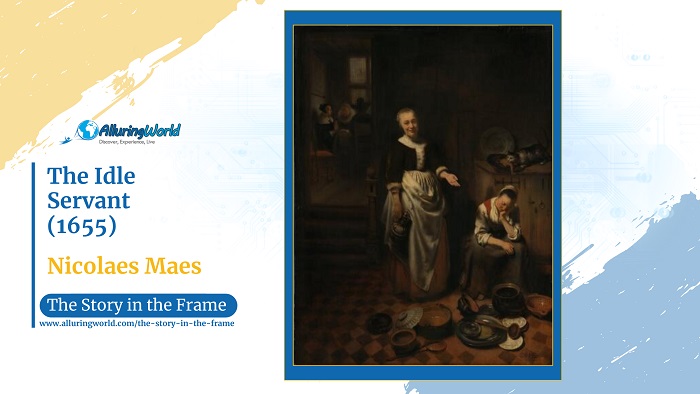
Painted in 1655, The Idle Servant by Dutch Golden Age painter Nicolaes Maes is a finely detailed and symbolic genre scene that reflects both humor and moral instruction. Known for his skill in depicting domestic interiors, Maes presents a scene that contrasts diligence and negligence within a household, using storytelling and symbolism to engage viewers. The work fits into the broader Dutch 17th-century tradition of moralizing art, where everyday settings were used to teach values and comment on social behavior.
About the Painter:
Nicolaes Maes (1634–1693) was a Dutch painter and one of Rembrandt’s most talented pupils. He initially adopted Rembrandt’s dramatic use of chiaroscuro in his early biblical and historical paintings but later turned to genre scenes and portraits, which brought him great success. His domestic interiors, particularly those from the 1650s, stand out for their lively narratives and moral undertones, often contrasting virtue with vice or diligence with laziness. Later in his career, Maes became one of the leading portrait painters of the Netherlands, particularly in Amsterdam.
Inspiration and Reasons Behind the Painting:
Maes painted The Idle Servant during a period when Dutch artists frequently used genre scenes to express moral lessons disguised as depictions of ordinary life. This painting can be read as both a humorous observation of domestic life and a subtle warning about laziness. Servants were central to Dutch middle-class households, and their behavior often symbolized wider themes of order, discipline, and virtue. By showing an exhausted maid neglecting her work while her mistress points toward her, Maes delivers a moral lesson about the consequences of idleness.
What is Depicted in the Painting:
At the center of the scene, a maid sits slumped on a chair, clearly overwhelmed or asleep, with dirty dishes scattered on the floor around her. The mess includes overturned bowls, plates, and pots, emphasizing her negligence. Standing beside her is the mistress of the house, smiling as she gestures toward the servant in a manner that is both reproachful and amused. Behind them, in a separate room visible through a doorway, figures are seated around a table, enjoying leisure, food, and conversation. The composition cleverly contrasts order and disorder, work and leisure, highlighting the tension between responsibility and idleness.
Colors and Techniques:
Maes employs a rich yet subdued palette, with earthy browns, warm reds, and creamy whites that enhance the intimacy of the interior scene. His use of chiaroscuro, learned from Rembrandt, is evident in the way light falls on the mistress and the idle servant, emphasizing their roles within the narrative. The details of the scattered kitchenware, the maid’s tired posture, and the faint glow from the background room demonstrate Maes’s careful observation of everyday life. The overall composition balances realism with symbolic storytelling, making the painting visually engaging and morally instructive.
Conclusion:
The Idle Servant is both a humorous domestic scene and a moral commentary on laziness and neglect. Through expressive gestures, careful detail, and symbolic contrast, Nicolaes Maes transforms a simple household moment into a layered narrative about virtue and vice. The painting reflects the values of Dutch society in the 17th century, where discipline and order were prized, and it remains an enduring example of how genre painting could combine everyday realism with timeless lessons.