
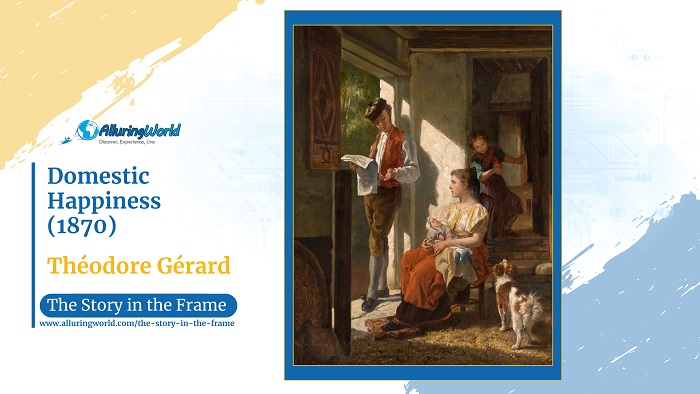
Painted in 1870, Domestic Happiness by Belgian artist Théodore Gérard is a tender and intimate genre scene that reflects the values of family, simplicity, and everyday joy in 19th-century life. Gérard, known for his detailed depictions of peasant interiors and family life, masterfully combines narrative warmth with technical precision. The painting captures a moment of harmony, offering a glimpse into the affectionate bonds of a modest rural household.
About the Painter:
Théodore Gérard (1829–1895) was a Belgian painter celebrated for his genre scenes, which often portrayed rural families in moments of daily activity, leisure, or tender intimacy. A graduate of the Royal Academy of Fine Arts in Ghent, he dedicated much of his career to capturing the authenticity of peasant life in Belgium and Germany. His works were widely exhibited and admired for their ability to convey warmth, moral themes, and social realism without losing artistic refinement. Gérard’s style emphasized storytelling, detailed observation, and a balance between realism and sentiment.
Inspiration and Reasons Behind the Painting:
The 19th century saw a rise in demand for paintings that reflected domestic virtues and the sanctity of family life. Gérard, deeply attuned to this cultural climate, often painted scenes that emphasized unity, affection, and the dignity of rural households. Domestic Happiness was inspired by the idea that true joy is found not in wealth or luxury, but in the quiet moments shared among loved ones. Through this work, Gérard idealized the peasant family as a symbol of honesty, stability, and enduring values.
What is Depicted in the Painting:
The composition portrays a rural family in the warm light of their home. At the center, a young mother sits with an infant in her arms, her calm expression directed toward her husband, who stands by the doorway reading aloud from a newspaper or letter, perhaps sharing important news with his family. Behind her, a child leans playfully against the doorway, adding an element of innocence and joy to the scene. At the mother’s feet, a loyal dog gazes upward, embodying faithfulness and companionship. The interplay of figures creates a circle of intimacy, where each character contributes to the atmosphere of comfort and affection.
Colors and Techniques:
Gérard employs a warm and natural palette, dominated by earthy browns, soft whites, and muted reds, creating a sense of harmony and tranquility. The gentle play of sunlight filtering through the doorway illuminates the central figures, casting soft shadows that enhance the depth of the space. The textures of clothing, wood, and stone are carefully rendered, reflecting Gérard’s attention to detail. His brushwork is smooth and precise, characteristic of academic realism, while the distribution of light adds a poetic, almost narrative rhythm to the painting.
Conclusion:
Domestic Happiness is more than just a depiction of a household; it is a timeless celebration of family, love, and the fulfillment found in ordinary life. Through Gérard’s careful composition, warm palette, and sensitive storytelling, the viewer is invited into an intimate moment that transcends its 19th-century setting. The painting continues to resonate as a reminder of the enduring values of unity, care, and simple joys that define the essence of human happiness.