
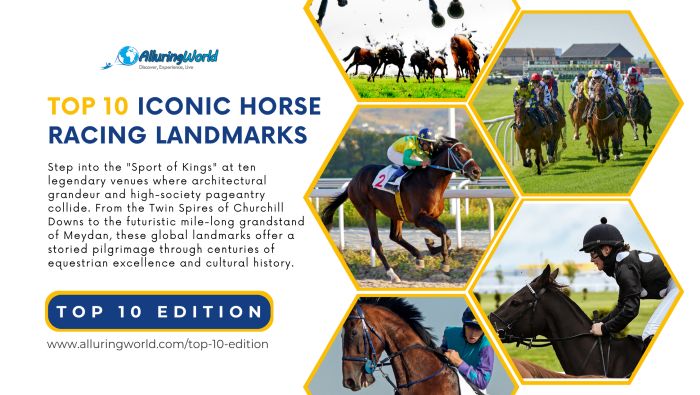
Horse racing is often called the “Sport of Kings,” but for the millions who flock to its most storied cathedrals every year, it is much more than a hobby, because some consider it to be a pilgrimage. Beyond the thundering hooves and the photo finishes lies a collection of venues that have surpassed sport to become global cultural landmarks. These locations are the intersection of architectural grandeur, high-society pageantry, and centuries of human history.
What elevates a simple dirt or grass track to the status of a landmark? It is a rare “secret sauce” composed of three vital ingredients: extreme longevity, social significance, and the hosting of events that capture the imagination of the entire world. From the rolling hills of the English countryside to the futuristic skyline of Dubai, the ten venues we bring to you below represent the pinnacle of equestrian excellence.
1. Churchill Downs (Kentucky, USA)
You cannot have a list of derbies without the home of the Kentucky Derby. Established in 1875, Churchill Downs is instantly recognizable by its signature Twin Spires. As the first leg of the American Triple Crown, the “Run for the Roses” is arguably the most famous two minutes in sports. It is a venue where tradition, as it usually includes mint juleps, elaborate hats, and the singing of “My Old Kentucky Home,” is just as important as the athletes on the track. Many are closely reviewing the betting odds at Churchill Downs, fueled by the perennial excitement of the competition.
2. Ascot Racecourse (Berkshire, UK)
Founded by Queen Anne in 1711, Ascot is the crown jewel of British racing. Every June, there is the Royal Ascot meeting, which is the ultimate display of English high society, where the Royal Procession and a strict dress code define the atmosphere. It remains a venue where the connection to the monarchy is palpable, making it a living museum of British culture and prestige.
3. Flemington Racecourse (Melbourne, Australia)
The Flemington Racecourse is thought to be the spiritual home of Australian racing. Hosting the Melbourne Cup since 1840, this is a race so significant that it is also known as “the race that stops a nation.” The venue is a sprawling masterpiece of horticultural beauty and historic grandstands. The Flemington, therefore, represents the heart of Australia’s deep-seated sporting passion and remains the premier destination for racing enthusiasts.
4. Longchamp Racecourse (Paris, France)
Located in the Bois de Boulogne, Longchamp is the epitome of Parisian elegance. It is the host of the Prix de l’Arc de Triomphe, which is considered to be the most prestigious flat race in Europe. Longchamp blends high fashion with elite athleticism, thus serving as a beacon of French culture since 1857.
5. Epsom Downs (Surrey, UK)
If you have ever used the word “Derby” to describe a sporting event, then you are paying homage to Epsom Downs. Hosting the original Epsom Derby since 1780, this venue features a unique, challenging terrain that tests the stamina and agility of the world’s finest thoroughbreds. It remains a public common, allowing for a unique, carnival-like atmosphere that welcomes everyone from commoners to queens.
6. Saratoga Race Course (New York, USA)
Affectionately known as “The Spa,” Saratoga is the oldest major sporting venue that can be found in the United States. The Saratoga Race Course dates back to 1863, and it is famous for its Victorian architecture and its reputation as the “Graveyard of Champions.” Named due to the legendary horses like Secretariat and Man o’ War who famously met defeat, The Spa definitely deserves its nickname. Nevertheless, it captures the charm of a bygone era better than any other track in the world.
7. Aintree Racecourse (Liverpool, UK)
Aintree is the home of the Grand National, which is the world’s most famous steeplechase. Since 1839, the track has been feared and respected for its daunting fences, such as “Becher’s Brook.” It is a venue defined by grit and endurance, where the stories of underdog winners have become the stuff of global legend.
8. Santa Anita Park (California, USA)
With the San Gabriel Mountains providing a majestic backdrop, Santa Anita is widely considered the world’s most beautiful racetrack. Its stunning Art Deco architecture and “Great Race Place” reputation make it a Hollywood favorite. The Santa Anita Park is a landmark, not just for California, but a landmark of the American West, further symbolizing the glamour and scale of California racing.
9. Meydan Racecourse (Dubai, UAE)
Meydan represents the future of horse racing in the Middle East. The racecourse was opened in 2010, and this architectural marvel features a grandstand over a mile long, which hosts the Dubai World Cup. The Meydan is a great symbol of the Middle East’s emergence as a global power in the sport, consequently offering luxury and technology that is unmatched anywhere else on the planet.
10. Piazza del Campo (Siena, Italy)
Unlike any other venue on this list, the Piazza del Campo is a medieval city square that transforms twice a year for the Palio di Siena. This bareback race dates back to the 1600s and is a fierce, primal competition between the city’s districts. It is a landmark of human history, where the ancient world and modern sport collide in a spectacle of color and speed.
Planning Your Pilgrimage: How to Visit These Icons
Visiting these global landmarks requires a blend of travel savvy and an understanding of local traditions, whether you are looking for the high-fashion experience of the Royal Enclosure or a casual day at the “Graveyard of Champions.” Here is how to navigate a visit to these historic tracks.
Strategic Booking and Timing
Most of these venues operate on a seasonal calendar. While the tracks often host smaller race meets throughout the year, the “Landmark Events” (like the Kentucky Derby or the Melbourne Cup) require planning at least 6 to 12 months in advance.
- Off-Peak Visits: If the spectacle of a million-dollar race isn’t your priority, visiting during a “mid-week” meet is significantly more affordable and allows you to explore the historic architecture without the massive crowds.
- Morning Works: Many tracks, such as Saratoga and Churchill Downs, allow the public to watch “morning works” for free or a small fee. This is a magical time to see the world’s most expensive athletes exercising at sunrise.
Navigating the Dress Code
One of the most intimidating aspects of visiting a historic racecourse is the attire. These venues are among the last bastions of formal public dress.
- The Strict Enclosures: At Ascot (especially the Royal Enclosure) and Longchamp, morning suits, top hats, and formal day dresses are mandatory.
- The “Smart Casual” Standard: Even at more relaxed tracks like Santa Anita or Meydan, most clubhouse areas require “smart casual” (collared shirts for men, no athletic wear). Always check the specific “Enclosure” or “Grandstand” rules on the official website before packing.
Accessibility and Tours
Overall, you don’t need a race ticket to experience the history of these sites.
- Museums and Hall of Fames: Both Churchill Downs (Kentucky Derby Museum) and Saratoga (National Museum of Racing) have world-class museums on-site that are open year-round.
- Guided Walking Tours: Aintree and Flemington offer behind-the-scenes tours where you can walk the track, see the weighing rooms, and stand in the winner’s circle.
A Quick Travel Reference
| Venue | Best Airport | Recommended Stay |
| Churchill Downs | Louisville (SDF) | Old Louisville or Downtown |
| Ascot | London Heathrow (LHR) | Windsor or London (short train) |
| Flemington | Melbourne (MEL) | Melbourne CBD |
| Meydan | Dubai (DXB) | The Meydan Hotel (on-site) |
| Piazza del Campo | Florence (FLR) | Siena Historic Center |
Conclusion: A Legacy That Endures
In conclusion, the horse racing venues from this list are more than just sports facilities. All 10 spots are guardians of history and beacons of culture, that continue to bring to life activities that might not be for everyone. If it is the royal prestige of Ascot, the historical weight of Saratoga, or the futuristic ambition of Meydan, these locations will offer you a window into the values and traditions of the societies that built them, further bringing you closer to the rich masses.
While the sport itself has evolved over the centuries, the allure of these landmarks remains unchanged. They continue to draw millions of spectators who seek to be a part of something larger than life. As long as there is a desire for speed, elegance, and the thrill of the chase, these iconic venues will stand as global landmarks, reminding us that some traditions are truly timeless.