
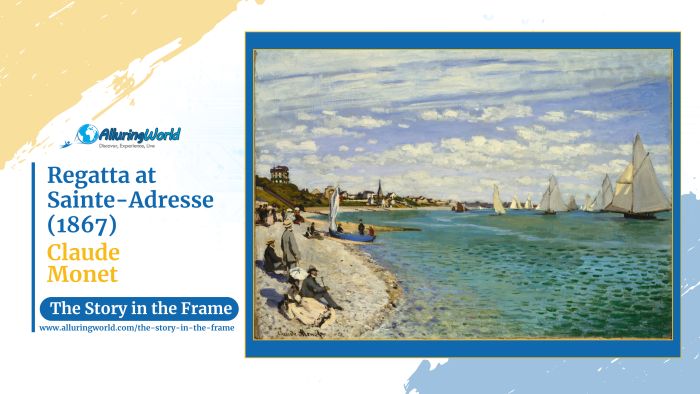
Capturing the lively scene of a seaside regatta on the Normandy coast, Regatta at Sainte-Adresse is a fantastic painting that was painted by the great painter Claude Monet in 1867. The painting reflects Monet’s fascination with light, leisure, and the vibrancy of the then-modern life, which in fact demonstrates his early experimentation with color, atmosphere, and composition that would later define Impressionism.
About the Painter:
Claude Monet (1840–1926) was a French painter and considered to be one of the leading figures of the Impressionist movement. He is renowned for his dedication to observing natural light and color, so Monet clearly focused on landscapes, urban scenes, and leisure activities. His innovative techniques and emphasis on perception transformed 19th-century painting and further influenced generations of modern artists who followed him and his artistic style.
Inspiration and Reasons Behind the Painting:
The inspiration behind Regatta at Sainte-Adresse was from Monet’s numerous visits to Sainte-Adresse, which is a fashionable seaside resort near Le Havre, in the northern part of France. The painting reflects his interest in contemporary leisure, the elegance of bourgeois society, and the interplay between people, water, and sky. Monet, as per usual, was trying to capture the transient effects of sunlight and movement on the scene, thus emphasizing immediacy and atmospheric vibrancy over detailed realism.
What is Depicted in the Painting:
His inspiration made him depict sailboats that are competing in a regatta along the coast, with elegantly dressed spectators calmly watching from the shore. The spectators are arranged in different groups, all being in small numbers, sitting on the beach and on a garden terrace far in the distance. At the same time, their poses suggest casual conversation and enjoyment of what they see. The water is animated with boats, reflections, and subtle ripples, while the horizon and sky provide a sense of openness and tranquility. In the Regatta at Sainte-Adresse, Monet clearly emphasizes the harmony between human activity, the natural landscape, and the shifting light, which makes this one of his more important works.
Colors and Techniques:
With Monet’s employment of a bright, luminous palette that is dominated by blues, whites, ochres, and touches of red, he manages to capture the brilliance of sunlight on sails, sand, and sea. His brushwork is fluid and spontaneous, with loose strokes that convey the movement of water and wind. When we point our attention to the light, we can notice that it is diffused and sparkling, thus creating a dynamic interplay between figures, boats, and the coastal landscape, highlighting the transient beauty of the moment.
Conclusion:
In conclusion, Regatta at Sainte-Adresse symbolizes Claude Monet’s early mastery of outdoor scene painting, as he was combining atmospheric observation, vibrant color, and depictions of then-modern leisure, so that he would showcase future generations to be bolder in their artistry. Through the fluid brushwork he expressed, balanced composition, and particular attention to light, the painting celebrates the pleasures of seaside life, the people living and enjoying the coast, and the fleeting, luminous qualities of nature. Overall, if it needs to be said, this painting remains a landmark in Monet’s development toward Impressionism and his enduring exploration of perception and light.