
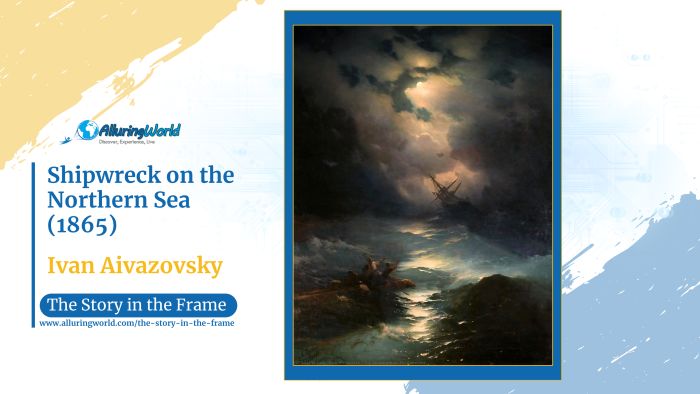
Painted in the 19th century, more precisely in 1865, Shipwreck on the Northern Sea by Russian Romantic artist Ivan Aivazovsky is a dramatic maritime scene that captures the perilous and untamed power of the ocean. The painting is well known for its dynamic composition, atmospheric intensity, and the exceptional ability of the artist to portray the interplay between human struggle and the forces of nature.
About the Painter:
Ivan Aivazovsky (1817–1900) was a Russian Romantic painter renowned for his seascapes and maritime works. Trained at the Imperial Academy of Arts in Saint Petersburg, Aivazovsky became famous for his ability to convey the moods, movement, and sublime qualities of the sea, blending precise observation with emotional and poetic expression.
Inspiration and Reasons Behind the Painting:
Shipwreck on the Northern Sea reflects Aivazovsky’s fascination with the dramatic and often dangerous aspects of the ocean, particularly in northern, stormy waters. Inspired by the Romantic tradition and his lifelong study of the sea, Aivazovsky sought to depict the heroism, vulnerability, and resilience of humanity when confronted by nature’s overwhelming forces.
What is Depicted in the Painting:
This fantastic artwork depicts a ship that was caught in a violent storm on the cold, northern waters. There can be seen towering waves that crash against the vessel, while dark clouds and swirling winds create a sense of chaos and danger. There are certain figures located on the ship who struggle to maintain control, thus emphasizing the human fragility and endurance in the face of natural power. The vast, stormy seascape dominates the scene, conveying both the sublime terror and majesty of the northern ocean.
Colors and Techniques:
Aivazovsky utilizes a palette of deep blues, grays, whites, and muted earth tones, since these allow him to capture the stormy sea, foamy waves, and turbulent sky in such a manner that it feels like you are transported in real time to that place and situation. His fluid, expressive brushwork conveys movement and texture, while the interplay of light and shadow enhances drama and emotional intensity. The reflections on the water, transparency of waves, and subtle gradations of color create additional realism and depth, further heightening the painting’s atmospheric impact and the experience of the person who admires the Shipwreck on the Northern Sea.
Conclusion:
In conclusion, Shipwreck on the Northern Sea demonstrates Ivan Aivazovsky’s mastery of seascape painting, drama, and Romantic sensibility, something that other artists from Russia cannot show. Through the dynamic composition, expressive brushwork, and atmospheric depth, his painting conveys the immense power of nature and human vulnerability, and how they are both connected in some way. Nevertheless, it remains to be one of Aivazovsky’s most celebrated works, admired for its technical brilliance, emotional intensity, and enduring ability to evoke awe and contemplation.